
24/7 Customer Support

Free returns

Same-day & Next-day Delivery

Quality Guaranteed

Unlock Your Welcome Offers: FREE Delivery | Up to 80% OFF | Free 30-day JoyPlus trial
Download the APP
Choosing a new hob is one of the most important decisions you'll make during a kitchen renovation. It sits at the heart of your daily cooking, influencing everything from meal times to cleaning routines and even your energy bills. With three main technologies to consider—gas, induction and ceramic—it can be difficult to cut through the marketing jargon and decide which is right for your home.
As the Joybuy Product Recommendation Officer, my role is to provide clear, practical advice to help you make an informed choice. This hob buying guide compares gas, induction and ceramic hobs across the factors that matter most to UK homeowners: cooking performance, safety, ease of cleaning and overall value.
Before we compare the technologies, here are a few practical points to keep in mind during your search.
Installation Requirements: Your choice has implications for installation. A gas hob must be fitted by a Gas Safe registered engineer. Most electric hobs, particularly powerful 4 zone hob models, need to be hardwired into a dedicated circuit by a qualified electrician, not just plugged into a standard socket. Always factor this professional installation cost into your budget.
Cleaning and Aesthetics: An easy to clean hob is a priority for many. While traditional gas hobs require cleaning around burners and pan supports, modern electric hobs offer a completely flat surface. The rise of the minimalist touch control hob has made the seamless, built-in hob look more achievable than ever.
Cookware Compatibility: Don't forget to check if your existing pots and pans will work. Gas hobs are compatible with almost any cookware. Ceramic hobs work best with flat-bottomed pans. Induction hobs are the most specific, requiring pans with a ferromagnetic (magnetic) base. You can easily test your current pans by seeing if a fridge magnet sticks firmly to the bottom.
Each hob type offers a distinct cooking experience. Here’s a straightforward breakdown of their pros and cons.
The traditional choice for many passionate cooks, gas provides an open flame for instant heat and visual feedback.
A popular electric option, ceramic hobs offer a sleek, modern look at an accessible price point. They work by heating electric elements underneath a tough glass surface.
The most advanced of the three, induction technology uses magnetic fields to heat the pan directly, not the hob surface.
To illustrate the differences, here are three popular 60cm hob models, each representing a different technology.
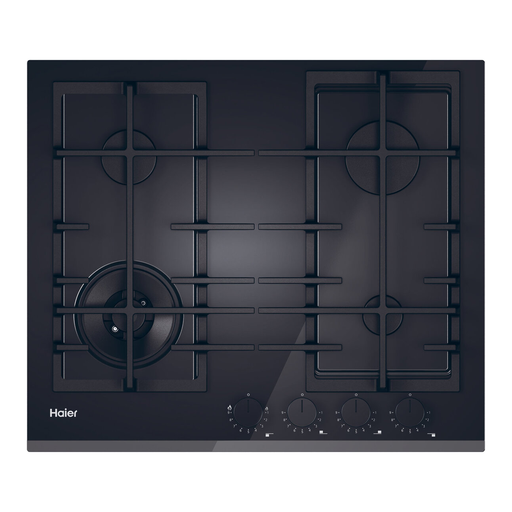
Why It Stands Out: The Haier HAVG6BF4TBPB bridges the gap between classic gas cooking and modern kitchen design. Its "gas on glass" construction places the burners on a sleek, tempered black glass surface, making it significantly easier to clean than a traditional stainless steel model. The standout feature is its Preci Flame technology, which provides 9 distinct power levels via the rotary knobs, offering a level of precision not often found on gas hobs.
Pros:
Who is it for? Home cooks who love the responsive feel of a gas flame but desire a more contemporary aesthetic and an easier cleaning experience.
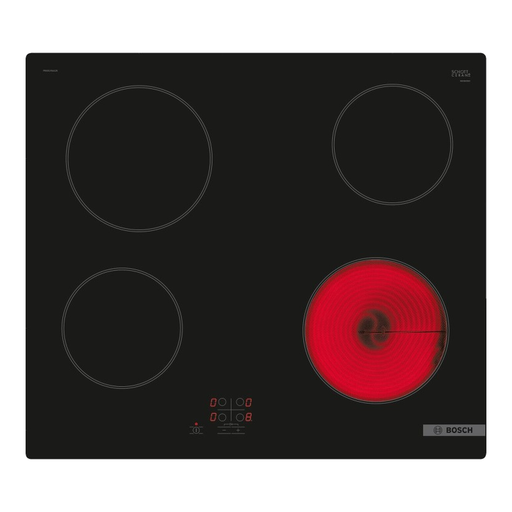
Why It Stands Out: The Bosch PKE61RAA8B is the definition of minimalist design. Its frameless, single-sheet glass surface and TouchSelect Basic controls create a completely flush and uncluttered look. With no knobs to clean around, maintenance is effortless. The four HighSpeed Cooking Zones heat up quickly, and the ReStart function is a practical touch—if you accidentally turn the hob off, it remembers your last settings for a few seconds.
Pros:
Who is it for? Those prioritising a clean, modern aesthetic and straightforward functionality in their kitchen upgrade, without the higher cost of induction.
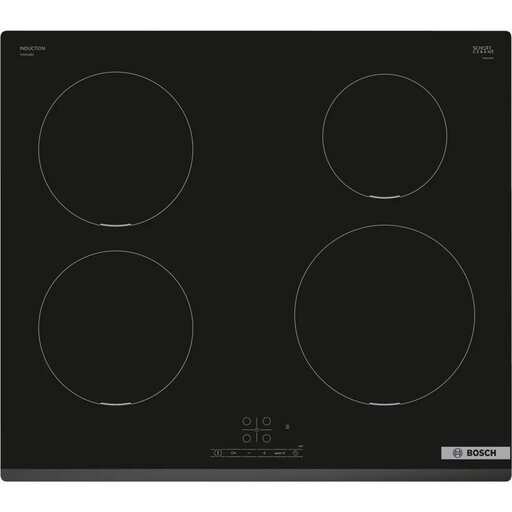
Why It Stands Out: The Bosch PIE631BB5E showcases the power of induction technology. Its key benefit is speed. According to Bosch, its PowerBoost function can boil water nearly twice as fast as one of their ceramic hobs, saving valuable time. Control is exceptionally precise, with 17 power levels available via the TouchSelect interface. Smart features like QuickStart, which automatically detects a pan's position, make it remarkably user-friendly.
Pros:
Who is it for? Busy households and keen cooks who value speed, safety and energy efficiency, and are ready to invest in the most advanced hob technology available.
The right hob ultimately depends on your cooking habits, kitchen design and budget. The models above are excellent starting points, but they are just a fraction of the available choices.
If you're still exploring or have different requirements, browse our full collection of integrated stove models to find the perfect fit for your kitchen.
1. Are induction hobs more energy-efficient? Yes, induction technology is widely regarded as the most energy-efficient. Because it uses a magnetic field to heat the cookware directly, very little energy is lost as waste heat into the kitchen air or the hob surface. In contrast, gas and ceramic hobs lose a significant amount of heat during the transfer process.
2. Do I need special pans for an induction hob? Yes, you need cookware with a ferromagnetic base. This includes cast iron, enameled cast iron and many types of stainless steel. Aluminium, copper and glass pans will not work unless they have a specific magnetic plate bonded to the bottom. An easy way to check your existing pans is to see if a simple fridge magnet sticks firmly to the base.
3. Which hob is the easiest to clean? Induction and ceramic hobs are the easiest to clean. Both feature a single, smooth glass surface with no physical parts to scrub around. Induction has a slight edge, as the surface itself doesn't get as intensely hot, meaning food spills are far less likely to burn on and can often be wiped away with just a damp cloth.