Who this is for

Parents of a child with diagnosed coeliac disease

Choose a strictly gluten-free product and agree handling and communication arrangements with the nursery. Coeliac UK advises speaking with the person in charge and relevant teaching and catering staff before a child starts or changes setting.

Parents packing an occasional gluten-free nursery treat

Look for a labelled gluten-free croissant that the nursery permits, check the current pack, and include other suitable lunch items.

Parents managing gluten avoidance plus another allergy

A gluten-free claim is only one check. Compare the exact current ingredient and allergen information with the child’s individual requirements, and tell the nursery about the dietary arrangements needed.

What to check before buying

Supermarket own-label croissants

Choose this when: You can inspect a small, clearly labelled pack before packing it for nursery.

Key trade-off: Retailer descriptions for the cited products recommend warming, and gluten-free does not confirm suitability for other allergens.

A branded gluten-free croissant

Choose this when: The child already accepts the exact variant and its current retailer page and pack meet their dietary requirements.

Key trade-off: Preparation details can differ between variants, so do not transfer claims from one listing or pack to another.

Another gluten-free lunch component

Choose this when: A pastry is unsuitable for the nursery plan or you want the croissant to be a treat rather than the main lunch item.

Key trade-off: This does not provide a croissant-style treat, and every prepared food still needs to fit the child’s dietary needs and nursery policy.

Priority What to check Your needs
Gluten-free status Look for an explicit gluten-free claim on the sealed pack. The Food Standards Agency states that, in Great Britain, food labelled gluten-free must contain no more than 20 mg/kg of gluten as sold. I need a product selected from its current label, not from the appearance of a bakery item or an older online listing.
Other allergens Read the full ingredients and allergen declaration for the exact pack. Compare it with the child’s documented dietary requirements and the nursery’s arrangements. Gluten-free alone is not enough where milk, egg, nuts or another ingredient matters for my child.
Lunch-box practicality Check serving and storage instructions, then try the exact croissant cold before relying on it in a packed lunch. Tesco and Sainsbury’s describe their cited croissants as best served warm. I want to know whether my child will accept the pastry after it has been packed for several hours, and what else to send with it.

Mistakes to avoid

  • Treating “gluten-free” as a complete allergy-safety claim

    A gluten-free claim does not confirm that a product suits every allergy or individual medical diet. Department for Education guidance explains that allergen information helps settings identify foods children can and cannot eat.

    Check the current sealed pack’s full ingredient and allergen declaration against the child’s written dietary requirements before buying or packing.

  • Ignoring the nursery’s food and allergy arrangements

    Coeliac UK advises discussing a child’s strict gluten-free needs with the setting and relevant staff, while individual nurseries may have their own labelling, storage and food-sharing rules.

    Before the first packed lunch, ask how food should be labelled, stored and handled, and whether any ingredients or sharing are restricted.

  • Assuming a breakfast pastry works the same in a cold lunch box

    Tesco and Sainsbury’s both describe their cited gluten-free croissants as best served warm, so texture and acceptance can differ once the pastry is cold.

    Try the exact product cold at home first, then pack it with other suitable lunch components rather than relying on it as the only food.

  • Using an old online listing instead of the product in hand

    Tesco notes that food products can be reformulated and that ingredients, nutrition and allergen information may change.

    Use online pages to locate products, but make the final decision from the physical pack’s current label and its use-by and storage instructions.

Relevant gluten-free croissant brand references

These references describe cited UK product lines; inclusion does not indicate nursery approval or current local availability.

Tesco Free From

Tesco lists a two-pack own-label gluten-free croissant for UK grocery shoppers.

  • Tesco describes the product as two gluten-free croissants made with a vegetable-oil blend.
  • The retailer says they are best served warm, so test whether the child accepts the exact product cold and check the current pack.

Sainsbury’s Taste the Difference Free From

Sainsbury’s lists a two-pack, 140 g gluten-free all-butter croissant option.

  • The retailer describes croissants made with tapioca starch, rice flour and potato starch.
  • They are described as best served warm, so check the current pack and cold lunch-box suitability.

M&S Made Without Wheat

M&S lists a 140 g Made Without Wheat all-butter croissant described as gluten-free.

  • M&S describes the pastries as flaky and intended to be warmed in an oven.
  • Inspect the local product pack for the ingredients and allergen information relevant to the child before relying on it.

Schär

Schär is a gluten-free specialist brand whose croissant is listed by Tesco in a four-croissant, 220 g product.

  • Schär’s own product page describes its croissant as ready to eat and vegetarian.
  • Tesco describes its listed product as frozen, so confirm the exact variant, preparation requirements and current pack information.

Joybuy product options

Joybuy product options for the alternative gluten-free carbohydrate route, for families who are not seeking a croissant as the main lunch item.
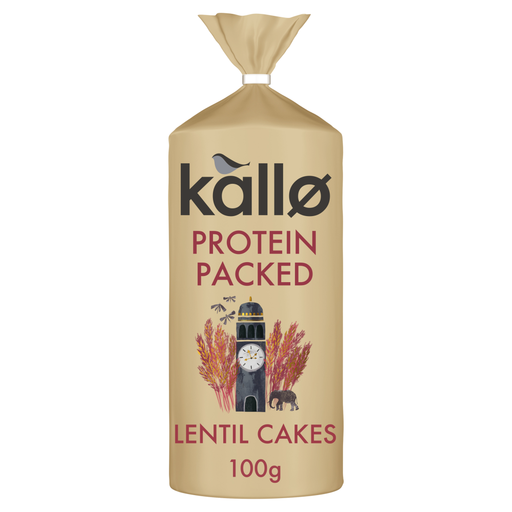
Kallo Protein Packed Lentil Cakes 100g

Kallo Protein Packed Lentil Cakes 100g

An alternative gluten-free lunch component rather than a croissant-style item.

Listed as gluten-free lentil cakes. Check the current physical pack for the child’s individual allergen requirements, and test whether the firm texture and portion suit the child before sending it to nursery.

Joybuy

Frequently asked questions

Does a product labelled gluten-free meet a UK legal threshold?

Yes. The Food Standards Agency states that, in Great Britain, food sold as gluten-free must contain no more than 20 mg/kg of gluten as sold to the final consumer. This does not make it suitable for every allergy or dietary requirement, so read the full current label.

Can I assume a gluten-free croissant is suitable for a child with a milk or egg allergy?

No. A gluten-free claim concerns gluten only. Check the exact current ingredients and allergen declaration against the child’s individual dietary plan rather than relying on the product name, retailer category or an older online listing.

Should I tell the nursery if my child has coeliac disease?

Yes. Coeliac UK advises arranging a discussion with the person in charge and relevant teaching and catering staff so they understand that the child needs a strict gluten-free diet.

Are gluten-free croissants suitable as the whole nursery lunch?

Treat a croissant as one lunch component rather than the whole meal. The cited supermarket products are pastries described as best warmed, while suitable gluten-free meal components can include foods such as rice, potatoes, maize, eggs, pulses, fruit and vegetables, subject to the nursery’s policy and the child’s needs.