
24/7 Customer Support

Free returns

Same-day & Next-day Delivery

Quality Guaranteed

Unlock Your Welcome Offers: FREE Delivery | Up to 80% OFF | Free 30-day JoyPlus trial
Download the APP
For anyone navigating a gluten-free lifestyle in the UK, the baking aisle can feel like a minefield. You dream of light, fluffy scones and perfectly risen Victoria sponges, but the reality is often a dense, crumbly bake that falls flat. Finding a reliable gluten free self raising flour is the key to unlocking baking success, but with so many options, it's easy to choose one that leads to disappointment.
As the Joybuy Product Recommendation Officer, my role is to help you see past the confusing labels and marketing claims. This guide will break down the common pitfalls to avoid and the essential factors to check, ensuring your next allergen-free baking project is a triumph.
Before you buy, be aware of a few frequent issues that can derail your baking efforts and waste your money.
To ensure you get the results you want, focus on these three non-negotiable parameters when selecting your flour.
A high-quality free from self raising flour is a carefully balanced mix of different flours, each serving a specific purpose.
This is what separates a plain flour from a self-raising one. A pre-mixed flour takes the guesswork out of your baking.
For anyone with coeliac disease or a severe intolerance, this is the most important factor.
Instead of a generic list, we've matched specific products to different types of home bakers to help you find the perfect fit.
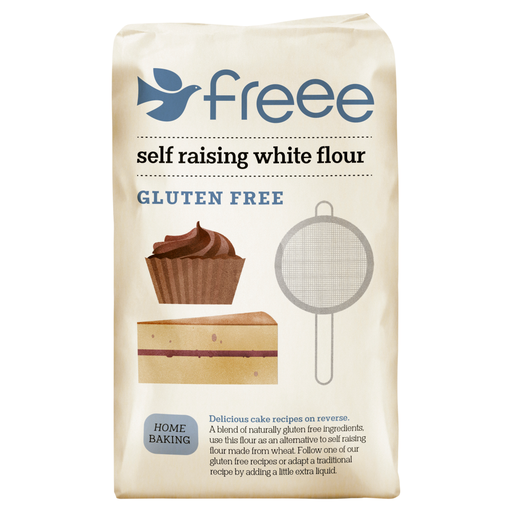
Why This Fits Their Persona: This baker needs a dependable, no-fuss solution for classic British bakes like scones, muffins and cakes. They value safety and consistency above all, especially when baking for family members with coeliac disease. This flour is designed as a direct 1-to-1 replacement for wheat flour in many recipes.
It completely solves the "Missing Binder Problem" by including xanthan gum in the blend, removing the need for extra ingredients and complex ratio calculations.
Certified by Coeliac UK, ensuring it's safe for sensitive diets. The balanced blend of rice, potato, tapioca, maize and buckwheat provides a neutral flavour and reliable structure.
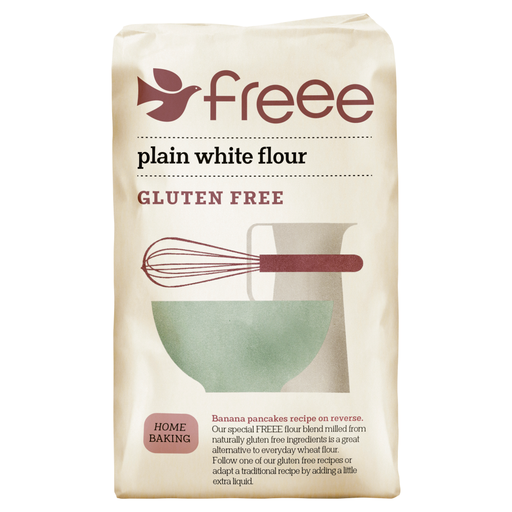
Why This Fits Their Persona: This baker enjoys having full control over their recipes. They want the flexibility to use a plain flour for sauces or pastry and then convert it into a self raising flour alternative by adding their own leavening. This approach allows for precise adjustments based on the recipe's needs.
This combination avoids the "One-Size-Fits-All" trap by giving the user complete control over the amount of rise, making it more versatile than a pre-mixed self-raising flour.
Maximum versatility for the pantry. The plain flour blend (which also needs a binder like xanthan gum) can be used for a wider range of cooking applications beyond just cakes.
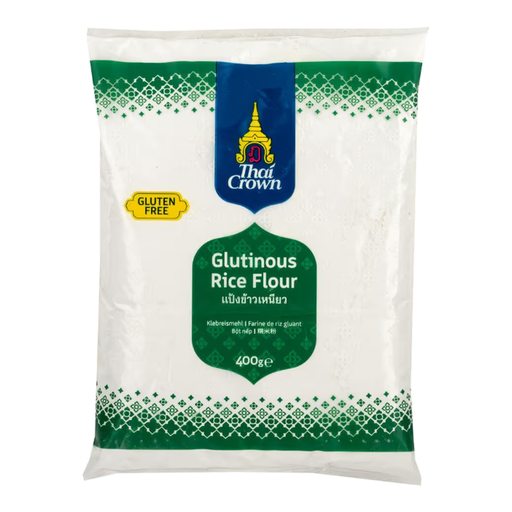
Why This Fits Their Persona: This person is exploring specific Asian recipes like mochi, rice cakes or dumplings. They need a particular texture—chewy and elastic—that a standard coeliac baking flour for cakes cannot provide. It's important to note that "glutinous" refers to the sticky texture, not the protein gluten; this flour is naturally gluten-free.
This perfectly illustrates the "One-Size-Fits-All" myth. Using a cake flour for mochi would result in a dry, crumbly failure. This specialised flour is essential for achieving the authentic texture.
It delivers the unique chewy, sticky and moist consistency required for many traditional Asian desserts. It is a single-ingredient flour, making it a pure and simple choice for specific recipes.
We have compiled a complete, real-time list of products that fully satisfy these strict selection criteria and UK safety regulations.
1. Can I just add baking powder to any gluten-free flour to make it self-raising? Not exactly. While you can add baking powder to a plain gluten-free flour blend, you will likely also need to add a binder like xanthan gum to provide the necessary structure that gluten normally would. Simply adding baking powder to a single-ingredient flour, such as almond or coconut flour, will not yield the same results as a balanced blend designed for baking.
2. How long does gluten-free self-raising flour last? The raising agents are what lose their effectiveness first. Always check the 'best before' date on the package. Once opened, it is advisable to store the flour in a cool, dry place inside an airtight container. For the best and most reliable rise in your bakes, aim to use the flour within 3-6 months of opening it.
3. Why are my gluten-free cakes so dense and heavy? This is a very common frustration. The cause is often an imbalanced flour blend, insufficient raising agent or the absence of a crucial binder like xanthan gum. Using a purpose-made free from self raising flour is the most straightforward way to avoid this. Also, be careful not to over-mix your batter, as gluten-free mixtures can become dense if overworked.