For grand strategy games on a shared work-and-play desk, start with screen format, comfortable positioning and connections rather than the highest refresh rate. A 27-inch 4K monitor offers a conventional 16:9 workspace; a 34-inch ultrawide is worth considering when side-by-side windows matter more, provided the desk and your games accommodate 21:9. Choose higher refresh rates for motion you value and can drive with your PC, and consider the static-image precautions an OLED screen needs.
Who is this choice for?
Detail-first strategy players
If you spend long sessions reading maps, menus and tooltips, assess resolution alongside viewing distance and interface scaling. A conventional high-resolution screen may matter more to you than gaming specifications chosen chiefly for faster-paced play.
Work-and-play desk sharers
When one monitor serves a laptop and a gaming PC, stand adjustment and the right connections affect everyday use. If you want USB-C video and laptop charging through one cable, check both the monitor’s power delivery and your laptop’s compatibility.
Wide-canvas multitaskers
A 34-inch 21:9 screen gives you room to arrange a game alongside reference or work windows. Measure the desk first, then check how your preferred games handle the wider format.
What matters when choosing?
Decide whether a conventional 16:9 screen or a wider 21:9 workspace suits your desk and games. Then check viewing comfort and connections before deciding how much refresh rate matters to you.
| Concern |
What to check |
Who this matters to |
| Readable maps and menus |
Compare resolution with screen size and viewing distance; try the operating-system and game scaling you expect to use. |
If maps, tooltips and office text occupy much of my day, I need them to remain comfortable to read at my desk. Around 36% of consumers put interface readability first. |
| Workstation fit and connections |
Check the stand’s adjustment range and your computer’s display outputs. For USB-C charging, confirm compatible video output and sufficient power delivery. |
When I switch between laptop work and gaming, I want a screen I can position comfortably and connect without disrupting the desk. For around 29% of consumers, workstation fit is the primary concern. |
| Side-by-side workspace |
Measure desk width and depth, and check how your games display at 21:9 before choosing a 34-inch ultrawide. |
I would rather keep a guide or work window beside the game than repeatedly switch between them. Wider workspace comes first for around 21% of consumers. |
| Smoother motion |
Confirm the refresh rate available at your chosen resolution through the intended connection, and whether your PC can deliver the frame rates you want. |
If I also play faster games, smoother motion may matter more than extra desktop width. Around 14% of consumers prioritise high-refresh gaming. |
Buying pitfalls to avoid
-
Choosing by refresh rate alone
A high refresh rate will not make an unsuitable stand or missing connection work for your desk. Which? highlights monitor adjustment as an important consideration for comfortable positioning.
List the outputs on your PC or laptop and the stand movements you need before comparing 120Hz, 144Hz or higher-refresh models.
-
Assuming every display cable is in the box
LG says the 34WR55QK-B supports DisplayPort but does not include a DisplayPort cable. A supported input does not, by itself, tell you which cable arrives with a monitor.
Choose how you will connect the screen, then check the box contents against your computer’s output.
Using DisplayPort with the LG 34WR55QK-B may require a separate cable.
-
Overlooking persistent images on OLED
Grand strategy interfaces and office applications can leave the same controls or taskbar visible for long periods. RTINGS identifies prolonged static elements as an OLED burn-in risk; ASUS advises against leaving the same image at maximum brightness for extended periods.
If you choose OLED, use its panel-care features and screen sleep settings, and consider how much of your day involves static desktop content.
-
Treating the manufacturer warranty as your only option
For a faulty monitor bought from a trader in the UK, statutory goods remedies are separate from a voluntary manufacturer warranty. The Consumer Rights Act 2015 explanatory notes describe a minimum 30-day period for the short-term right to reject where its conditions are met.
Keep your purchase and delivery records, document the fault and contact the trader about the applicable remedy rather than assuming optional warranty cover replaces your statutory rights.
Relevant brands to consider
These examples illustrate different monitor configurations, not a judgement about every model a brand makes.
Dell
The Dell S2725QS is an example of a conventional 27-inch 4K IPS screen for a combined office and gaming desk.
- Dell specifies 3840 × 2160 at 120Hz, AMD FreeSync Premium and height, pivot, swivel and tilt adjustment for this model.
- If USB-C laptop charging is essential, check the exact model’s ports; Dell’s S2725QC is a different variant.
LG
The LG 34WR55QK-B illustrates a 34-inch 21:9 option for arranging game and work windows on a wide desk.
- LG specifies 3440 × 1440, 100Hz, Picture-by-Picture and USB-C charging up to 65W for this model.
- Check desk fit, laptop compatibility and game support for 21:9. LG states that a DisplayPort cable is not included.
ASUS ROG
The ROG Swift PG27UQR represents a gaming-led 27-inch 4K route when higher refresh is a priority.
- ASUS specifies 160Hz, FreeSync Premium Pro, G-SYNC compatibility and height, pivot, swivel and tilt adjustment for this model.
- Check whether your PC and chosen connection can drive the resolution and refresh rate you intend to use.
BenQ MOBIUZ
The EX2710U is a 27-inch 4K IPS gaming option for shoppers also considering integrated audio.
- BenQ specifies 144Hz, integrated 2.1-channel audio and its HDRi and gaming-image modes for this model.
- Assess its connections, stand and audio against your own desk setup rather than assuming the named modes will suit every game.
Joybuy monitor choices
These choices include 27-inch 4K gaming screens and 34-inch wide-format models for a shared gaming and home-office desk. The OLED option deserves particular consideration if static game and office interfaces will remain on screen for long sessions.
 No image available
LG UltraGear 27G810A-B 27-inch IPS 4K Dual Mode
Consider this conventional-size screen if you want a 4K IPS display for strategy games and desktop work.
Its title lists Dual Mode with a maximum of 360Hz; confirm which resolution, connection and PC output apply to the mode you want.
View on Joybuy
 No image available
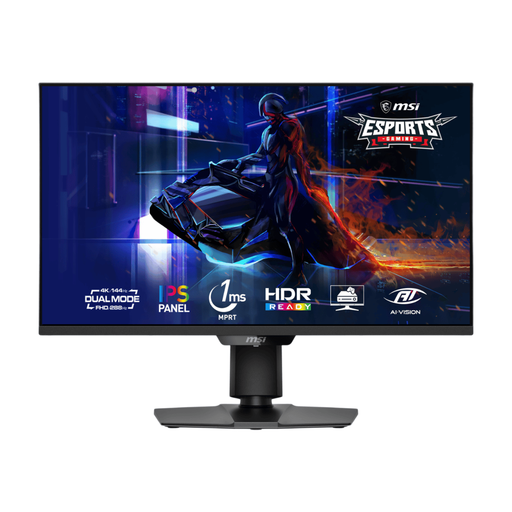
MSI MAG 275UPD E14 27-inch 4K Dual Mode
This 27-inch screen suits a conventional high-resolution desk when you also want a separate higher-refresh mode.
The listed modes are UHD at 144Hz and FHD at 288Hz, with Adaptive Sync. Check that your computer and intended connection support the mode you plan to use.
View on Joybuy
 No image available
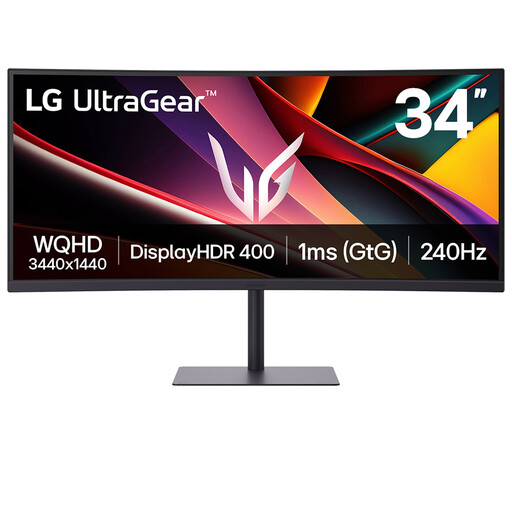
LG UltraGear 34G630A-B 34-inch VA WQHD 240Hz
Consider this wide-format gaming screen if desk space and your games suit an ultrawide layout.
The title specifies a 34-inch VA WQHD display at 240Hz. Before relying on a single laptop connection for charging, check its USB-C power requirements against the monitor’s stated capability.
View on Joybuy
 No image available
Dahua 34-inch 3440 × 1440 curved VA monitor, 200Hz
This 21:9 option is for a desk where you want room to arrange a game and other windows side by side.
The title lists two HDMI and two DisplayPort 1.4 inputs. Measure your desk and check your games’ 21:9 handling; if laptop charging matters, confirm the required connection before buying.
View on Joybuy
 No image available
LG UltraGear 34GX900A-B 34-inch OLED WQHD 240Hz
Consider this OLED model if you want a 34-inch gaming screen and are prepared to manage prolonged static content.
Check desk fit and game-format support, and use the screen-protection features when strategy-game controls or office windows remain visible for extended periods.
View on Joybuy
Frequently asked questions
Should I choose 27-inch 4K or a 34-inch ultrawide for grand strategy games?
Choose 27-inch 4K if you prefer a conventional 16:9 screen; consider a 34-inch ultrawide if keeping other windows beside the game matters more. Check scaling at your viewing distance for 4K, or desk fit and 21:9 support in your preferred games for ultrawide.
Do grand strategy games require a 144Hz or 160Hz monitor?
No particular refresh rate is established as a requirement for this use. Higher refresh may be worth prioritising if you also play faster games or value smoother motion, but check the rate available at your intended resolution and whether your PC can drive it.
Is OLED practical for strategy gaming and office work?
OLED is an option if you are willing to manage long periods of static content. RTINGS identifies burn-in risk from persistent screen elements, and ASUS advises against leaving the same image at maximum brightness for extended periods; use the monitor’s panel-care and screen sleep features.
What should I do if a new monitor is faulty?
Contact the trader and keep your purchase, delivery and fault records; a manufacturer warranty is separate from your statutory goods rights. For UK purchases where the conditions for the short-term right to reject are met, the Consumer Rights Act 2015 explanatory notes describe a minimum 30-day period, while other remedies may also be relevant.


