For a late-night bass transcription session, start with wired, closed-back monitoring headphones if room noise or disturbing someone nearby matters; consider open-back reference headphones if you listen alone in a quiet room. Compare how clearly each model presents low notes without assuming that stronger bass means more accurate pitch, then check fit, connection and the playback device. Keep the volume comfortable rather than turning it up to compensate for missing detail.
Who these choices suit
Late-night transcribers who need isolation
If you work in a shared home or contend with background noise, a closed-back, over-ear design is worth considering for its isolation. Check its fit as well as its sound: isolation is not a reason to raise the volume.
Analytical listeners working alone
If you have a quiet, private space, an open-back reference model may suit your preference for an analytical presentation. Its open earcups are a trade-off when containing sound or reducing room noise matters.
Phone and laptop transcribers
If you plug directly into a portable device or computer, check its audio output against the headphone plug and cable. For models sold in different impedance versions, confirm the exact version rather than relying on the family name.
What matters when choosing
Closed-back monitoring
Choose when: Background noise or a shared room makes isolation important. Audio-Technica describes the ATH-M40x as closed-back, isolating and flat-tuned for monitoring.
Trade-off: Check whether the enclosed fit remains comfortable for your session; closed-back construction alone does not establish a particular bass balance.
Open-back reference listening
Choose when: You listen alone in a quiet space and do not need isolation. Sennheiser positions the open-back HD 560S for analytical listening.
Trade-off: Open earcups do not serve the same isolation need as a closed-back design.
| Concern |
What to check |
Who this matters to |
| Bass-note definition |
Compare the exact model’s monitoring aim and low-frequency presentation; a quoted frequency range alone cannot establish transcription accuracy. |
If I need to distinguish pitch changes and where one low note ends and another begins, more bass quantity is not enough. Around 36% of consumers put bass-note definition first. |
| Late-night isolation |
Check whether a closed-back fit addresses room noise and sound containment; manage listening volume separately. |
In a shared or noisy room, I want to follow the part without turning up the sound to overcome distractions. Keeping the session contained comes first for around 29% of consumers. |
| Session comfort |
Consider the fit, pads and stated weight for the time you expect to listen; do not assume over-ear headphones are designed to be worn while sleeping. |
Before bed, I need a fit I can tolerate throughout a focused transcription session, even if another model offers more isolation. Comfort is the primary concern for around 21% of consumers. |
| Device connection |
Confirm the plug, any required adapter and cable arrangement; match an impedance variant to the playback device. |
If I work from a phone or laptop, I need the headphones to connect conveniently to the output I actually use. A straightforward device match comes first for around 14% of consumers. |
Mistakes to avoid
-
Turning up the volume to follow the bass
Louder listening does not establish that a headphone presents bass pitch clearly. The World Health Organization explains that hearing risk depends on sound level, listening duration and how often exposure occurs.
Check fit and isolation first, use the lowest comfortable volume and take breaks rather than repeatedly increasing the level.
-
Buying a DT 770 PRO by name alone
Beyerdynamic distinguishes its 32-, 80- and 250-ohm DT 770 PRO versions by intended source use. The family name does not tell you which version suits your device.
Confirm the impedance in the product listing and match that exact version to the phone, computer, interface or amplifier you plan to use.
A poorly matched choice could leave you needing a different playback device or headphone amplifier.
-
Expecting open-back headphones to provide isolation
The Sennheiser HD 560S has open earcups, whereas Audio-Technica describes the ATH-M40x and ATH-M50x as closed-back isolation options. Those constructions address different room conditions.
Consider open-back listening when the room is quiet and private; prioritise a closed-back fit when outside distraction or containing your listening matters more.
Relevant brands to consider
Audio-Technica
Its wired, closed-back M-Series models offer different starting points for considering monitoring and late-night isolation.
- Audio-Technica describes the ATH-M40x as flat-tuned and isolating, and supplies three detachable cables with the ATH-M50x.
- The brand’s description of the ATH-M50x’s deep, accurate bass does not establish that it has the same tonal balance as the ATH-M40x or that either model will suit every transcription task.
beyerdynamic
Its closed-back DT 770 PRO range makes the intended playback device an important part of choosing a variant.
- Beyerdynamic lists soft, replaceable pads for the DT 770 PRO 80-ohm version and provides source guidance for the range’s impedance options.
- The 32-, 80- and 250-ohm versions have different intended source uses, so check the full variant designation before buying.
Sennheiser
The open-back HD 560S provides a reference-oriented alternative for listening in a quiet, private space.
- Sennheiser positions the HD 560S for analytical listening and describes its bass as deep and defined.
- Its open earcups are not a substitute for closed-back isolation; confirm that your playback device suits the 120-ohm model.
Related Joybuy products
These wired in-ear and over-ear options relate to late-night listening, but their product descriptions do not establish neutral monitoring performance or bass-note transcription accuracy. Choose between their wearing styles and check the connection and fit for your own setup.
 No image available
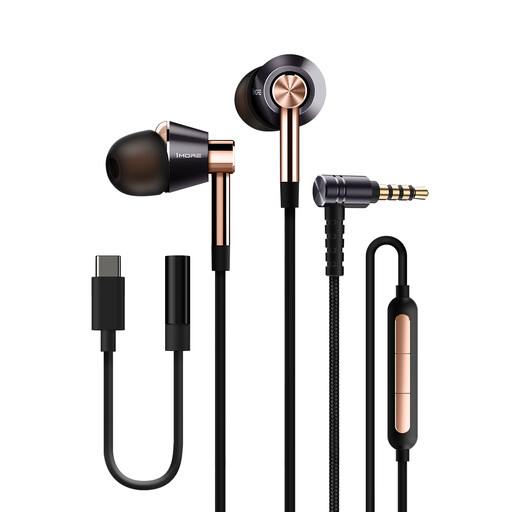
1MORE E1001 Triple Driver wired in-ear earphones, Gold
Consider this in-ear option if you prefer earphones to an over-ear fit for a focused listening session. Its stated features include a wired, triple-driver design and a microphone; check tip fit and the connection to your device before choosing it for bass transcription.
View on Joybuy
 No image available
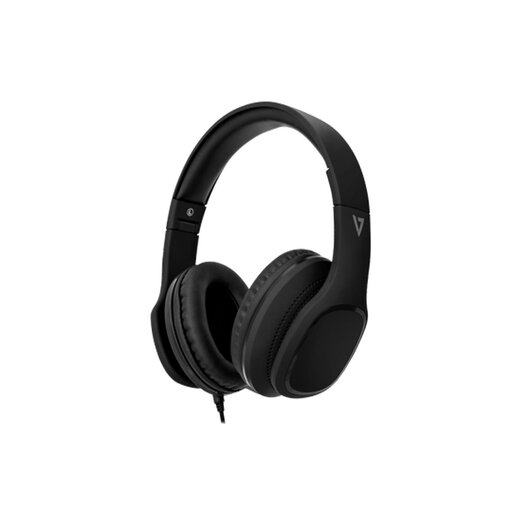
V7 HA701-3EP wired over-ear headphones, 40 mm drivers
Consider this over-ear option if that wearing style suits your late-night listening session. The product name specifies wired headphones with 40 mm drivers and an inline microphone; driver size alone does not establish how clearly they present bass pitch, so check fit and connection as well.
View on Joybuy
Questions about late-night transcription
Do I need wired headphones to transcribe a bass line?
No particular connection type is mandatory for every transcription setup, but the Audio-Technica ATH-M40x and ATH-M50x, Sennheiser HD 560S and beyerdynamic DT 770 PRO options discussed here use wired connections. Before choosing one, check the output on your playback device and the supplied plug or adapter.
How should I manage volume during a late-night session?
Use a comfortable volume and limit how long you listen rather than raising the level whenever a bass note is difficult to hear. The World Health Organization says exposure risk depends on level, duration and frequency, and advises keeping device volume at no more than 60% of maximum; Royal Free London NHS Foundation Trust also recommends regular breaks.
Which DT 770 PRO impedance should I choose?
Choose the DT 770 PRO variant for the source you will actually use, not just by the model-family name. Beyerdynamic says its 32-ohm version works with computer soundcards, audio interfaces and portable players, while the 250-ohm version is intended for stationary sources such as headphone amplifiers; it describes the 80-ohm version in relation to recording-studio use.


