Shoppers prioritising protein
If you want a crisp-style snack for its protein content, look beyond the ingredient name. Compare protein per bag with the product’s energy and protein figures before treating it as high protein.


If protein is the reason for adding crisp-style snacks to your weekly shop, compare the amount in the portion you will eat and check whether the product meets the high-protein criterion. Myprotein Salt & Vinegar Popped Protein Crisps meet that criterion on the stated figures; lentil and bean-based snacks offer different pack formats, but their ingredients or protein content alone do not establish the same claim. Salt and allergens can change which flavour is suitable for you.
If you want a crisp-style snack for its protein content, look beyond the ingredient name. Compare protein per bag with the product’s energy and protein figures before treating it as high protein.
Lentil cakes, lentil crisps and bean-based sharing snacks offer alternatives to potato crisps for a weekly shop. Check the portion count as well as the pack size if several people will share them.
Suitability depends on the exact flavour. Protein-focused snacks may contain soya or milk, while vegan or gluten-free labelling on a potato crisp does not tell you how much protein it provides.
Start with the protein claim and the portion you expect to eat, then check salt, ingredients and pack format against the rest of your weekly shop.
| Priority | What to check | Your needs |
|---|---|---|
| High-protein claim | Compare protein and energy on the same per-100g or per-serving basis. The criterion published on legislation.gov.uk requires at least 20% of a food’s energy to come from protein; a lentil or bean ingredient alone does not establish this. | If I am buying the snack specifically for protein, I want its nutrition figures to substantiate a high-protein claim, not just protein-related wording on the front of the pack. |
| Protein per portion | Read protein per bag or stated serving alongside the per-100g figure. Myprotein lists 11g per 25g bag; Ocado lists 10g per 35g serving for The Curators Tangy Cheese Protein Chips. | A single bag suits my plans differently from a sharing pack. I want to know the protein in the amount I expect to eat. |
| Salt and allergens | Compare salt for the portion you plan to eat, since bag sizes differ. Read the current flavour’s ingredients, declared allergens and any precautionary statement. | If I buy snacks regularly or avoid particular ingredients, the exact flavour’s salt and allergen information matters as much as its protein figure. |
| Snack and pack format | Check whether the product is a popped snack, tortilla-style chip, lentil cake or potato crisp. For sharing bags, check the stated number and size of portions. | For the weekly shop, I might prefer individual bags or something to share; I do not expect every crisp-style snack to have the same base or texture. |
These descriptions answer different questions. Tyrrells lists 3.9g protein per 30g serving of its Sour Cream & Onion Lentil Crisps, while Tesco lists 3.8g per 25g portion of Graze Marmite Crunch; neither serving figure alone establishes a high-protein claim.
For a high-protein requirement, compare the product’s protein and energy figures against the criterion published on legislation.gov.uk: at least 20% of energy from protein.
A smaller individual bag and a multi-portion sharing bag represent different amounts to eat. Tesco lists approximately four 25g portions in a 100g Graze Marmite Crunch pack.
Check protein and salt for your planned portion as well as per 100g, and note how many portions the pack contains.
Myprotein’s Salt & Vinegar Popped Protein Crisps contain soya, while The Curators Tangy Cheese Protein Chips contain milk and soya. Suitability cannot be inferred from a different flavour.
Read the current pack’s ingredients and allergen information, including any “may contain” statement.
Vegan, gluten-free and hand-cooked describe other characteristics. For example, KETTLE Chips lists 6.5g protein per 100g for its Lightly Salted potato crisps; Myprotein lists 44g per 100g for its Popped Protein Crisps.
Choose the requirement that matters to you, then check the relevant nutrition, ingredient and suitability information for the exact product.
These examples show why a brand name or snack base cannot stand in for the nutrition and ingredient information on a particular product.
Its Popped Protein Crisps are a crisp-style snack; the Salt & Vinegar variant is labelled suitable for vegans.
Tangy Cheese Protein Chips are a lentil-and-soya, tortilla-style snack sold in a 35g bag.
Its lentil crisps offer a different base from its potato crisps.
Marmite Crunch is a bean-based snack in a 100g sharing bag.
Its Ready Salted product is a conventional potato crisp made with potatoes, vegetable oils and salt.
Lightly Salted is a potato-crisp option that KETTLE Chips labels suitable for vegans and vegetarians.
Sea Salted is a conventional potato crisp labelled gluten-free and suitable for vegans and vegetarians.
Its Salted ridged potato crisps provide a conventional crisp option.
REAL Hand Cooked Crisps describes its range as vegetarian and gluten-free, with some recipes suitable for vegans.
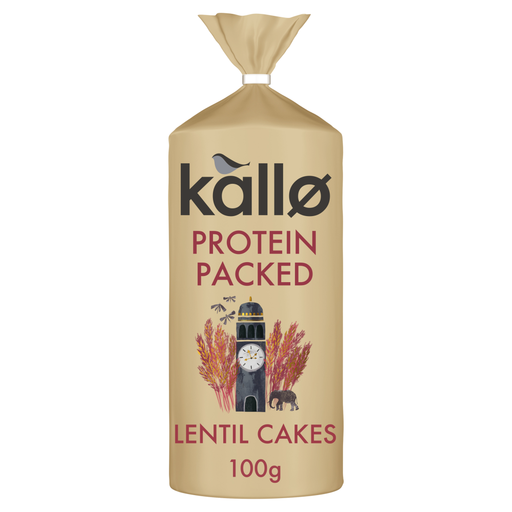
This lentil-cake option is a crisp-style alternative for a weekly shop. Check its current nutrition and allergen information against your protein requirement and planned portion.
 No image available
The 100g pack offers lentil cakes rather than conventional potato crisps for a weekly shop. Compare the current label’s protein and energy figures, portion size and allergen declaration before choosing it for a high-protein requirement.
The high-protein criterion published on legislation.gov.uk requires at least 20% of the food’s energy to come from protein. Check the protein and energy figures on the same basis; words such as “lentil” or “protein” do not establish that proportion by themselves.
No. A lentil base does not by itself establish a high-protein claim. Tyrrells lists 13g protein per 100g for its Sour Cream & Onion Lentil Crisps; assess that figure alongside the product’s stated energy when protein is your main reason for buying.
Use both: per 100g helps you compare products on one basis, while per bag or serving shows the amount in your planned portion. For a sharing pack, check the portion count too; Tesco lists approximately four 25g portions in a 100g bag of Graze Marmite Crunch.
Check the exact flavour. Myprotein labels its Salt & Vinegar Popped Protein Crisps suitable for vegans, but the product contains soya. The Curators Tangy Cheese Protein Chips contain milk and soya, so they do not meet a vegan requirement.
Read the current pack’s ingredient list and any precautionary allergen statement for the flavour you are buying. GOV.UK explains that regulated allergens used as ingredients in prepacked food must be clearly labelled in the ingredients list; another flavour’s label is not a substitute.