Hosts planning a protein-focused snack table
You want a crisp-style option with a clearly stated amount of protein per pack, rather than choosing ordinary potato crisps simply because their nutrition panel lists some protein.


If protein per pack is the priority, consider purpose-made protein crisps: Applied Nutrition states 15g per 50g bag, while Myprotein and EatProtein state 11g per pack; the checked Walkers potato crisps list 1.3g or 1.6g per pack. For a mixed Halloween party, compare the declared portions and check each flavour’s ingredients and allergen information rather than assuming one snack suits every guest.
You want a crisp-style option with a clearly stated amount of protein per pack, rather than choosing ordinary potato crisps simply because their nutrition panel lists some protein.
You need to check the ingredients and allergen statements for each flavour and keep that information available when serving snacks.
You want conventional potato crisps on the table too, while keeping their flavour or reduced-salt and reduced-fat claims separate from the question of protein content.
Choose the type of crisp that fits the table, then compare the actual packs and flavours you plan to serve.
Choose when: You want a stated protein amount in each individual bag.
Keep in mind: Pack sizes differ, and each flavour needs its own ingredient and allergen check.
Choose when: Familiar crisp flavours matter more to your snack selection than protein per pack.
Keep in mind: The checked Walkers packs list much less protein per pack than the cited protein-crisp examples.
| Priority | What to check | Your needs |
|---|---|---|
| Protein per pack | Read the protein amount for the pack guests will receive. Applied Nutrition states 15g per 50g bag; Myprotein states 11g per 25g pack, and EatProtein states 11g per bag. | I want the protein option to be identifiable by its stated serving, not just by the word “protein” on the front of a packet. |
| Portion size | Check the declared pack weight before comparing per-pack figures; use per-100g values for a same-weight nutrition comparison. A 25g pack and a 50g bag are different portions. | Individual bags would make it easier for me to plan how many portions to put out. |
| Ingredients and allergens | Read the exact flavour’s current ingredients and allergen statement. Keep packets or their flavour-specific information available if snacks are served outside their packaging. | Guests with food allergies need to be able to identify which snacks they can consider, rather than rely on a general description of the range. |
| Salt and fat | Compare salt and fat on the same pack or per-100g basis. Check what a reduced-salt or reduced-fat claim is comparing with; neither claim establishes protein content. | I may want more than one type of crisp, but I would check salt, fat and protein separately rather than treating one claim as an answer to all three. |
Walkers UK lists 1.3g protein per 22g Oven Baked Sea Salt pack and 1.6g per 25g Ready Salted pack; those amounts should not be confused with the stated per-pack amounts for the cited protein crisps.
Check the claim and nutrition information on the product you are buying. The high-protein criterion published on legislation.gov.uk is that at least 20% of the food’s energy value comes from protein.
Applied Nutrition’s stated protein amount is for a 50g bag, while Myprotein’s is for a 25g pack. Per-pack figures describe different-sized portions.
Use per-pack figures to plan individual servings, and per-100g nutrition figures when you need a same-weight comparison.
Ingredients and allergen statements can differ between products and flavours, making it harder for guests to identify what is in a mixed bowl.
Check each purchased packet and keep its information with the snack. Identify a separate option for guests whose stated allergen needs rule out a product.
Department of Health and Social Care guidance describes HFSS promotion and placement rules for businesses operating in and selling to England. Those retail rules do not, by themselves, settle what a school event may serve.
If the Halloween event is school-linked, check the school’s current catering policy with the organiser.
Its Protein Chips provide a stated 15g protein per 50g bag, according to Applied Nutrition.
Myprotein lists 11g protein for a 25g pack of its Protein Crisps.
EatProtein states 11g protein per bag for its protein-crisp range.
The checked Walkers potato crisps are conventional crisp options, not substitutes for a stated protein-crisp portion.
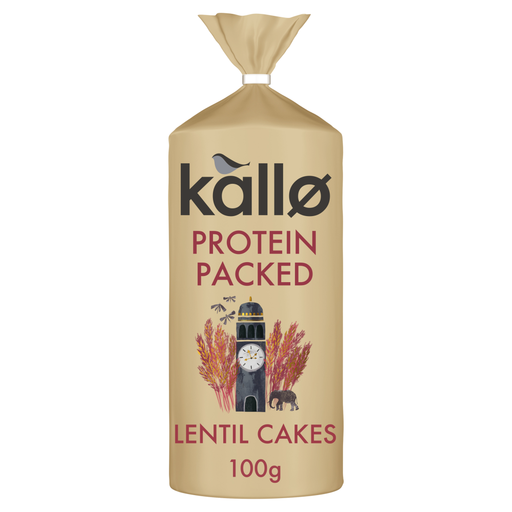
This lentil-cake option offers a different savoury format for the Halloween snack table; it is not an individual bag of conventional crisps.
 No image available
These lentil cakes offer a different format from conventional potato crisps for a Halloween snack table. The pack is 100g; check its nutrition panel for protein per portion and its ingredients and allergen statement before serving guests.
The high-protein criterion published on legislation.gov.uk requires at least 20% of the food’s energy value to come from protein. A protein figure on a nutrition panel alone does not establish that the product meets that criterion; check the product’s claim and nutrition information.
No single range description establishes suitability for every guest. Check the exact flavour’s current ingredients and allergen warnings, and keep that information available if you serve the crisps outside their packets.
Not necessarily: fat, salt and protein are separate nutrition measures. Walkers UK lists 1.3g protein per 22g Oven Baked Sea Salt pack and 1.6g per 25g Ready Salted pack; check the specific variant’s protein figure rather than relying on a different nutrition claim.
No. Department of Health and Social Care guidance addresses qualifying retail promotions and placements for businesses operating in and selling to England, not a general school-event permission or prohibition. Ask the school organiser for the current catering policy; the Department for Education’s September 2026 materials describe updated guidance for the academic year beginning September 2027 as subject to Parliamentary approval.
For food packed for direct sale, the Food Standards Agency and Food Standards Scotland describe labelling that shows the food name, a full ingredients list and the 14 regulated allergens emphasised within it. Check the applicable labelling arrangements for the event, and retain the manufacturer’s information for commercially prepacked crisps.