Desk-based savoury snackers
If you want something crunchy during a morning break, compare the protein stated for the packet you would eat rather than choosing by the front-of-pack wording alone.


Compare protein and energy for the amount you would actually eat, then check salt and ingredients on the chosen flavour. Manufacturer figures for EatProtein and Myprotein describe smaller packets with 11–11.2g protein and 89–92 kcal, while Applied Nutrition states 15g protein and 210 kcal for a 50g bag; the useful choice depends on your preferred portion and dietary requirements, not protein grams alone.
If you want something crunchy during a morning break, compare the protein stated for the packet you would eat rather than choosing by the front-of-pack wording alone.
A smaller individual packet and a 50g bag are different snacks in practice. Check both protein and energy per packet before deciding which portion fits your break.
Protein crisps can use pea, soya or milk ingredients. Check the exact flavour’s ingredient and allergen statements alongside any vegetarian, vegan or gluten-free wording.
Start with the portion you expect to eat, then compare its nutrition figures and ingredients. Use per-100g values when packet sizes differ.
| Priority | What to check | Your needs |
|---|---|---|
| Protein | Read the protein grams for the whole packet or your portion. For a like-for-like comparison, also use the per-100g figure. | I want to know how much protein my actual tea-break portion contains, not just whether the pack mentions protein. |
| Portion and energy | Compare packet weight and stated kcal together. EatProtein states 89 kcal and 11.2g protein per bag; Applied Nutrition states 210 kcal and 15g protein per 50g bag. | A smaller packet may suit my break, or I may prefer a larger bag with more stated protein. I need to compare the portions before choosing. |
| Salt | Read both salt per packet and salt per 100g. The NHS describes more than 1.5g salt per 100g as high; Myprotein states 5.70g per 100g for its listed Salt & Vinegar crisps. | If savoury snacks are a regular part of my breaks, I want to see how much salt this packet contains as well as how it compares with other pack sizes. |
| Ingredients | Check the protein source, ingredient list and allergen statement for the exact flavour. Do not extend a dietary claim from one product to an entire range. | I need to check whether the chosen flavour fits my dietary restrictions, particularly where soya or milk ingredients are relevant. |
| Traffic-light labels | Where shown, use the colours alongside the full nutrition panel and note whether the figures refer to 100g or a serving. | I use the colours as a quick prompt to inspect the figures. In a Food Standards Agency and Ipsos Northern Ireland survey of 611 people interviewed from September to November 2024, 49% said they actively used traffic-light labelling when shopping for food; that figure is not specific to crisp buyers. |
Protein and salt describe different parts of the nutrition panel. Myprotein states 1.40g salt per 25g pack for its listed Salt & Vinegar crisps; the NHS describes foods with more than 1.5g salt per 100g as high in salt.
Compare salt per packet for the amount you would eat and per 100g when comparing products.
The listed Myprotein pack is 25g, while the Applied Nutrition bag is 50g. Protein per packet therefore does not describe an equal quantity of food.
Check protein and energy for each whole packet, then use the per-100g figures for a like-for-like comparison.
EatProtein lists soya and milk ingredients in its Cheese & Onion crisps. Myprotein lists soya for the Salt & Vinegar product and a precautionary statement for other allergens.
Read the ingredient list and allergen statement on the exact flavour and current pack.
A protein message does not tell you the packet’s full energy, salt or ingredient details.
Use it as a prompt to read the nutrition panel for the portion you plan to eat.
These examples illustrate different packet sizes and ingredients; check the chosen flavour’s current label before making a comparison.
Applied Nutrition describes its Protein Chips as a 50g savoury bag made with pea protein.
EatProtein offers Cheese & Onion Protein Crisps as an individual savoury packet.
Myprotein lists Popped Protein Crisps in 25g packs, including a Salt & Vinegar product.
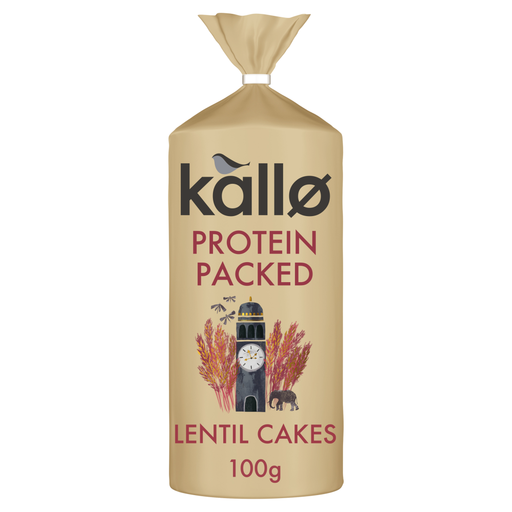
This lentil-cake option is a crisp-like snack to consider for a morning break. Compare its label with individual protein-crisp packets if portion size and protein per serving matter to you.
 No image available
These lentil cakes offer a crisp-like choice for a morning break rather than an individual bag of crisps. The pack is 100g; check its nutrition panel for the portion you would eat and read the ingredient and allergen statements before choosing.
Start with the protein grams and energy for the amount you would actually eat, then compare the per-100g figures if pack sizes differ. Protein’s approximate contribution to stated energy can be calculated as protein grams multiplied by 4 kcal, divided by the kcal for the same portion; it does not describe the crisp’s other ingredients or salt.
Use both for different purposes: per-bag figures describe the snack you plan to eat, while per-100g figures let you compare differently sized packs on the same basis. Make sure any per-serving figure refers to the portion you intend to have.
No. Check salt separately for the chosen flavour. Myprotein states 5.70g salt per 100g and 1.40g per 25g pack for its listed Salt & Vinegar crisps; the NHS describes more than 1.5g per 100g as high in salt.
No; suitability depends on the exact product and flavour. Applied Nutrition describes its pea-protein chips as soya-free, EatProtein lists soya and milk ingredients, and Myprotein lists soya plus a precautionary allergen statement for its Salt & Vinegar crisps. Check the current pack rather than relying on a brand-wide assumption.