If you want protein from the cake itself, compare the amount on the pack: Marks & Spencer lists 24.8g per 100g for its Barbecue High Protein Rice Cakes, while Tesco lists 26.0g per 100g for Kallo Protein Lentil Cakes, which are lentil-based rather than conventional rice cakes. For a plain rice-cake snack, plan to get protein from a separate food: Kallo Lightly Salted lists 0.6g per cake and Tesco Lightly Salted lists 0.7g per cake. Check the portion you will eat and the current ingredients and allergen statements before deciding.
Who each option suits
Shoppers who want protein from the cake
Compare both the per-100g figure and the amount in the portion you will eat. Marks & Spencer lists 24.8g protein per 100g for its Barbecue High Protein Rice Cakes; Tesco lists 26.0g per 100g and 1.8g per cake for Kallo Protein Lentil Cakes. The Kallo product is lentil-based, so it is a different choice from a conventional rice cake.
Rice-cake fans who prefer to add a topping
Plain cakes offer a base for a separately chosen protein food. Kallo Lightly Salted Wholegrain Rice Cakes list 0.6g protein per cake, and Tesco Lightly Salted Rice Cakes list 0.7g per cake; neither figure describes a protein-rich snack on its own.
Shoppers checking dietary labels and allergens
Check the exact product and flavour rather than relying on the rice-cake category. The M&S high-protein cakes and Kallo Protein Lentil Cakes are listed as vegan and gluten free, but Tesco’s Kallo lentil-cake listing says they may contain sesame seed and soya. Kallo says its Lightly Salted rice cakes may contain milk, sesame seeds and soya.
What to compare before buying
Decide whether the cake needs to provide protein itself or will be a base for another food, then compare the portion and label details for that choice.
| Priority |
What to check |
Your needs |
| Protein in the portion |
Read protein per 100g and per cake or serving. Tesco lists 26.0g per 100g but 1.8g per cake for Kallo Protein Lentil Cakes; the two figures answer different questions. |
I want to know how much protein the number of cakes I will eat actually provides, not just whether the pack emphasises protein. |
| Cake or topping base |
Check the main ingredients and protein per cake. Kallo Lightly Salted lists 0.6g per rice cake, and Tesco Lightly Salted lists 0.7g per rice cake. |
If I prefer plain rice cakes, I can choose a separate protein food for the same snack or meal rather than counting on the cakes alone. |
| Ingredients and allergens |
Read the current ingredients, allergen declaration and any may-contain statement for the exact flavour. Tesco lists sesame seed and soya in the precautionary wording for Kallo Protein Lentil Cakes. |
A vegan or gluten-free label does not answer every allergen question I may have. I need to check the whole pack. |
| Whole nutrition panel |
Compare the portion you expect to eat with the protein, energy, fat and salt shown on the pack. M&S lists 451kcal and 16.2g fat per 100g for its Barbecue High Protein Rice Cakes. |
I want the protein figure in the context of the rest of this snack, rather than choosing from a front-of-pack claim alone. |
Common buying mistakes
-
Assuming every rice cake provides substantial protein
The amount varies by product. Kallo lists 0.6g protein per Lightly Salted rice cake, while Tesco lists 0.7g per Lightly Salted rice cake.
For a snack centred on protein, compare the stated serving amount. If you choose plain rice cakes, select a separate protein food for the snack or meal.
-
Treating a lentil cake as an ordinary rice cake
Lentil flour is the main listed ingredient in Kallo Protein Lentil Cakes. Their ingredients and eating experience should not be assumed to match those of a plain rice cake.
Check the ingredients and protein per cake if you are considering a lentil-based alternative; choose a rice-cake-format product if that distinction matters to you.
-
Overlooking may-contain statements
Vegan and gluten-free descriptions do not replace the rest of the allergen information. Food Standards Agency research explains that precautionary allergen labelling communicates the possibility of unintended allergen presence.
Read the ingredients and precautionary wording on the current pack, including when switching flavours or products.
-
Choosing from a protein claim alone
A per-100g protein figure does not tell you how much is in the portion you will eat or show the rest of the nutrition panel. M&S lists 24.8g protein, 451kcal and 16.2g fat per 100g for its Barbecue High Protein Rice Cakes.
Compare the stated serving with the full panel, including energy, fat and salt, before deciding how the cakes fit into your snack.
Relevant brand references
These examples illustrate differences between specific cake-style snacks and plain rice cakes; a brand name alone does not establish a product’s ingredients or nutrition.
M&S
Barbecue High Protein Rice Cakes combine wholegrain brown rice and buckwheat with pea protein and lentil flour, according to Marks & Spencer’s product information.
- The product lists 24.8g protein per 100g and is described as vegan and gluten free.
- It also lists 451kcal and 16.2g fat per 100g. Check the current pack and the portion you intend to eat.
Kallo
Kallo has distinct lentil-cake and wholegrain rice-cake products, so check which one a nutrition figure describes.
- Tesco lists 26.0g protein per 100g and 1.8g per cake for Kallo Protein Lentil Cakes.
- Those cakes are lentil-based and may contain sesame seed and soya. Kallo Lightly Salted rice cakes list 0.6g protein per cake and may contain milk, sesame seeds and soya.
Tesco
Tesco Lightly Salted Rice Cakes are a brown-rice-and-sea-salt option for shoppers who want a plain topping base.
- The listing gives a 7.2g cake as the individual portion, making its per-cake nutrition straightforward to check.
- Each cake lists 0.7g protein, so a separate food would need to provide protein if that is the purpose of the snack.
Snack a Jacks
The researched flavoured products are choices for flavour and pack format rather than equivalents to the protein-focused cakes above.
- Tesco lists 1.2g protein per 19g bag for the Salt & Vinegar multipack.
- Tesco lists 0.8g protein per 9.7g serving for Sour Cream & Chive Jumbo Rice Cakes. Check allergens by flavour: the researched variants have different ingredient and precautionary information.
Joybuy product options
This lentil-based cake is an option if you are considering an alternative to conventional rice cakes for a post-gym snack.
 No image available
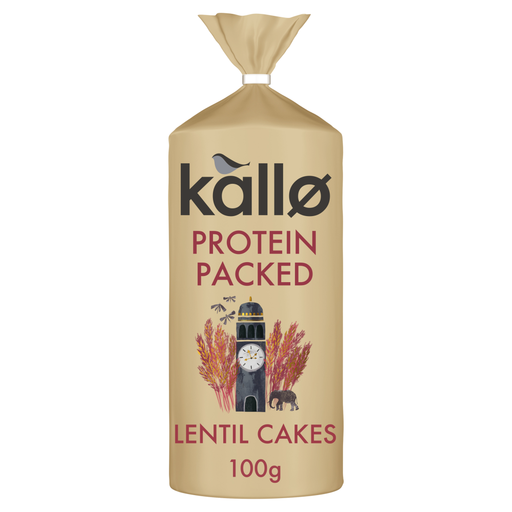
Kallo Protein Packed Lentil Cakes 100g
A lentil-based cake for shoppers who want the cake itself to contribute protein. It is not a conventional rice cake; check this exact pack’s protein per serving, ingredients and allergen statements rather than using figures for a differently named Kallo product.
View on Joybuy
Questions about post-gym rice cakes
Do ordinary rice cakes provide much protein on their own?
The plain examples here provide small amounts per cake: Kallo lists 0.6g for Lightly Salted Wholegrain Rice Cakes, and Tesco lists 0.7g for Lightly Salted Rice Cakes. If protein is the point of your post-gym snack, choose another food to provide it alongside plain cakes.
How does a protein lentil cake differ from a high-protein rice cake?
The main ingredient differs. Tesco lists lentil flour as the main ingredient in Kallo Protein Lentil Cakes, with 26.0g protein per 100g and 1.8g per cake. Marks & Spencer’s Barbecue High Protein Rice Cakes contain wholegrain rice and buckwheat alongside pea protein and lentil flour, and list 24.8g protein per 100g. Compare the serving amounts as well as the ingredients.
Is a vegan or gluten-free label enough to check for allergens?
No. Read the ingredients and any may-contain statement on the exact current pack. Tesco lists Kallo Protein Lentil Cakes as vegan and gluten free but says they may contain sesame seed and soya; the Food Standards Agency explains that precautionary wording signals possible unintended allergen presence.


