Snackers looking for protein in the cake
If the cake itself needs to contribute protein during an afternoon break, compare the declared amount per serving as well as any protein claim on the pack.


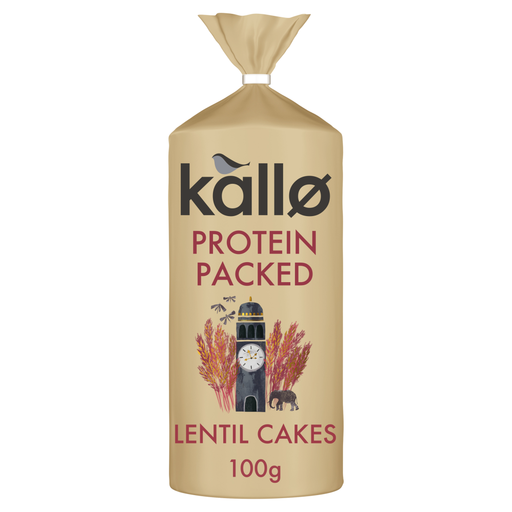
If you want protein from the cake itself, check the amount per serving: M&S Barbecue High Protein Rice Cakes are a rice-cake option, while Kallo Protein Packed Lentil Cakes offer a lentil-based alternative. Plain rice cakes suit an afternoon snack assembled with a separate topping, but compare the complete nutrition panel and allergen statements rather than choosing by the product name alone.
If the cake itself needs to contribute protein during an afternoon break, compare the declared amount per serving as well as any protein claim on the pack.
A plain wholegrain rice cake can be the base of a snack with a separately chosen topping. Tesco and Kallo’s published figures show why the plain cake’s own protein content should be checked rather than assumed.
If you need a particular dietary label or avoid an allergen, check the exact product and current pack. A gluten-free label does not address every other ingredient or precautionary allergen statement.
Start with the protein in the portion you expect to eat, then compare the rest of the nutrition panel and the ingredient list.
| Priority | What to check | Your needs |
|---|---|---|
| Protein in the snack | Compare protein per serving and per 100g. For a UK high-protein claim, legislation.gov.uk states that protein must provide at least 20% of the food’s energy. | I want the cake itself to contribute protein, rather than relying on a topping. M&S lists 24.8g per 100g for its Barbecue High Protein Rice Cakes; Tesco lists 0.6g per cake for its Lightly Salted Rice Cakes. |
| Cake and topping | Check the plain cake’s protein, then consider the ingredients and portion of any topping separately. Kallo lists 8.5g protein per 100g for its Organic Lightly Salted Rice Cakes. | A plain rice base suits me if I want to choose the topping myself. The finished snack will depend on what I add. |
| Whole nutrition panel | Compare fat, saturates and salt on the same per-100g basis, then check the portion you intend to eat. Traffic-light labels, where present, offer another way to read the pack. | Protein matters to me, but I also want to see the other figures. M&S lists 16.2g fat per 100g for its Barbecue High Protein Rice Cakes; Snack a Jacks lists 0.63g salt per 23g Salt & Vinegar multipack. |
| Ingredients and allergens | Read the ingredient list, dietary labels and precautionary allergen statements on the current pack. Check a lentil-based cake’s ingredients if you specifically want a rice cake. | I need to know whether the exact product fits my dietary requirements. Sainsbury’s listing for Kallo Protein Packed Lentil Cakes says they may contain sesame and soya; Tesco lists possible sesame, soya and milk for its Lightly Salted Rice Cakes. |
Protein varies by product: Tesco lists 8.8g per 100g for its Lightly Salted Rice Cakes, compared with M&S’s 24.8g per 100g for Barbecue High Protein Rice Cakes.
Check protein per cake or serving as well as per 100g. Under the UK rule published by legislation.gov.uk, a high-protein claim requires at least 20% of the food’s energy to come from protein.
Other figures can change the comparison: M&S lists 16.2g fat per 100g for its Barbecue High Protein Rice Cakes, while Snack a Jacks lists 0.63g salt per 23g Salt & Vinegar multipack.
Read fat, saturates and salt alongside protein, and compare the portion you plan to eat.
A gluten-free description does not cover other allergens. Sainsbury’s lists possible sesame and soya for Kallo Protein Packed Lentil Cakes; Tesco lists possible sesame, soya and milk for its Lightly Salted Rice Cakes.
Check the current pack’s ingredients and precautionary statements for the specific allergens you need to avoid.
M&S Barbecue High Protein Rice Cakes are a rice-based option made with wholegrain rice, buckwheat, pea protein and lentil flour.
Kallo’s range includes plain wholegrain rice cakes and Protein Packed Lentil Cakes, which are a different type of cake.
Tesco Lightly Salted Rice Cakes are a plain rice-cake option for a snack assembled with a separate topping.
Its Salt & Vinegar multipack is a flavoured, portioned rice-and-corn snack to assess by its own label, not by a general assumption about rice cakes.
Sainsbury’s rice-and-corn-cake range includes own-label rice cakes and Kallo Protein Packed Lentil Cakes.
This lentil-cake option is for an afternoon break when a rice-cake-like snack is acceptable; it is not a plain rice cake.
 No image available
A lentil-cake alternative for an afternoon snack when an all-rice cake is not essential. Check the current pack’s protein per serving, ingredients and precautionary allergen statements before choosing.
Do not assume so from the category name. Tesco lists 0.6g protein per Lightly Salted Rice Cake, while Kallo lists 8.5g per 100g for its Organic Lightly Salted Rice Cakes. Check the particular product: legislation.gov.uk states that a UK high-protein claim requires protein to provide at least 20% of its energy.
Check the ingredient base as well as the protein figure. M&S Barbecue High Protein Rice Cakes contain wholegrain rice alongside buckwheat, pea protein and lentil flour. Kallo Protein Packed Lentil Cakes are a lentil-based alternative, not a conventional all-rice cake.
Yes. A topping lets you build the snack separately rather than relying on the plain cake for its protein. The NHS includes rice cakes with lower-fat cream cheese and cucumber among its snack ideas; check the combined ingredients, nutrition and allergens for the version you make.
No. Gluten-free status does not address every other allergen. Sainsbury’s lists possible sesame and soya for Kallo Protein Packed Lentil Cakes, and Tesco lists possible sesame, soya and milk for its Lightly Salted Rice Cakes. Read the current physical pack if you need to avoid any of them.
Yes. Use the online figures to compare options, then read the pack you are buying for its current ingredients, nutrition and allergen statements, particularly if you are choosing between plain rice cakes and a flavoured or lentil-based product.