Late-night snackers comparing protein
If you want a small cupboard-ready snack, compare protein per cake as well as per 100g. A light plain rice cake and a protein-labelled cake may contribute quite different amounts.


For a small late snack where protein is the priority, compare explicitly high-protein cakes rather than choosing by calories alone. Kallo UK declares 26.0g protein per 100g for its Protein Packed Lentil Cakes, while M&S lists 24.8g per 100g for its Barbecue High Protein Rice Cakes; the Kallo product is a lentil cake, not a conventional rice cake. Check the portion you plan to eat, along with fat, salt and allergen information on the current pack.
If you want a small cupboard-ready snack, compare protein per cake as well as per 100g. A light plain rice cake and a protein-labelled cake may contribute quite different amounts.
Check the dietary statement for the exact product and read its allergen warning separately. A vegan-friendly recipe does not remove a may-contain warning.
A calorie figure does not tell you how much protein a cake contains. For flavoured and coated options, compare sugars, saturated fat and salt for the portion you intend to eat.
Start with protein per 100g to compare products, then use the per-cake figures and your planned portion to assess the snack itself.
| Priority | What to check | Your needs |
|---|---|---|
| Protein | Compare protein per 100g on the same basis, then check the amount per cake. Kallo UK lists 26.0g per 100g for its Protein Packed Lentil Cakes; Tesco lists 8.5g per 100g and 0.6g per cake for Kallo's lightly salted wholegrain rice cakes. | I want the cake itself to contribute protein, rather than relying on a topping to do so. |
| Portion | Check the per-cake information and how many cakes you plan to eat. Kallo UK lists 29 calories per Protein Packed Lentil Cake; Tesco lists 27 kcal per Kallo lightly salted wholegrain rice cake. | For a late snack, I would rather compare the portion I might actually eat than judge two products by their per-cake calorie figures alone. |
| Flavouring | Read sugars, saturated fat, fat and salt alongside protein. M&S lists 16.2g fat per 100g for its Barbecue High Protein Rice Cakes; Asda lists 5.3g sugars and 2.7g saturated fat per yoghurt rice cake. | I might choose a flavoured or coated cake, but I want to know what else comes with that flavour. |
| Dietary labels | Check the exact product's vegan or gluten-free statement and its current allergen panel. Kallo's Protein Packed Lentil Cakes carry a may-contain warning for milk, sesame seed and soya. | If I avoid particular ingredients or allergens, a broad description such as plant-based is not enough for my decision. |
Tesco lists 27 kcal but only 0.6g protein per Kallo lightly salted wholegrain rice cake. The two figures describe different parts of its nutrition.
Compare protein per 100g and for the serving you plan to eat before deciding whether a plain cake meets your aim.
Flavoured products can have quite different nutrition profiles. Asda lists 5.3g sugars and 2.7g saturated fat per yoghurt rice cake, while M&S lists 16.2g fat per 100g for its Barbecue High Protein Rice Cakes.
Read the sugars, saturated fat, fat and salt figures alongside protein, using the same per-100g basis where possible.
Kallo UK declares 26.0g protein per 100g for its Protein Packed Lentil Cakes, whereas Tesco lists 8.5g per 100g for Kallo lightly salted wholegrain rice cakes.
Choose by the exact product name and current nutrition panel, not the brand or the general rice-cake category.
Kallo's Protein Packed Lentil Cakes are described as vegan-friendly, but carry a may-contain warning for milk, sesame seed and soya.
Read the allergen statement on the pack you buy, particularly if cross-contact matters to you.
These examples show why the exact product matters: a brand or retailer can list both protein-labelled and ordinary rice cakes.
Kallo lists lentil cakes as well as conventional wholegrain rice cakes.
Its listed barbecue protein cakes and lightly salted rice cakes serve different shopping needs.
Tesco's Kallo lightly salted wholegrain rice-cake listing provides a plain-cake comparison.
Snack a Jacks presents calorie information prominently for its snack products.
Asda's yoghurt rice cakes illustrate the need to read beyond a coated cake's portion size.
This option is a lentil cake for shoppers considering a protein-labelled alternative to plain rice cakes.
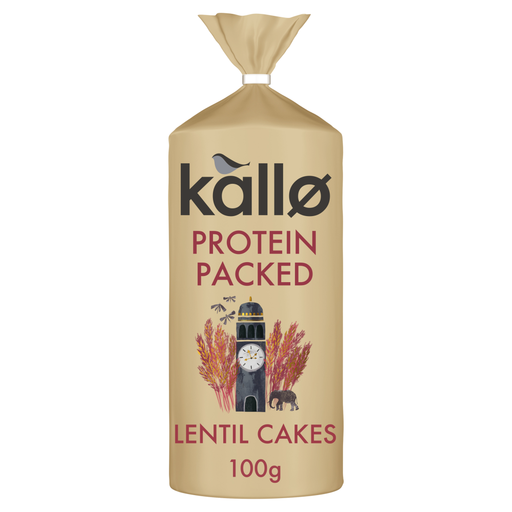 No image available
A lentil-cake option if protein content matters more to you than a conventional rice-cake base. Kallo UK publishes 26.0g protein per 100g for its Protein Packed Lentil Cakes; check the current pack's figure before relying on it for this item, and read any milk, sesame or soya warning.
Do not assume so from the category name. Tesco lists 8.5g protein per 100g and 0.6g per cake for Kallo lightly salted wholegrain rice cakes, while M&S lists 9.6g per 100g for its lightly salted rice cakes. If you want protein from the whole snack, also account for anything you add or eat alongside them.
Among these specific listings, Kallo UK declares 26.0g per 100g for Protein Packed Lentil Cakes, M&S lists 24.8g for Barbecue High Protein Rice Cakes, and Sainsbury's lists 24g for Kallo Sweet Chilli Lentil & Pea Veggie Cakes. The figures compare declared protein per 100g, not protein in the portion you will eat.
No. Compare the number of cakes you plan to eat and read the fat, sugars and salt information as well as protein. Flavouring and coatings can change those figures substantially between products.
Not necessarily. Kallo's Protein Packed Lentil Cakes are described as vegan-friendly but carry a may-contain warning for milk, sesame seed and soya. Check the current pack's allergen statement separately from its dietary label.