Students looking for an explicit protein claim
If a crunchy snack needs to be labelled high protein, check the product claim and nutrition panel rather than judging it by its rice-cake shape or wholegrain wording.


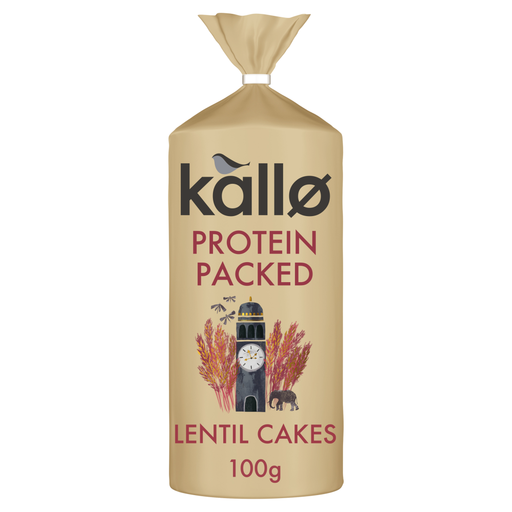
If you want a rice cake explicitly labelled high protein, M&S Barbecue High Protein Rice Cakes fit that description; M&S lists wholegrain rice, buckwheat, pea protein and lentil flour among their ingredients. If a lentil-based cake is acceptable and you want a stated protein figure, Kallo’s shop lists 26.0g per 100g for Protein Packed Lentil Cakes, though the current pack is the place to check ingredients and allergens. Plain rice cakes offer another route if you plan to add a protein-containing topping, rather than relying on the cake itself for a high-protein claim.
If a crunchy snack needs to be labelled high protein, check the product claim and nutrition panel rather than judging it by its rice-cake shape or wholegrain wording.
If the rice base matters to you, distinguish a rice cake made with protein-containing ingredients from a lentil cake sold alongside rice cakes.
Gluten-free or vegan wording may be relevant, but the current ingredients and precautionary allergen statement still matter for individual requirements.
Decide whether the rice-cake format is essential, then compare the nutrition and allergen information for the products you would actually eat.
Choose this when: You want a rice cake with an explicit high-protein claim, such as M&S Barbecue High Protein Rice Cakes.
Keep in mind: Check its current nutrition panel if the protein amount per 100g will determine your choice.
Choose this when: A lentil-based alternative suits you and a stated protein amount matters; Kallo’s shop lists 26.0g per 100g for Protein Packed Lentil Cakes.
Keep in mind: It is not a conventional rice cake, and the current pack’s ingredients and allergen wording need checking.
Choose this when: You want a simple rice-cake base and plan to add a protein-containing food.
Keep in mind: Assess the cake and topping together rather than assuming a plain rice cake has a high-protein claim.
| Priority | What to check | Your needs |
|---|---|---|
| Protein information | Look for the claim on the pack; compare protein per 100g and for the portion you plan to eat. | I want to know how much protein my chosen portion contains, not rely on a wholegrain or light-snack description. |
| Product type | Read the product name and ingredients to distinguish a rice cake, a lentil cake and a plain cake used as a topping base. | The familiar rice-cake format may matter more to me than choosing a lentil-based alternative. |
| Other nutrition values | Compare salt, sugars, fat and saturates on the same per-100g basis; check the values for your serving too. The NHS recommends using nutrition labels to compare foods. | If I am choosing between flavoured snacks, I want to see more than the front-of-pack protein wording. |
| Ingredients and allergens | Read the current pack’s ingredients and precautionary statements, as well as any gluten-free or vegan wording. Kallo’s pages give different precautionary wording for its Protein Packed Lentil Cakes. | For an allergy or a strict dietary requirement, I need the label for the pack I am buying. |
Wholegrain, gluten-free and high-protein descriptions refer to different characteristics. Kallo describes its plain lightly salted rice cakes as predominantly wholegrain brown rice, while its protein-focused product is lentil-based.
Check for an explicit protein claim and read the nutrition panel. If you choose plain cakes, consider the topping or accompanying food separately.
A protein claim does not tell you the product’s salt, sugars, fat or saturates, or how much is in the portion you will eat.
Use the nutrition panel to compare products on the same basis, then check your intended serving.
Kallo describes its Protein Packed Lentil Cakes as gluten free and vegan, while its product pages also give precautionary statements concerning sesame and soya; its shop page additionally mentions milk.
If an allergen or strict dietary requirement affects your choice, read the current pack rather than relying on a category label.
M&S describes a rice cake made with added pea protein and lentil flour; Kallo’s protein-focused cake is described as lentil-based. A stated protein figure for one does not establish how their protein amounts compare.
Decide which type you would buy, then compare current nutrition panels using the same units.
Its Barbecue High Protein Rice Cakes are relevant if you want a product described as a rice cake with a high-protein claim.
Its range provides a distinction between Protein Packed Lentil Cakes and plain wholegrain rice cakes.
Tesco lists Kallo Protein Lentil Cakes as well as its own lightly salted rice cakes.
Its rice-and-corn-cakes category includes Kallo Protein Packed Lentil Cakes alongside plain own-brand rice cakes.
Its flavoured multipacks are relevant to label comparison, rather than to a high-protein selection.
This Joybuy option represents the lentil-cake route for shoppers who are open to an alternative to a conventional rice cake.
 No image available
Consider these if a protein-positioned lentil cake suits your revision snack choice better than a conventional rice cake. Kallo describes the product as gluten free and vegan; check the current pack for ingredients and precautionary allergen information, particularly if milk, sesame or soya matters to you.
No. Kallo describes its Protein Packed Lentil Cakes as lentil-based, while M&S describes its Barbecue High Protein Rice Cakes as containing wholegrain rice alongside buckwheat, pea protein and lentil flour. Check which product type you want before comparing their labels.
Use per 100g to compare products on the same weight basis, then check the amount in the portion you intend to eat. Kallo’s shop lists 26.0g protein per 100g for Protein Packed Lentil Cakes; use the current pack when working out a serving amount.
No; read the current product pack’s ingredients and precautionary allergen statement. Kallo describes its Protein Packed Lentil Cakes as gluten free and vegan, but its pages also give precautionary wording concerning sesame and soya, with milk mentioned on its shop page.
A high-protein claim does not describe the snack’s salt or sugars. The NHS recommends using nutrition labels to compare foods, so check these values alongside protein, particularly when comparing flavoured products.