
24/7 Customer Support

Free returns

Same-day & Next-day Delivery

Quality Guaranteed

Unlock Your Welcome Offers: FREE Delivery | Up to 80% OFF | Free 30-day JoyPlus trial
Download the APP
Building a home gym does not require a spare room or a large budget. The right combination of home fitness equipment can support strength training, yoga, Pilates, cardio and everyday activity tracking in a flat, house or shared accommodation.
However, product pages often focus on colour, motivational language and broad fitness promises rather than the details that affect daily use. Before buying dumbbells, resistance bands, a yoga mat or a fitness tracker, check how the product will fit your space, routine and experience level.
Bright colours and compact designs can make fitness products look appealing, but they do not tell you whether the item is suitable for your routine. A pair of 2.5kg dumbbells may be useful for lighter strength work, while someone progressing with presses, rows or squats may need heavier options or several weight levels.
Similarly, a thin exercise mat may be easy to store but offer limited cushioning on hard flooring. Always check dimensions, weight, thickness and materials before considering appearance.
Grip depends on both the product and the floor or clothing it contacts. A textured yoga mat may provide useful traction, but dust, moisture and smooth flooring can still affect stability. Fabric hip bands may resist rolling more effectively than narrow elastic loops, but they should still be checked before each session.
For resistance bands, inspect the material for cracks, stretching damage or worn edges. Do not use a band that shows visible deterioration.
Fitness trackers, smart rings and heart rate monitors can record useful activity data, but consumer wearables are not substitutes for medical devices or professional advice. Check the compatible phone operating system, app requirements, charging method and fit.
A sleep monitor may help you observe patterns over time, while a fitness watch with step, exercise, heart rate or blood oxygen features may suit users who want several activity readings in one device. Treat readings as general wellness information rather than a diagnosis.
For dumbbells, consider whether you need a single pair or multiple increments. Lighter neoprene dumbbells can work well for beginners, mobility exercises, higher-repetition arm movements and cardio routines. A set containing 1kg, 1.5kg and 2kg pairs offers more flexibility for gradual progression.
Heavier 5kg dumbbells may be more appropriate for users already familiar with resistance training. Hexagonal ends are also practical because they help prevent weights from rolling between sets.
Neoprene-coated hand weights generally provide a softer, more comfortable surface than bare metal, while ergonomic handles can improve control. Look for the stated core material and coating rather than relying only on phrases such as “premium” or “professional”.
For bands, natural rubber latex and cotton fabric feel different in use. Latex resistance bands are typically long and versatile for rows, presses, assisted movements and stretching. Fabric hip bands are designed mainly for lower-body movements such as squats, side steps and glute-focused exercises. Anyone with a latex sensitivity should check the material carefully.
A yoga mat around 3mm thick is relatively slim and easier to roll away, making it suitable for yoga, Pilates, balance and floor exercises where closer contact with the floor is preferred. A 1.2cm NBR exercise mat offers more cushioning for kneeling, core work and general gym movements, although it takes up more storage space.
Measure your available floor area and storage location. A mat that cannot be laid flat or stored safely is less likely to become part of a regular routine.
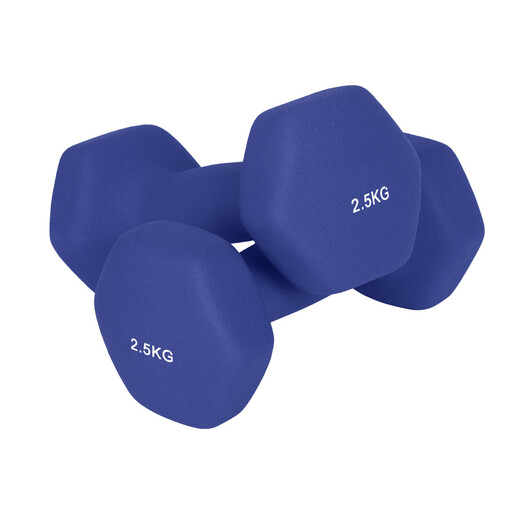
Why This Fits Their Persona: A straightforward pair for adults starting home strength training, arm exercises or light cardio routines without taking up a large footprint in a UK living area.
The listing states the 2 x 2.5kg weight, neoprene coating and hexagonal design, making the selection more transparent than buying by appearance alone.
Neoprene-coated handles; hexagonal ends help keep the dumbbells stationary between exercises.
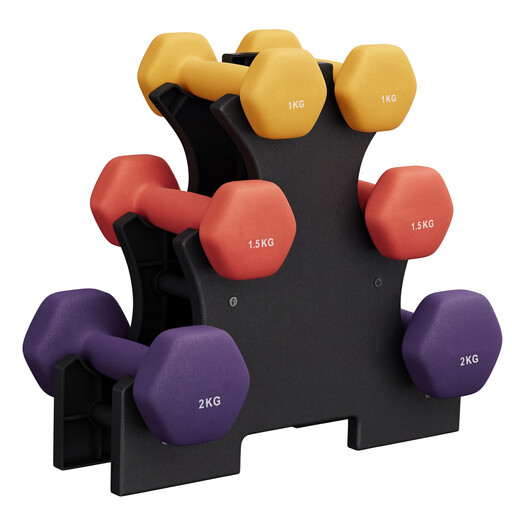
Why This Fits Their Persona: Suitable for households wanting several lighter weights and a dedicated storage solution for a tidier workout area.
It specifies three pairs—1kg, 1.5kg and 2kg—rather than presenting one general weight range, and includes a PP plastic stand.
Six dumbbells across three weights; compact stand supports organised storage.
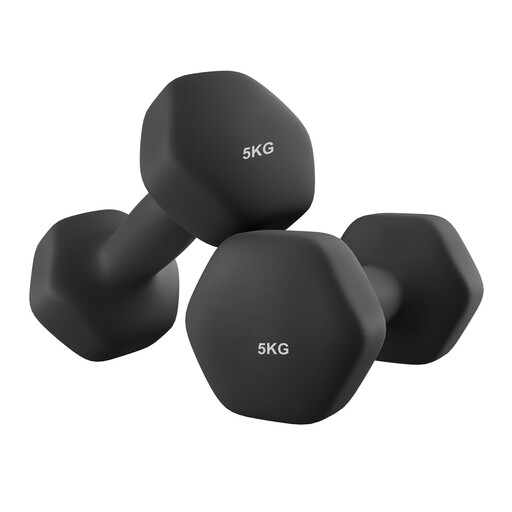
Why This Fits Their Persona: A practical match for experienced users who need a heavier fixed pair for rows, presses, squats and other strength-focused movements.
The product information clearly states the 2 x 5kg net weight, cast iron construction and 3% possible weight discrepancy.
5kg per dumbbell; neoprene coating and non-rolling hexagonal ends.
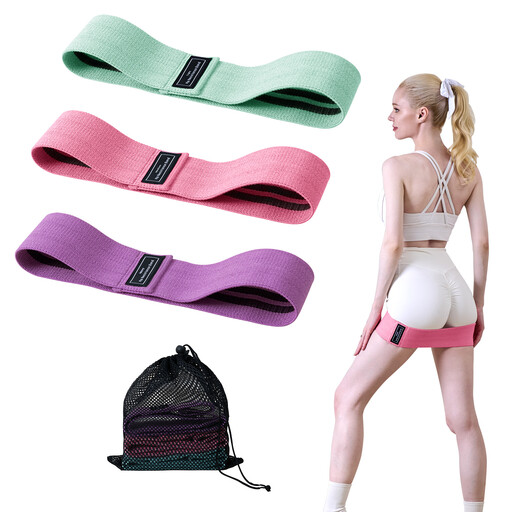
Why This Fits Their Persona: Useful for adults focusing on hip, leg and glute exercises, Pilates, yoga or portable workouts at home.
The set identifies light, medium and heavy resistance levels and uses a fabric construction designed to reduce slipping and rolling.
Three resistance levels; storage bag included for transport and organisation.
We have compiled a complete, real-time list of products that fully satisfy these strict selection criteria and UK safety regulations.
A small collection of home workout accessories can make a routine easier to maintain:
Check app compatibility and charging requirements before purchasing wearable technology. For rings, measure your finger carefully and select the correct size; an uncertain fit can affect comfort and increase the risk of losing the device during activity.
Start with equipment that supports the exercises you are most likely to repeat. A moderate pair of dumbbells, a resistance band and a suitable exercise mat can cover many basic movements without a large upfront cost. Add heavier strength training equipment only when your current loads no longer provide an appropriate challenge.
Lifespan depends on frequency of use, storage and maintenance. Keep dumbbells dry, store bands away from direct sunlight and inspect elastic materials before use. Mats should be cleaned according to their material instructions and checked for tears, punctures or loss of surface grip.
Most basic equipment, including dumbbells, hip bands, Pilates equipment and mats, uses no electricity. Wearables require occasional charging, so their running cost is generally linked to electricity use and replacement parts rather than daily operation. Fitness equipment that needs mains power should be checked for UK plug compatibility and the manufacturer’s usage instructions.