
24/7 Customer Support

Free returns

Same-day & Next-day Delivery

Quality Guaranteed

Unlock Your Welcome Offers: FREE Delivery | Up to 80% OFF | Free 30-day JoyPlus trial
Download the APP
As a Joybuy Product Recommendation Officer, my role is to help you navigate the crowded market of home office furniture. With more of us working and studying from home, finding the right desk has become essential. However, it's easy to fall for marketing photos that promise style and function, only to end up with a piece of furniture that causes daily frustration.
Many shoppers find themselves disappointed by three common pitfalls:
This guide will help you sidestep these issues by focusing on the core features that truly matter, ensuring your next home office desk is a lasting and practical investment.
Before you add any desk to your basket, it's crucial to look past the polished images and analyse a few key specifications. These are the non-negotiable elements that determine a desk's stability, longevity and suitability for your space.
The foundation of any sturdy desk is its frame. A wobbly desk is often the result of thin metal or an unsupported design.
industrial writing desk style, look for powder-coated steel frames. Pay attention to the dimensions of the steel tubes. Legs with a thickness of 5 cm x 5 cm, for example, provide substantially more stability than thinner alternatives.small desk might support around 50 kg, which is adequate for a laptop and a few books. However, a larger computer desk for home intended for multiple monitors and equipment should have a capacity well over 100 kg.The desktop is your primary workspace, so its dimensions and material are critical.
study table.Even the strongest frame can feel unstable on an uneven floor, a common issue in many UK homes. The single most important feature to counteract this is adjustable leg pads. These small, screw-in feet allow you to level the desk perfectly, eliminating wobbles and protecting your flooring from scratches.
To help you find a desk that aligns with your needs, we've matched a few options to common user profiles.
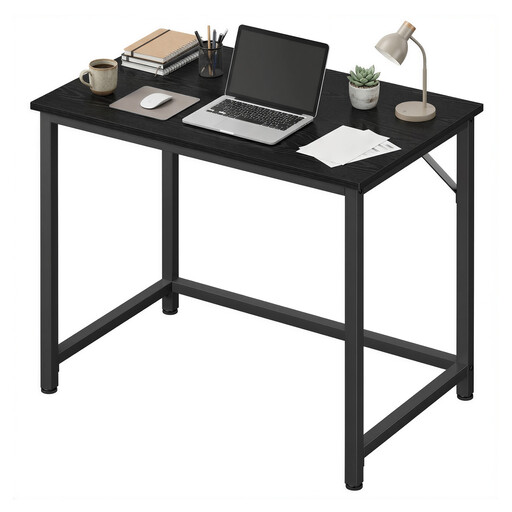
Why This Fits Their Persona: Ideal for students or professionals in smaller flats or bedrooms. Its 80 x 50 cm footprint provides a dedicated workspace without consuming the entire room, making it a perfect small desk for essential tasks.
This desk counters the "assembly nightmare" with clearly marked parts and straightforward instructions, allowing for a quick and hassle-free setup.
Includes adjustable feet to ensure stability on uneven floors, directly addressing the wobble factor common in compact spaces.
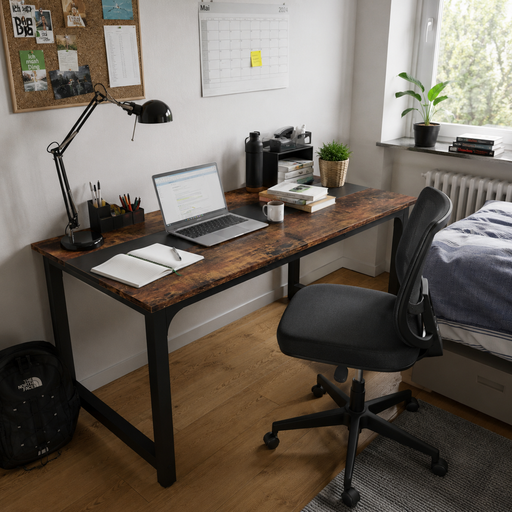
Why This Fits Their Persona: For the serious remote worker or gamer with a multi-monitor setup and other peripherals. The expansive 160 x 80 cm surface provides ample room for a complete, uncluttered workstation.
It directly tackles the "wobble factor" with a heavy-duty powder-coated steel frame, additional steel supports and a triangular connection design, giving it an impressive load capacity of up to 400 kg.
The combination of a huge surface area and exceptional stability makes it a reliable foundation for heavy and expensive equipment.
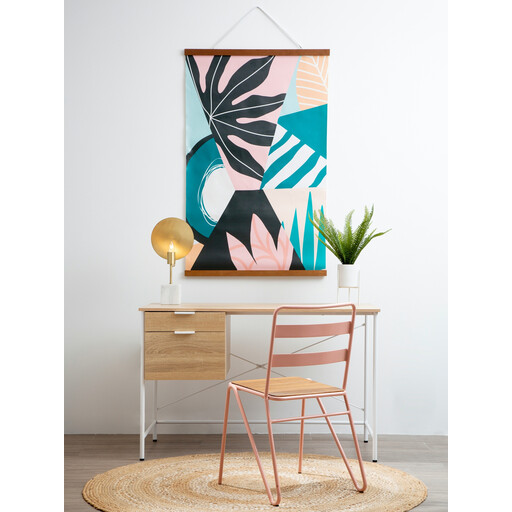
Why This Fits Their Persona: For those who need a modern office desk that combines aesthetics with practicality. The oak-effect finish and white drawers offer a clean, contemporary look that integrates well into a living space, not just a dedicated office.
This desk avoids the trap of being just a flat surface by providing integrated storage. The two drawers offer a convenient solution for keeping stationery and clutter out of sight.
The 120 cm wide top provides ample workspace, while the robust metal frame with a rear crossbar ensures stability for daily work.
We have compiled a complete, real-time list of products that fully satisfy these strict selection criteria and UK safety regulations.
For a simple laptop and notebook setup, a desk with a maximum load capacity of 50 kg is sufficient. However, if you plan to use multiple monitors, a desktop computer tower and other heavy equipment, look for a desk rated for at least 100 kg to ensure long-term stability and safety. Heavy-duty models can support 200 kg or more.
To comfortably fit two 24-inch monitors side-by-side and still have space for a keyboard, mouse and writing area, a desk width of at least 120 cm is recommended. For larger monitors or for more breathing room, a width of 140 cm or 160 cm is even better. A depth of at least 60 cm will also help you maintain a comfortable viewing distance from your screens.
High-quality particleboard is a common and reliable material for home office furniture. Its durability depends on the density of the board and the quality of the laminate finish. Look for desks with a thick, scratch-resistant and water-resistant laminate. When properly cared for—by avoiding excessive moisture and using coasters—a particleboard desk can last for many years of regular use.