Households making cards and occasional A3 prints
Match your card’s weight and finish to the printer’s supported media and specified feed path. Check A3 printing and scanning separately if you also need to digitise large originals.


For card, colour and occasional larger prints, start with an inkjet all-in-one, but check the exact card weight, feed path and scan size before choosing a model. Refillable ink tanks are worth considering when colour printing is regular; an A4 laser multifunction printer is more relevant to frequent documents, while a separate scanner makes sense when batches of paperwork are the main task. A3 printing alone does not establish A3 scanning.
The right format depends on whether card, larger sheets or batches of documents drive most of your work.
Match your card’s weight and finish to the printer’s supported media and specified feed path. Check A3 printing and scanning separately if you also need to digitise large originals.
A refillable ink-tank model may reduce how often you replace ink, but compare its scan size with your originals and account for the cleaning procedures an inkjet may need when print quality deteriorates.
If stacks of double-sided pages matter more than card or A3 output, look closely at automatic document feeder (ADF) capacity and duplex scanning. A dedicated document scanner is another route if you have room for a second device.
Settle the size and type of your print and scan jobs first. Then compare media instructions, scanning workflow and the way each printer uses supplies.
| Priority | What to check | Your needs |
|---|---|---|
| Card and sheet handling | Check the maximum supported media weight in g/m², permitted card finishes and required tray or rear-feed path. Confirm the maximum print size separately. | I want to print on my actual card stock, not just a printer described as suitable for photos or A3 paper. If I make larger pieces, the sheet size matters too. |
| Scan size and batches | Check flatbed and ADF scan sizes independently of print size. For stacks of A4 paperwork, compare ADF capacity, duplex capture and the scan destinations you need. | An A3 original must fit the scanner if I need to capture it in one pass. For multi-page records, feeding and scanning both sides may matter more than A3 printing. |
| Ink and toner use | Compare replacement formats and stated page-yield conditions against your expected black-and-white and colour volume. For an inkjet, read its print-quality cleaning instructions. | If I print colour regularly, I want to know how often supplies may need replacing. With only occasional jobs, I also care about the maintenance involved between uses. |
| Programmes and workflow | Check any optional subscription’s trial and cancellation terms. For an HP+ model, check the account, Internet and Original HP Ink conditions before activation. | I want to understand any continuing supply commitment before joining a printer programme, rather than discovering it after setting up the device. |
Epson describes the EcoTank ET-15000 as offering A3+ output from a rear feed but A4 scanning. By contrast, Brother specifies A3 scanning for the MFC-J6959DW. A3 on the printer label therefore does not settle what size original you can scan.
Read the maximum print size, flatbed scan area and ADF scan size as separate specifications for the exact model.
Card weight and feed instructions vary by model. Brother specifies 64–220 g/m² media for the MFC-J6959DW’s standard and multipurpose trays, but that range alone does not establish compatibility with every card finish.
Compare your stock’s g/m² and finish with the model manual, then use the feed path it specifies.
Card outside the documented handling conditions may be wasted on unsuccessful prints or feed poorly.
A large ink supply is most useful when you expect to use it. Toner and ink yields also need their stated measurement conditions, while Epson’s support instructions note that Power Cleaning uses more ink when that procedure is needed.
Estimate your document and colour-printing frequency, and compare the relevant supply and maintenance instructions before choosing tanks, cartridges or toner.
HP states that an activated HP+ printer requires an HP account, an Internet connection and Original HP Ink for the printer’s lifetime. Those are HP+ conditions, not a rule for every home printer.
Check whether the particular HP model and setup use HP+, and decide whether its conditions suit you before activation.
These references help identify specifications and programme terms to examine; a brand name alone cannot confirm that a particular model handles your card or scan size.
Epson’s EcoTank range includes refillable-ink printers, while its WorkForce range includes separate document scanners.
Brother has both A3 inkjet multifunction models and A4 document-focused multifunction devices.
Canon describes the PIXMA TS9550a as an A3 all-in-one with two-way paper feeding and a 20-sheet ADF.
HP’s HP+ setup and optional Instant Ink service are relevant when considering how a particular eligible printer will use ink.
These inkjet, ink-tank and colour laser models offer different starting points for home documents, card and scanning. Check each exact model’s media and scanner documentation against your jobs before choosing.
 No image available
Consider this model if you want to handle printing and scanning in one setup. For your card and originals, confirm the supported media weight, required feed path and maximum scan size in its model documentation.
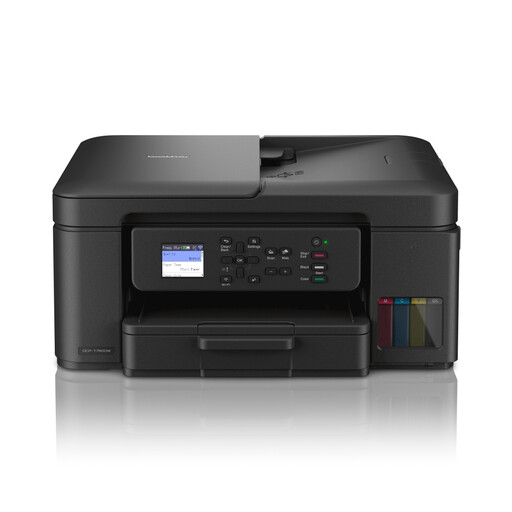 No image available
The refillable-ink format is relevant if colour documents are a regular job. Before using card, match its weight and finish to the model’s feed instructions; check the maximum paper size separately if you need A3.
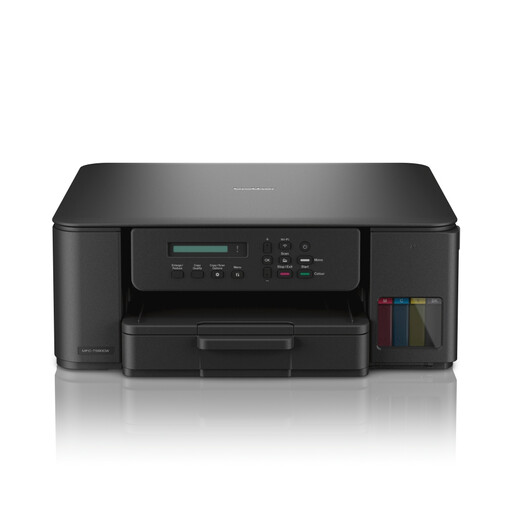 No image available
This refillable-ink model is another option for colour documents. If multi-page scanning matters, confirm the scanner and ADF workflow for the exact model; check its card-feed instructions and maximum paper size for larger craft work.
 No image available
An all-in-one inkjet keeps document printing and scanning in a single device. If you need larger originals or craft card, confirm maximum scan size, supported card weight and feed path for this model before deciding.
 No image available
A colour laser route is worth considering when documents take priority over larger craft prints. Check this model’s scanner workflow and documented card weight, finish and feed path against your needs rather than assuming laser printing covers every type of stock.
Not necessarily: print size and scan size are separate specifications. Epson describes A3+ rear-feed printing but A4 scanning for the EcoTank ET-15000, whereas Brother specifies A3 scanning for the MFC-J6959DW. Check both the flatbed and ADF limits if you have A3 originals.
Match your card’s weight in g/m², finish and size to the exact model’s media instructions, including the required tray or feed path. Brother specifies a 64–220 g/m² range for the MFC-J6959DW’s standard and multipurpose trays, but that model-specific range does not guarantee every card finish will feed correctly.
It depends on whether you will use the larger ink supply often enough to value fewer replacements. Also consider maintenance: Epson’s guidance describes nozzle checks and cleaning for print-quality faults and says its deeper Power Cleaning procedure uses more ink. Compare those requirements with your likely printing pattern.
There is no single answer across models and setup programmes. HP says an activated HP+ printer requires Original HP Ink for its lifetime; HP also describes cartridge security measures on its standard printers. Check the precise printer and programme conditions before choosing supplies rather than applying one brand’s rule to another.
No. HP says HP+ is not itself an Instant Ink subscription and participation in Instant Ink is optional. If you choose a trial, check when it ends and how to cancel the service; the separate HP+ account, Internet and Original HP Ink conditions still matter for an activated HP+ printer.