Regular script-pack coordinator
If you repeatedly print full packs, automatic duplexing, refillable ink and a paper tray suited to each batch can limit interruptions. Photo-printing features may be less relevant to a mainly text-based workload.


For regular batches of text-heavy rehearsal scripts, start with a refillable ink-tank printer that prints automatically on both sides of the page. A larger paper tray and faster rated mono printing matter more when one organiser produces sizeable packs at short notice; an automatic document feeder matters chiefly if the group also scans or copies paper originals. If the printer will sit unused between productions, account for inkjet maintenance before choosing one.
If you repeatedly print full packs, automatic duplexing, refillable ink and a paper tray suited to each batch can limit interruptions. Photo-printing features may be less relevant to a mainly text-based workload.
If revised scenes must reach a cast or crew quickly, compare rated mono speed and paper capacity alongside the connection the person sending the files will use. Published speeds are a starting point, not a promise for every script layout.
A smaller all-in-one may suit limited storage and occasional copying or scanning. Brother UK advises that infrequent inkjet use can let ink dry in printhead nozzles, so someone should be able to follow the chosen model’s maintenance guidance.
Match the printer to the size and frequency of your script runs before deciding whether scanning features or a larger paper supply deserve space in the group’s setup.
| Concern | What to check | Who this matters to |
|---|---|---|
| Interruptions during regular batches | Check the black-ink refill system and automatic duplex printing for the exact model. | When I print full packs repeatedly, I want to spend less time changing ink or turning pages by hand. Around 36% of consumers put uninterrupted batch printing first. |
| Deadline turnaround | Compare rated mono speed and paper-tray capacity; a speed rating does not guarantee the pace of every script job. | If revised pages are needed shortly before rehearsal, waiting for a long print run is my main concern. For around 29% of consumers, turnaround is the primary need. |
| Shared document work | Check device and network compatibility, and whether an automatic document feeder is useful for recurring scan or copy jobs. | I need to handle marked-up paper scripts as well as print files sent by other organisers. Around 21% of consumers prioritise that shared print, scan and copy workflow. |
| Storage and occasional use | Confirm the dimensions and follow the model’s guidance for use and printhead maintenance. | Our group prints infrequently, so I need somewhere to keep the printer and someone who can look after it between productions. This is the main concern for around 14% of consumers. |
Regular script packs can mean repeated ink changes or pauses to refill a small tray, even when the printer can produce the pages you need.
Compare the exact model’s ink system, the basis of its stated page yield, automatic duplexing and tray capacity against a typical production’s workload.
An automatic document feeder handles paper originals for scanning or copying; it does not hold the blank paper for a script print run.
Prioritise one if volunteers regularly scan or copy multi-page documents. For printing alone, examine the print tray, duplexing and rated mono speed instead.
Brother UK says infrequent use or dust can allow ink to dry in printhead nozzles and cause clogs.
Arrange occasional use or a nozzle check as directed for the model, and follow its maintenance instructions rather than repeatedly starting cleaning cycles without guidance.
A manufacturer’s ink-yield figure describes pages under specified test conditions. The number of packs a group produces also depends on script length, revisions, coverage and print settings.
Estimate the pages needed for a production, including revisions and test prints, and use stated yields as comparison figures rather than exact pack counts.
Epson’s EcoTank range offers refillable A4 printers. The ET-2950 is a compact all-in-one route for a group that wants wireless printing and automatic duplexing without choosing around office-scale paper handling.
Brother’s TankBenefit line includes refillable document printers. The DCP-T780DW is relevant when a volunteer also scans or copies multi-page paper originals.
Canon’s MAXIFY MegaTank GX6150 is a refillable, office-oriented option to examine when one organiser handles frequent, sizeable script batches.
These printers cover refillable options for regular script batches and cartridge-based or other inkjet options worth assessing for their duplexing and paper handling. Choose according to how often the group prints and whether volunteers also need to scan or copy documents.
 No image available
Consider this refillable all-in-one when frequent script batches make paper reloads and turnaround important.
Canon UK Store specifies automatic duplexing, 350-sheet paper capacity and up to 24 images per minute for mono printing. Its 50-sheet document feeder is for scanning or copying originals, not feeding print paper.
 No image available
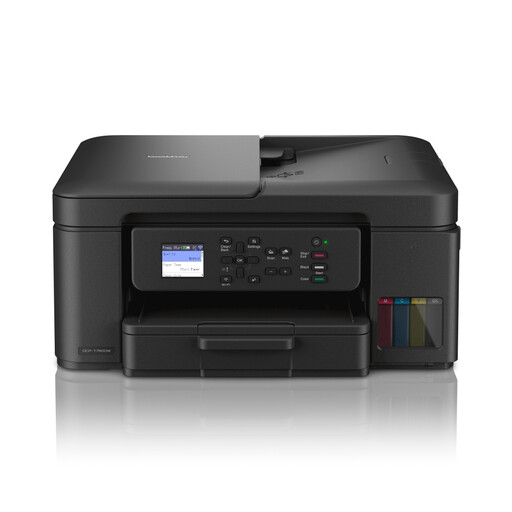
This refillable model suits regular script printing when the group also scans or copies multi-page originals.
Brother UK specifies automatic duplexing, a 150-sheet input tray, a 20-sheet document feeder and up to 16 images per minute. The feeder helps with scanning and copying rather than script-print throughput.
 No image available
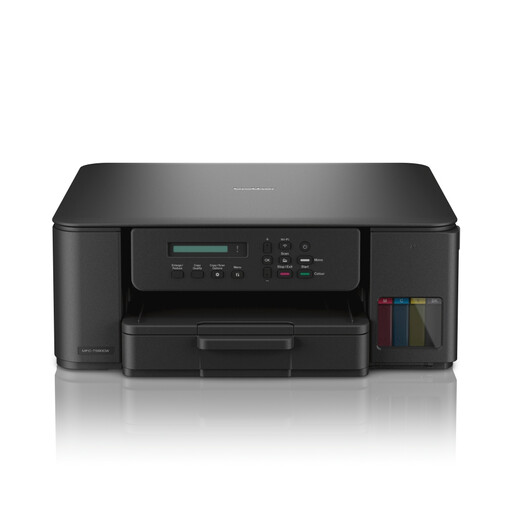
This refillable all-in-one is an option for a group printing regular A4 packs that also wants wireless print, copy and scan functions.
The product information specifies automatic duplexing and a 150-sheet input tray. If volunteers routinely scan or copy multi-page paper originals, check whether the exact model has a document feeder.
 No image available
Consider this model for time-sensitive A4 script runs when a volunteer also handles paper originals.
The product information specifies automatic duplexing, a standard 250-sheet tray, up to 28 images per minute for mono printing and a 50-sheet document feeder. Check the exact consumable system before choosing it for refillable-ink use: its product information describes both cartridges and an ink tank. Any additional lower tray is optional.
 No image available
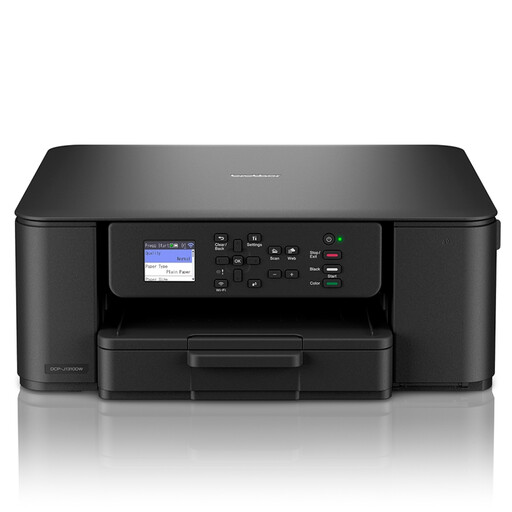
This cartridge-based all-in-one is worth assessing for a group that wants wireless A4 script printing and automatic duplexing.
The product information specifies a 150-sheet input tray and print, copy and scan functions. It identifies individual ink cartridges rather than a refillable tank; check replacement-ink needs against your expected printing. Confirm document-feeder availability with the seller if multi-page scanning or copying matters.
For regular, mostly text-based packs, start with automatic duplexing, an ink system suited to the group’s printing frequency and a tray that holds enough paper for a typical run. Check that the organiser’s device can send files to the printer; faster rated mono printing becomes more relevant when revisions or full packs are needed quickly.
No: an automatic document feeder handles paper originals for scanning or copying, not the blank paper used to print a script. Choose one if volunteers regularly process multi-page marked-up documents; otherwise focus on print-tray capacity, duplexing and rated mono speed.
Regular use and model-specific maintenance are worth planning for, especially if the group has long breaks between productions. Brother UK says infrequent use or dust can allow ink to dry in printhead nozzles and cause clogs; follow the chosen printer’s guidance for checks and cleaning.
Check that the seller supplies the model and its safety information for the Great Britain market. GOV.UK explains that the Electrical Equipment (Safety) Regulations 2016 set requirements for electrical equipment placed on that market; the regulation is not, by itself, proof that a particular listing meets those requirements.