Studios printing forms frequently
When ink changes and paper refills interrupt regular form runs, consider refillable tanks and a paper tray sized for your busiest batch. Weigh those conveniences against the studio's actual printing volume.


For frequent feedback-form printing in a shared studio, consider a refillable A4 inkjet if fewer ink changes justify the greater initial outlay. A cartridge-based business inkjet may suit shorter or less frequent runs, provided it meets your needs for shared access and paper handling. In either case, check duplex compatibility with your form stock and compare consumables against your expected printing volume.
When ink changes and paper refills interrupt regular form runs, consider refillable tanks and a paper tray sized for your busiest batch. Weigh those conveniences against the studio's actual printing volume.
If several people send jobs from different devices, check how the printer connects to the studio network and whether its paper capacity will cover busy periods without frequent reloading.
For short, irregular runs, a cartridge-based model may be worth considering. Check its duplex features and exact consumables rather than assuming that a refillable tank will suit every workload.
Start with how often the studio prints, then check shared access, the busiest paper run and whether completed forms also need scanning or copying.
| Concern | What to check | Who this matters to |
|---|---|---|
| Ink changes | Check whether the model takes refillable bottles or cartridges, and which replacement consumables it uses. | If forms are printed routinely, changing ink must not keep interrupting shared work. Around 36% of consumers would put fewer ink-related interruptions first. |
| Shared access and paper | Check Wi-Fi or Ethernet compatibility and tray capacity against the busiest form run. | With several people sending short batches, I need a printer everyone can reach without constant paper refills. Shared access and capacity would come first for around 29% of consumers. |
| Two-sided work | Check duplex printing for the intended paper; if completed forms need digitising, check double-sided scanning and the document feeder. | When forms use both sides or completed sheets need processing, I want the relevant print or scan function to handle them. Around 21% of consumers would make that workflow their primary concern. |
| Initial outlay | Compare what is included with each printer and the consumables or optional plans it will require. | If form runs are occasional, committing to a tank model may matter less than keeping the initial outlay manageable. For around 14% of consumers, that would be the deciding concern. |
Automatic two-sided printing does not necessarily mean the printer can scan or copy both sides of completed forms through its document feeder.
Decide whether you need two-sided printing alone or also double-sided scanning and copying. Check the exact model's supported paper sizes, stock and feed paths.
A cartridge-based model and a refillable-tank model handle ink replacement differently; the initial outlay alone cannot settle which suits the studio's workload.
Estimate monthly form printing, then compare the included ink, replacement consumables, maintenance parts and any optional subscription terms.
Epson United Kingdom identifies the EcoTank ET-4850 as discontinued and the ET-4950 as a newer model. Advice about the older printer may not describe the model you can buy.
Confirm the exact model before checking its current consumables and features.
Canon's MAXIFY GX4050 is a refillable A4 multifunction option for studios considering shared network access and a larger plain-paper reserve.
Epson's refillable EcoTank ET-4950 is relevant when the studio also wants to process completed forms.
Brother's cartridge-based MFC-J4550DW is a shared A4 business-inkjet option for studios weighing network access and paper capacity.
These inkjet models offer options to consider for shared feedback-form printing, including refillable-tank and other multifunction printers. Match each model's paper handling, connections and consumables to the studio's workload.
 Image unavailable
Consider this model for frequent shared form runs where ink handling and paper reloading affect the workflow. Confirm its paper capacity, network connections and whether duplex printing accepts your chosen form stock.
 Image unavailable
Consider this model if the studio prints A4 forms and also needs scanning or copying. Check its shared-network connections, document-feeder requirements and duplex compatibility with your paper.
 Image unavailable
Consider this model for shared form printing if an A3-capable multifunction printer would also be useful. Check that its size and placement work in the studio, and confirm duplex paper compatibility and the exact cartridges before choosing it for A4 forms.
 Image unavailable
Consider this A3-capable model if shared A4 printing and occasional batch document handling both matter. Confirm its footprint, supported duplex stock and exact ink system before comparing its consumables with refillable-tank models.
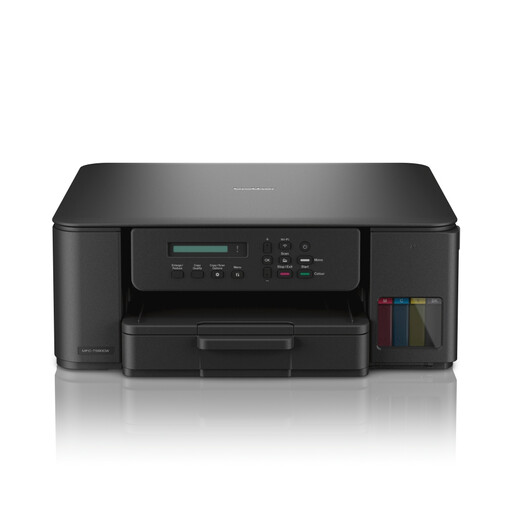 Image unavailable
Consider this wireless ink-tank model for A4 form printing if a smaller paper reserve suits the studio's batches. Check that Wi-Fi meets your sharing needs, and confirm duplex compatibility with the intended paper and how completed forms would be scanned.
Start with A4 support, a connection the studio can share and a tray sized for its busiest print run. Add automatic duplex printing if forms use both sides; a document feeder matters chiefly if completed forms will also be scanned or copied in batches.
Refillable tanks are worth considering when frequent printing makes fewer ink changes valuable enough to justify greater initial outlay. For occasional runs, a cartridge-based business inkjet may suit the studio, but compare the exact replacement consumables and any optional plan terms.
No: duplex support can depend on paper size, type and feed path. Canon, for example, specifies the MAXIFY GX4050's automatic duplex printing for A4 or Letter plain paper from its rear tray or cassette; check the conditions for the exact model and stock you intend to use.
Check which electrical-equipment collection or take-back route will accept the old printer. GOV.UK identifies the Waste Electrical and Electronic Equipment Regulations 2013, as amended, as the UK framework; confirm the practical arrangements with the relevant retailer or collection service rather than assuming one disposal procedure applies to every studio.