Choose a keyboard around the controls you use to plan routes and the space available at your desk: a split design is worth considering for long typing sessions, a full-size layout keeps more keys directly accessible, and a compact layout leaves more room for a mouse or notes. Check UK key placement, access to your mapping shortcuts and software compatibility before choosing; no keyboard alone can make an unsuitable workstation comfortable.
Who this is for
Long-session home route planners
If you spend extended periods entering locations and editing routes at a desk, consider how the keyboard fits your overall working posture. The Health and Safety Executive advises home display-screen workers to aim for a comfortable, sustainable setup.
Shortcut and coordinate users
If you move around maps with keys or enter precise locations, convenient access to those controls matters. Google Maps documents arrow-key map movement, while komoot supports planning with coordinates.
Multi-device or configurable-desk users
If you switch between computers or want to arrange keys around repeated planning tasks, compare device-switching controls and the software needed for customisation.
What to check when buying
Start with the keys your route planner uses, then decide how much desk space and configuration flexibility you need. Assess typing posture as part of the whole workstation, not as a property of the keyboard alone.
| Concern |
What to check |
Who this matters to |
| Comfort during longer sessions |
Compare keyboard height, angle and palm support with your desk, chair and mouse position. |
I spend a long time editing routes at my desk and want a typing position I can sustain; around 36% of consumers put comfort and posture first. |
| Direct map controls |
Inspect access to arrow and plus/minus keys; check UK key placement if familiar punctuation matters to you. |
When I adjust a map or enter locations, I want the controls I use within easy reach. Direct route entry and navigation come first for around 29% of consumers. |
| Device switching and customisation |
Check supported devices, operating systems and whether configuring shortcuts requires software. |
If I plan on more than one device or repeat the same actions, I want controls that fit that workflow; around 21% of consumers prioritise switching or customisation. |
| Desk space |
Measure the keyboard and mouse area, then inspect any keys moved to secondary layers. |
With a mouse and notes beside the keyboard, I would rather keep the desk area clear. Space is the primary concern for around 14% of consumers. |
Buying pitfalls
-
Treating an ergonomic keyboard as a complete answer to discomfort
The Health and Safety Executive identifies workstation design and use as relevant to display-screen discomfort; changing one device does not address the rest of the setup.
Consider keyboard reach and angle alongside your chair, screen, mouse and breaks. Seek appropriate clinical advice if symptoms persist or worsen.
-
Choosing a compact layout without checking shortcuts
Google Maps documents arrow-key map movement and plus/minus zoom when the map has focus. On a compact keyboard, access to those keys may differ from a conventional layout.
List the controls you use in your planner and inspect the exact keyboard layout before buying.
-
Assuming QWERTY means UK key placement
A QWERTY description alone does not identify the physical variant. For example, Keychron lists a UK-ISO version of its Q6 Max, while several keyboards shown below specify US QWERTY.
Check the selected variant’s layout and key legends, particularly if you rely on familiar punctuation positions.
Brands to consider for relevant keyboard designs
Logitech
Logitech offers different approaches within its range: MX Keys S for a conventional multi-device desk setup and ERGO K860 for a curved split keyframe.
- Logitech says MX Keys S can switch between up to three devices; it lists 0°, -4° and -7° palm-lift settings for ERGO K860.
- A split shape changes key positions, and its suitability depends on the rest of your workstation rather than the keyboard alone.
Keychron
The Q6 Max UK-ISO is a full-size mechanical option for people who want a specified physical layout and QMK/VIA key customisation.
- Keychron lists Type-C wired, 2.4 GHz wireless and Bluetooth 5.1 connectivity for this model.
- Check the exact layout and switch variant, and allow desk space for a full-size keyboard.
HP
HP’s 960 Ergonomic Wireless Keyboard is a split-zone option with a separate numeric keypad.
- HP lists 20 programmable keys for this model.
- Consider whether the split-zone shape and separate keypad fit your desk and typing habits; ergonomic branding is not a promise of relief from discomfort.
Joybuy keyboards for this setup
These mechanical keyboards offer different compact layouts and connection options for a home-office route-planning desk. Compare their physical keys and stated layout with the mapping controls you use; the products shown here do not represent every keyboard design discussed above.
 No image available
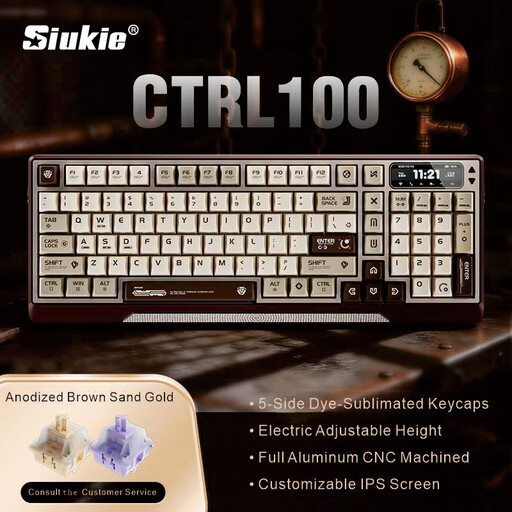
Siukie CTRL100 96% mechanical keyboard, US QWERTY, brown
Consider this model if you want a 96% layout and several connection options at one desk.
The title specifies HMX Cream Taro HIFI switches, a configurable IPS screen and wired, Bluetooth and 2.4 GHz connectivity. Its stated layout is US QWERTY rather than UK-ISO; check key placement and compatibility with your computer and planning software.
View on Joybuy
 No image available
AULA F75 75% mechanical keyboard, US QWERTY
Its 75% layout is worth considering when mouse space matters, provided the keys you use for map navigation are convenient to reach.
The title specifies wired, Bluetooth and 2.4 GHz connectivity, PBT keycaps and RGB backlighting. This is a US QWERTY variant; check its physical keys and computer compatibility before buying.
View on Joybuy
 No image available
Razer Huntsman V3 Pro Mini 60% keyboard
Consider this 60% layout only if a small keyboard footprint matters more to you than immediately accessible map controls.
The title identifies analog optical switches. Check how its modifier-based arrow-key access works for your planner, along with the selected physical layout and computer compatibility.
View on Joybuy
 No image available
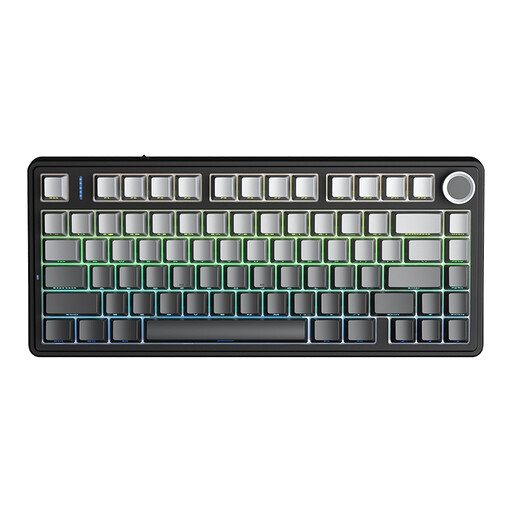
AULA F75 PRO 75% mechanical keyboard, US QWERTY
This is another 75% option if you want to keep room beside the keyboard for a mouse or route notes.
The title specifies wired, Bluetooth and 2.4 GHz connectivity, hot-swappable switches and RGB backlighting. Check the exact navigation-key arrangement and computer compatibility; the stated layout is US QWERTY.
View on Joybuy
 No image available
MACHENIKE KG87 80% mechanical keyboard, Latte Switch, pink
Consider its 80% layout if you want a keyboard smaller than a full-size model without choosing a 60% design.
The title specifies a US QWERTY layout and tri-mode connectivity. Inspect the exact navigation keys and confirm compatibility with your computer and mapping workflow.
View on Joybuy
Frequently asked questions
Do I need a full-size keyboard to plan cycling routes?
No: a full-size keyboard is a preference, not a requirement of route planning. Google Maps documents arrow-key movement and plus/minus zoom when the map has focus, while komoot accepts coordinates; check how readily you can use the controls you need on a smaller layout.
Will an ergonomic keyboard prevent wrist pain?
A keyboard’s shape cannot guarantee that outcome. The NHS identifies repetitive typing and poor posture as possible contributors to repetitive strain injury, and the Health and Safety Executive advises looking at the whole display-screen workstation. Seek clinical advice if symptoms persist or worsen.
Should I choose a UK-ISO keyboard?
Choose UK-ISO if you want its physical key placement and legends for familiar UK typing. Check the exact selected variant: a keyboard described only as QWERTY may have a different physical layout.
Are programmable keys useful for route planning?
They can be useful if you repeat actions that your keyboard software and mapping application allow you to configure. Logitech lists programmable keys for MX Keys S; confirm operating-system and software support before making that feature a deciding factor.


