
24/7 Customer Support

Free returns

Same-day & Next-day Delivery

Quality Guaranteed

Unlock Your Welcome Offers: FREE Delivery | Up to 80% OFF | Free 30-day JoyPlus trial
Download the APP
As a Joybuy Product Recommendation Officer, my role is to help you navigate the crowded market of household essentials. A good kitchen roll is a staple in any UK home, but not all rolls are created equal. It can be frustrating to spend money on a product that promises strength and absorbency, only for it to disintegrate the moment it touches a spill.
Before you add another pack of disappointing kitchen roll to your basket, let’s look at the common purchasing pitfalls that lead to wasted money and cleaning frustration.
To make a smarter choice, you need to look beyond the marketing slogans. Here are the three most important factors to check before you buy.
The term "ply" refers to the number of layers of paper that make up a single sheet.
Don't be swayed by terms like "Jumbo" or "Mega Roll". The only way to accurately compare value is to look at the total sheet count for the price. A bulk kitchen roll pack with eight rolls of 80 sheets each (640 sheets total) might offer far better value than a seemingly cheaper four-roll pack with only 50 sheets per roll (200 sheets total). Always check the specifications for "sheets per roll" and "number of rolls" to calculate your cost per sheet.
While traditional kitchen roll is convenient, it isn't the only solution. Consider the job at hand:
Based on these practical criteria, we've matched some effective solutions to different household needs.
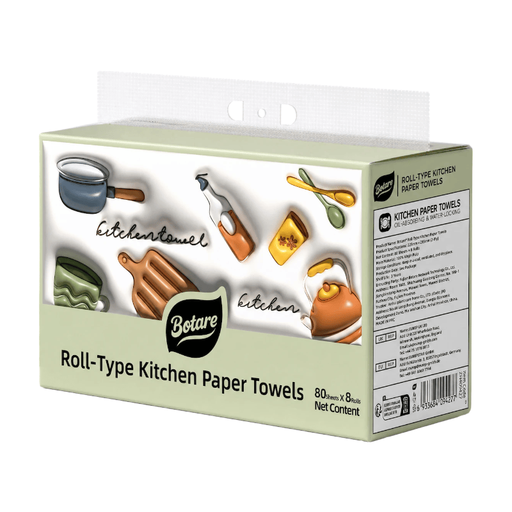
Why This Fits Their Persona: For a busy family home, cost-effectiveness and stock levels are key. This bulk pack provides a large total sheet count, reducing the frequency of shopping trips and offering a lower cost-per-sheet, which is ideal for managing a household budget.
This avoids the false economy of cheap rolls. By buying in bulk, you get a reliable, absorbent kitchen roll at a better unit price, ensuring you don't have to over-use flimsy sheets.
The pack contains 8 rolls with 80 sheets each, providing a total of 640 sheets. This is a practical, long-lasting supply for high-traffic kitchens.
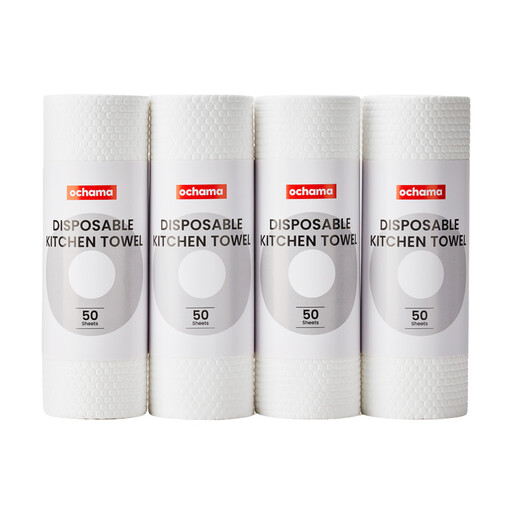
Why This Fits Their Persona: This user prioritises food safety and preventing cross-contamination. These heavyweight disposable sheets act like a cloth but are designed for single-use, eliminating the risk of bacteria build-up found in traditional dishcloths.
It sidesteps the "flimsy paper" trap entirely. Engineered as a cloth alternative, it's thick and resilient for both wet and dry use, so it won't disintegrate when scrubbing grease or soaking up oil.
Offers superior hygiene by being disposable, yet strong enough for heavy-duty tasks. Its dual wet-and-dry functionality makes it a versatile tool for any kitchen mess.
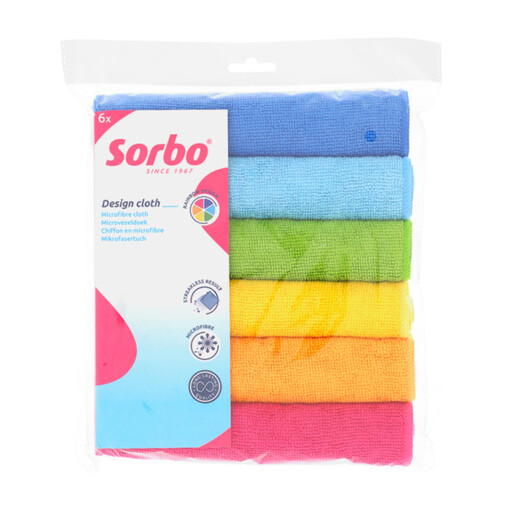
Why This Fits Their Persona: This user wants to reduce household waste and invest in long-lasting solutions. A pack of washable, reusable microfibre cloths replaces the need for endless rolls of disposable paper for general cleaning, dusting and wiping surfaces.
It completely bypasses the disposable market. Instead of calculating cost-per-sheet, the value comes from durability and reusability, offering a long-term solution that is more economical over time.
Machine washable and highly durable for repeated use. The microfibre material is effective at trapping dust and grease, often requiring only water for a streak-free clean.
We have compiled a complete, real-time list of products that fully satisfy these strict selection criteria and UK safety regulations.
There is no single correct number, but a quality roll for a family home typically contains between 60 to 80 sheets. More important than the count is the quality of the sheets. A durable 2-ply roll with 60 sheets will likely last longer and perform better than a flimsy 1-ply roll with 100 sheets.
This depends on the quality of the paper. Lower-quality, loosely-fibred kitchen rolls will often leave behind lint and streaks on glass and mirrors. For a lint-free finish, it is better to use a high-quality, tightly woven kitchen roll or, for a more reliable result, a dedicated microfibre cleaning cloth.
Generally, yes. Buying bulk kitchen roll usually results in a lower cost per roll and per sheet. This is a practical strategy for households that use it regularly. It not only saves money over time but also reduces the number of shopping trips needed to keep your home stocked with essentials.