
24/7 Customer Support

Free returns

Same-day & Next-day Delivery

Quality Guaranteed

Unlock Your Welcome Offers: FREE Delivery | Up to 80% OFF | Free 30-day JoyPlus trial
Download the APP
Inaccurate quantities can turn a reliable recipe into a disappointing meal. A jug that is difficult to read, spoons that lose their markings or scales that switch off midway through preparation can all create unnecessary waste. Choosing kitchen measuring tools is less about collecting every gadget and more about matching capacity, materials and measurement precision to the way you cook.
Before adding measuring jugs, cups, spoons or kitchen scales to your basket, watch for these common buying pitfalls.
A large measuring cup may appear more versatile, but it can be awkward when measuring small quantities. Conversely, a 250ml jug is convenient for sauces and dressings but unsuitable for preparing a large batch of stock or batter. Consider the quantities you regularly use rather than choosing by capacity alone.
Recipes in the UK may use millilitres, litres, teaspoons, tablespoons, grams and ounces. Faint or incomplete markings increase the risk of mistakes, particularly when measuring flour, liquids or strong ingredients such as baking powder. Look for clear, permanent markings and check whether both metric and imperial measurements are included.
Plastic can be light and practical, while glass offers visibility and a non-porous surface. However, not every container is suitable for hot liquids, microwaving, ovens or dishwashers. Always check the care instructions and avoid sudden temperature changes with glass, even when it is designed to resist thermal shock.
Select sizes according to your routine:
A jug with a stable handle and controlled pouring lip can be more useful than one with a larger capacity but poor handling.
For liquid ingredients, transparent sides and bold graduations allow you to check the level from different angles. For dry ingredients, measuring spoons should have a shallow bowl that can be levelled easily.
Digital kitchen scales are useful when recipes depend on weight rather than volume. A scale offering 1g increments is suitable for many home cooking and baking tasks, while a tare function lets you reset the display between ingredients without using another bowl. Check the maximum capacity as well: a 5kg limit accommodates most domestic mixing bowls and meal-prep portions.
Borosilicate glass is valued for clarity and resistance to temperature changes, although it should still be handled carefully. Stainless steel measuring spoons are durable, resistant to rust and generally straightforward to clean. Plastic prep containers are lightweight, but lids may have separate heat restrictions.
For electronic scales, check the power source and cleaning instructions. Battery-operated models may be convenient, while battery-free kitchen scales can reduce the need for replacement batteries but may require manual kinetic charging before use.
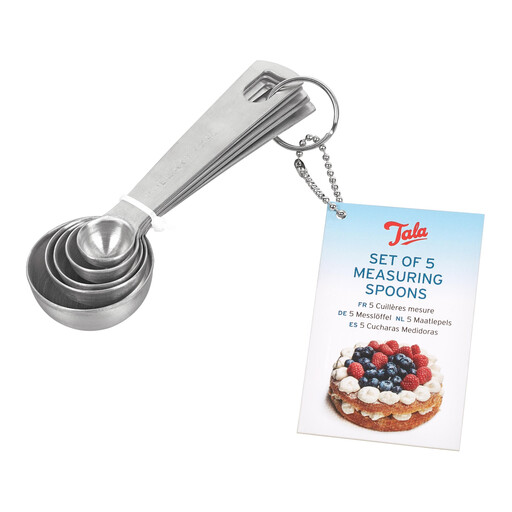
Why This Fits Their Persona: A practical starting point for students, first kitchens and home cooks building a compact collection of cooking and baking essentials.
The set uses clear metric and imperial markings, helping avoid guesswork when recipes use teaspoons, tablespoons or millilitres.
Five stainless steel spoons, dishwasher-safe construction and an interlocking hanging ring for organised storage.
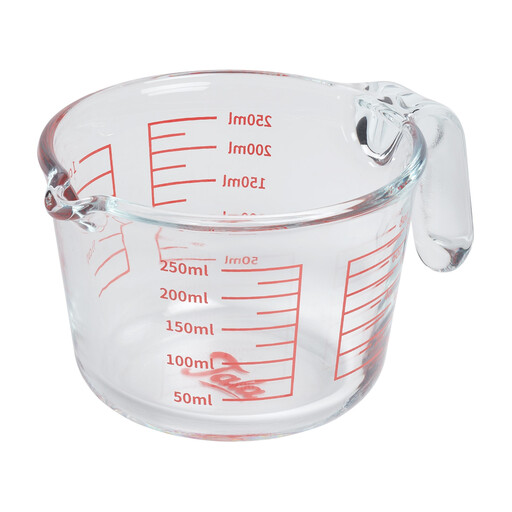
Why This Fits Their Persona: Suitable for cooks who value a compact, clearly marked jug for frequent sauces, dressings, drinks and baking preparation.
Bold ml and fl oz markings improve visibility, while the pouring lip helps give better control than an unshaped container.
250ml borosilicate glass construction with a handle and precision spout; listed as oven, fridge and freezer safe.
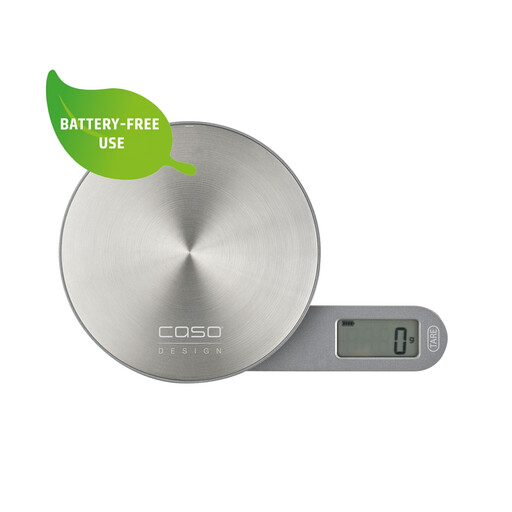
Why This Fits Their Persona: A considered option for frequent bakers and meal-prep users who weigh ingredients regularly and prefer not to depend on disposable batteries.
The 5kg capacity and 1g increments address the limitations of scales designed only for small portions, while the tare function supports multi-ingredient recipes.
Kinetic, battery-free operation, LCD display, automatic switch-off, magnetic base and units including grams, ounces and water or milk millilitres.
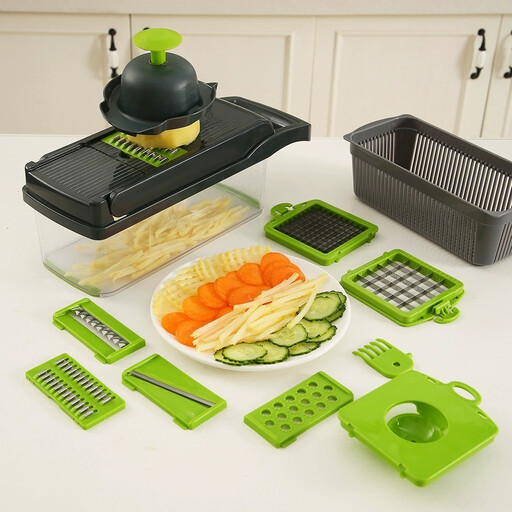
Why This Fits Their Persona: Designed for households preparing vegetables, packed lunches and ingredients ahead of time, especially where cupboard organisation matters.
It combines preparation, measuring and storage in one set, reducing the need to buy disconnected pieces that are difficult to store together.
The 16-piece BPA-free plastic set includes containers, lids and measuring cups; the containers are listed as top-rack dishwasher safe.
We have compiled a complete, real-time list of products that fully satisfy these strict selection criteria and UK safety regulations.
Good kitchen measuring tools can remain useful for years when handled according to their materials and construction.
They can be useful when a recipe specifies grams, particularly for flour, sugar and dough ingredients. A model with 1g increments, a stable platform and a tare function can simplify weighing several ingredients in one bowl. Consider whether the power source and cleaning method suit your routine.
For everyday sauces, dressings and smaller recipes, a 250ml measuring jug is convenient. A 500ml or 1000ml measuring cup is more suitable for larger quantities, batch cooking and drinks. If space allows, combining a small jug with a larger cup can cover more tasks without forcing one container to handle every measurement.
Some borosilicate glass measuring cups are designed to handle hot liquids and temperature changes, but care instructions still apply. Avoid sudden thermal shock, inspect the product guidance before microwaving and handle larger cups carefully because their contents can become heavy.