Shared-screen team practice users
You want game footage, voice chat and team notes to remain usable together while several people view the screen. Check the seating positions as well as the screen dimensions.


For shared team practice, start with a roughly 32-inch 4K monitor whose stand and connections suit your seating and devices. A 144Hz IPS model with KVM or picture-by-picture suits a mixed-device setup; consider Mini LED when HDR presentation matters, or 240Hz OLED when fast PC play takes priority and your connection can deliver the intended mode. An ultrawide offers a different workspace, but its width and viewing positions need a separate check.
You want game footage, voice chat and team notes to remain usable together while several people view the screen. Check the seating positions as well as the screen dimensions.
Fast gameplay is your main use, but you also want a large 4K display for reviewing matches and communication. The refresh mode matters only if your PC and connection can support it.
You switch between a gaming PC, laptop or console and need to check whether the particular monitor offers the connections, KVM switching or simultaneous-source display your setup calls for.
Consider it when: Practice combines gaming with a laptop, console or shared documents; the Gigabyte M32U illustrates this route with KVM and picture-by-picture.
Trade-off: The M32U is specified at up to 144Hz, rather than the 240Hz of the OLED examples.
Consider it when: HDR presentation in a brighter room is important; BenQ lists the EX321UX with VESA DisplayHDR 1000 certification.
Trade-off: The EX321UX is specified at 144Hz, and BenQ lists maximum power consumption of 274W; compare operating modes if power use matters.
Consider it when: High-refresh PC gaming leads the decision; Dell specifies the Alienware AW3225QF and ASUS specifies the ROG Swift OLED PG32UCDM at 4K 240Hz.
Trade-off: Check the required PC connection and shared viewing positions; the AW3225QF has a 1700R curved screen.
| Concern | Buying checks | Who it matters to |
|---|---|---|
| Shared-screen clarity | Check resolution, screen shape and the available desk and viewing space. | If game footage, chat and notes need to stay visible together, I want enough detail without making the group crowd around the desk; around 31% of consumers put shared-screen clarity first. |
| Responsive gaming | Check refresh rate at your chosen resolution and the input and cable needed for that mode. | During fast team drills, I care most about how the game responds, even if HDR is less important to me; roughly 31% of consumers give responsive play first priority. |
| Device switching | Check for KVM, the required video ports and USB-C video and charging features where needed. | Moving between a PC and a laptop or console should not interrupt practice every time I change devices; about 23% of consumers chiefly need a smoother multi-device workflow. |
| HDR and room fit | Check the exact HDR certification, reflections and stand or mounting adjustments. | In a brighter room or during longer sessions, I want the picture and screen position to suit the space; around 15% of consumers place HDR and room fit first. |
A large panel may still sit awkwardly on the desk or leave some viewers with a poor angle. The UK Health and Safety Executive also highlights workstation layout and environment for regular display-screen work.
Measure desk width and depth, consider where the team will sit, and check stand adjustment or mounting options before buying.
The selected 4K refresh mode depends on the monitor input and the source device. Gigabyte lists DisplayPort 1.4 with DSC for the M32U, while Dell specifies connection requirements for the AW3225QF’s 4K 240Hz mode.
Match the intended resolution and refresh rate to the monitor manual, your GPU or console output, and the cable you will use.
VESA’s DisplayHDR and DisplayHDR True Black certifications have distinct performance tiers; a generic HDR label does not identify one of those tiers.
If HDR affects your choice, compare the exact certification and panel specification rather than relying on the word HDR alone.
Video input, laptop charging and KVM switching are separate capabilities. BenQ lists DisplayPort Alt Mode and 65W Power Delivery for the EX321UX; ASUS lists 90W USB-C Power Delivery and KVM for the PG32UCDM.
Check your laptop’s video and charging requirements, then confirm each function on the exact monitor model.
The M32U is a 31.5-inch 4K IPS example for gaming alongside multi-device team practice.
The EX321UX is a 31.5-inch 4K Mini LED example for buyers comparing HDR features and device connections.
Dell’s AW3225QF is a 31.6-inch 4K QD-OLED example for high-refresh PC gaming on a large screen.
The PG32UCDM is a 31.5-inch 4K QD-OLED example combining high-refresh gaming with laptop and peripheral connections.
These choices cover large 4K screens and wider-format alternatives for gaming and team review. A 34-inch or 49-inch ultrawide changes the layout rather than serving as a like-for-like substitute for a roughly 32-inch 4K screen; compare desk fit, seating and the refresh mode you need.
 No image available
Consider this wide-format option if arranging practice content across a 32:9 screen matters more than using a conventional 4K layout.
The product name specifies a 49-inch curved QD-OLED panel, 1800R curvature and 240Hz refresh.
Check desk width and each viewer’s position. Confirm KVM or simultaneous-source functions for the exact X49X before making them part of your setup plan.
 No image available
This is a 32-inch option to examine when competitive PC play and large-screen team review are both priorities.
The product name specifies a 4K 240Hz mode and a Full HD 480Hz dual mode, plus HDMI 2.1 and DisplayPort.
Confirm the exact variant before relying on those modes: the product title identifies 32GS95UV-B, while the accompanying technical details identify 32GS95UV-W.AEU. Check the PC, input and cable required for your chosen mode.
 No image available
Consider this 4K option if you want a large screen for shared game viewing while keeping responsive play in focus.
The product name specifies a curved OLED panel, 3840 × 2160 resolution, 165Hz refresh and USB-C with a stated 65W rating.
Check whether the curve suits everyone’s seat. If a laptop or shared peripherals are central to practice, confirm the required USB-C video mode and KVM functions before buying; also check the exact HDR specification rather than treating the HDR400 wording as certification.
No image available
This 21:9 option is worth considering if a wider game-and-chat layout suits your desk and team better than a conventional 4K screen.
The product name specifies 3440 × 1440 resolution, a VA panel and 200Hz refresh.
It is not a 4K display. For the intended high-refresh mode, check your source and cable against the selected port; the stated HDMI mode is more limited than the DisplayPort mode at this resolution.
 No image available
Consider this screen when viewing shared practice material takes priority over high-refresh competitive gaming.
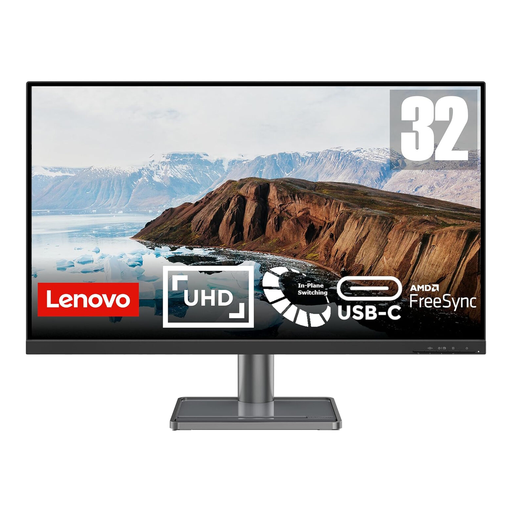
The product name identifies a 31.5-inch 4K IPS monitor with USB-C. Its stated 60Hz limit needs weighing against your gaming refresh target.
If a laptop is part of the setup, confirm that the USB-C connection provides the video and charging functions you require.
No: a 4K 144Hz monitor can suit shared footage, chat and multi-device practice. Consider 240Hz when fast competitive PC play is a primary need, and confirm that your PC, cable and chosen input can deliver the intended 4K mode.
Check the monitor’s exact inputs against each device’s video output and your intended resolution and refresh rate. Gigabyte lists HDMI 2.1, DisplayPort 1.4 with DSC and USB-C for the M32U, but its available modes should not be assumed to apply to other monitors or connections.
Only if the laptop and monitor support each function you need. Check video input, Power Delivery wattage and KVM separately: BenQ lists USB-C DisplayPort Alt Mode and 65W Power Delivery for the EX321UX, while ASUS lists 90W USB-C Power Delivery and KVM for the PG32UCDM.
No: compare the exact HDR specification rather than assuming all HDR labels describe the same capability. VESA distinguishes its tested DisplayHDR and DisplayHDR True Black certification tiers from a generic HDR claim.
It matters when the screen forms part of qualifying work use, not simply because it is used for recreational gaming. The UK Health and Safety Executive says the Display Screen Equipment Regulations apply to workers who use display-screen equipment daily for continuous periods of an hour or more; if that describes your work setup, consider workstation layout alongside the monitor choice.