What matters when choosing?
Choose a format for the amount and frequency of file transport, then check that individual files and the full connection path will work on both computers.
USB flash drive
Choose it when: you want a pocketable device for occasional transfers that fit its capacity.
Trade-off: capacity and sustained transfer behaviour vary by model, so a basic stick should not be assumed to perform like an SSD.
Portable SSD
Choose it when: you repeatedly move sizeable files and your computers can make use of the drive’s connection.
Trade-off: quoted maximum speeds depend on a compatible host and cable; protection against travel damage depends on the exact model.
Portable HDD
Choose it when: carrying a large collection matters more than completing each transfer quickly.
Trade-off: Which? distinguishes SSDs as generally faster than HDDs; an older USB connection can further limit an HDD transfer.
| Priority |
What to check |
Your needs |
| Individual files |
Check the largest single file, not just the folder size. Microsoft lists FAT32’s maximum individual file size as 4GiB. Before changing format, copy existing files elsewhere: formatting erases the drive. |
I need a large video, archive or project file to copy without hitting a file-system limit, even when the drive has free space. |
| Computer compatibility |
Check the current file system and whether both computers can write to it. Apple Support identifies ExFAT for disks over 32GB intended for Windows and Mac use. |
Files need to move between my Windows PC and Mac without leaving one computer unable to write to the drive. |
| Transfer speed |
Compare the drive, computer port, cable and any hub or adapter. The USB Implementers Forum identifies 5Gbps, 10Gbps and 20Gbps USB 3.2 tiers; a connector’s shape alone does not establish the data rate. |
I move sizeable files often enough that transfer time matters, and I want to know whether my computers can use a faster drive. |
| Capacity and carrying |
Allow for the collection you actually carry and check the exact model’s dimensions and protection claims. Which? identifies small flash drives as an option for regular file transport and distinguishes SSD and HDD transfer speeds. |
A pocket-sized device would suit my smaller transfers; for a larger collection, I can accept a bigger drive or slower copying if it meets the capacity I need. |
| Physical connections |
Identify the ports on both computers and the drive connector. Check whether the required cable or adapter is included and whether it supports the needed USB data mode. |
One computer has USB-A and another has USB-C, so I need a connection that works at both ends. |
| Workplace permission |
Confirm whether the organisation permits removable media and which security controls it requires. The National Cyber Security Centre identifies data-loss and theft risks; the Information Commissioner’s Office describes encryption as protection for personal information on USB media. |
Before carrying work or study files, I need to know whether I may use my own drive and how sensitive files must be protected. |
Joybuy drive options
These options cover portable SSDs for repeated large-file transfers, a dual-connector flash drive for switching ports and a portable HDD for carrying a larger collection. Check the file system and connection requirements of any model against your own computers.
 No image available
Samsung MU-PE1T0S 1TB portable SSD, black
A portable SSD to consider for repeated large-file moves. The title specifies USB 3.2 Gen 2 and USB Type-C; check your computers’ ports and data rates, and confirm the file system before using it between operating systems.
View on Joybuy
 No image available
Samsung MU-PG1T0B 1TB portable SSD, black
Consider this 1TB model when repeated transfers make connection capability important. Its title specifies USB 3.2 Gen 2x2 and USB Type-C; check whether the computers and cable support the required mode before choosing it for speed.
View on Joybuy
 No image available
Lexar ES4 1TB portable SSD with magnetic set
A 1TB option for moving files between computers. The title states USB 3.2 Gen 2 and read and write maxima of 1,050MB/s and 1,000MB/s; those figures depend on the connection. Check the drive’s file system for your computers, and confirm the stated case or ring requirements if you plan to use the magnetic mounting set.
View on Joybuy
 No image available
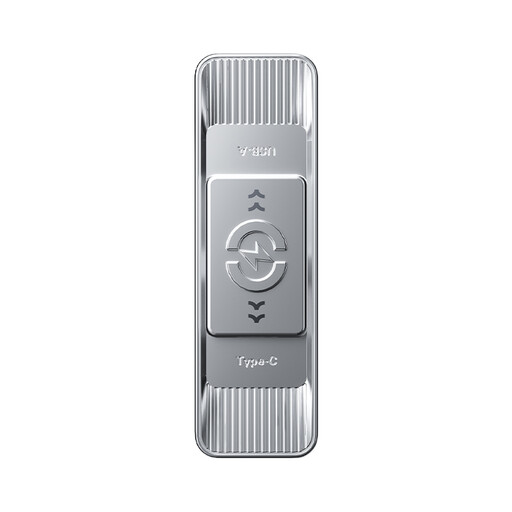
MOVESPEED YSUSP05-512GSR 512GB dual-connector flash drive
The USB-A and USB-C connectors suit carrying files between computers with different ports, provided 512GB meets your capacity needs. The title specifies USB 3.2 Gen 1 and an up-to-570MB/s read figure; check the file system and individual-file limit before moving large files.
View on Joybuy
 No image available
Western Digital My Passport Ultra for Mac 5TB, silver
This portable HDD offers 5TB for carrying a larger file collection when slower transfers are acceptable. The title identifies it as the for Mac variant; if you also use Windows, confirm its file system, any required software and whether that software can be installed on your computer.
View on Joybuy
Questions about moving large files
Can I use one drive with both a Windows PC and a Mac?
Yes, if both computers can use the drive’s file system. Apple Support identifies ExFAT for disks over 32GB intended for Windows and Mac use. Check the existing format before copying files, and move any files elsewhere before reformatting because that erases the drive.
Why does a drive with free space reject one large file?
Its file system may limit individual file size. Microsoft lists FAT32’s maximum as 4GiB, so check the size of the single file and the drive’s format rather than looking only at remaining capacity.
Does USB-C guarantee fast transfers?
No. USB-C identifies the connector, while the USB Implementers Forum identifies 5Gbps, 10Gbps and 20Gbps USB 3.2 data-rate tiers. Check the capabilities of the drive, computer ports and any cable or adapter.
Can a USB-A portable HDD connect to a USB-C-only laptop?
It can if a suitable connection is available, but check the drive’s connector and the cable or adapter specification. For a Seagate One Touch HDD, Seagate specifies a Micro-B-to-USB-C cable supporting USB 3.0 or higher for this connection; a physical fit alone does not preserve the drive’s data rate.
Can I use my own drive for sensitive work or study files?
Check your organisation’s removable-media policy before using it. The National Cyber Security Centre identifies risks from removable media, and the Information Commissioner’s Office describes encryption as protection for personal information stored on USB media. Use the organisation’s approved device and protection process where one is required.


