A 32-inch-class 4K monitor is a sensible starting point if you pause tournament footage to inspect fine detail. A wider ultrawide display is worth considering if its shape suits your footage and desk, but its resolution is not interchangeable with 4K. If you also play competitively, check the resolution and refresh rate your device can actually output; for long review sessions, consider reflections, screen positioning and OLED care as well.
Who is this for?
Replay-detail reviewers
If you pause and scrub footage to inspect small on-screen details, start with screen size and the resolution of both the monitor and recording. The 4K models specified by Dell, ASUS and Samsung illustrate the large-screen route; a high refresh-rate figure alone does not add detail to a recording.
Competitive players who analyse replays
If the same display handles footage review and live play, the supported resolution-and-refresh combinations matter. LG, for example, specifies separate 4K 240Hz and FHD 480Hz modes for its 32GS95UE-B; the faster mode trades away 4K resolution.
Long-session desk reviewers
If you review footage for extended periods, allow for the screen's position, room lighting and breaks as well as its panel specifications. The Health and Safety Executive advises adjusting the display appropriately and taking regular breaks from display-screen work.
What matters when choosing?
Decide whether fine 4K detail or a wider viewing area matters more for your footage, then check the refresh mode available through your own device and connection.
| Concern |
What to check |
Who this matters to |
| Fine detail on a large screen |
Check panel size and resolution against the footage you review. A 32-inch-class 4K screen and a 32:9 ultrawide have different pixel layouts. |
When I pause a replay to examine small on-screen details, I want enough resolution without giving up a large image. Around 33% of consumers put detail visibility first. |
| Motion and competitive play |
Check which resolution and refresh-rate combination your source and monitor input support. A dual-mode screen's highest refresh rate may use a lower resolution. |
If I also play fast-paced games on this screen, I care about the mode I can use rather than the largest refresh-rate number on the box. Roughly 27% of consumers prioritise motion and play. |
| Device connections |
Match the monitor's HDMI, DisplayPort or USB-C input and supported mode to your PC, console or capture setup. |
With more than one source device, I need to know that each connection will handle the picture mode I intend to use. About 20% of consumers place connectivity first. |
| Long-session desk fit |
Consider stand adjustment or mounting, available desk space and reflections in your usual room. |
For lengthy replay sessions, I need a screen I can position comfortably in the light I actually have. Around 20% of consumers make viewing conditions their primary concern. |
Buying pitfalls
-
Assuming the advertised refresh rate works from every device
The available mode depends on the source, cable and exact monitor input. Dell specifies 4K at 240Hz for the AW3225QF under particular connection conditions, including DisplayPort 1.4 with Display Stream Compression.
Before ordering, compare your device's output with the monitor's supported resolution, refresh rate and input mode. Check HDR or variable refresh rate in the same combination if you need them.
-
Reading dual mode as 4K at the faster refresh rate
LG specifies the 32GS95UE-B for either 4K at 240Hz or FHD at 480Hz, not 4K at 480Hz. The FHD mode gives up resolution that may matter when inspecting fine replay detail.
Choose the 4K mode for detail-focused review; decide whether you would use the lower-resolution mode often enough in competitive play to make that trade-off worthwhile.
-
Expecting a panel finish to solve every viewing problem
A glare-management feature does not replace suitable lighting and screen positioning. The Health and Safety Executive also advises regular breaks during prolonged display-screen work.
Assess reflections where the monitor will sit and check whether its stand or mounting options let you position it appropriately.
-
Treating similar model names as identical
A different suffix can refer to a different retail model. LG's UK page identifies the 32GS95UE-B as discontinued, so its specifications and availability should not be assumed to apply to another UltraGear model.
Compare the complete manufacturer model number, intended display modes and warranty details on the product page before buying.
Relevant brands and model lines
Alienware
The curved AW3225QF is a 31.6-inch 4K QD-OLED option for a desk where its 1800R shape is welcome.
- Dell specifies 3840 × 2160 at 240Hz, two HDMI 2.1 ports and DisplayPort 1.4 with Display Stream Compression for this model.
- Check whether the curve suits your footage-review position and whether your source supports the intended display mode.
LG UltraGear
The 32GS95UE-B illustrates the choice between detailed 4K viewing and a separate faster FHD mode.
- LG specifies 4K at 240Hz or FHD at 480Hz, as well as HDMI 2.1 and DisplayPort 1.4.
- LG's UK page labels this exact model discontinued. Check the full suffix, current availability and warranty rather than transferring its specifications to another model.
ASUS ROG
The PG32UCDM combines a 32-inch 4K QD-OLED display with connections that may suit a PC-and-laptop review desk.
- ASUS specifies 240Hz, HDMI 2.1, DisplayPort 1.4 with Display Stream Compression and USB-C with 90W Power Delivery for the PG32UCDM.
- ASUS describes its cooling design as reducing burn-in risk, not eliminating it. Check the care guidance and applicable warranty for this model.
Samsung Odyssey
The 32-inch OLED G8 G80SH illustrates a 4K QD-OLED setup with a Glare Free finish for rooms where reflections matter.
- Samsung Business UK specifies 240Hz, DisplayPort 2.1 and USB-C with 98W power delivery for the G80SH.
- Check the complete retail model code and your source device's output mode; a glare-management finish does not remove the need to position the screen and manage room lighting.
Joybuy product choices
These choices cover 4K screens for detail-focused review and wider ultrawide formats for setups that suit them. Compare each monitor's resolution and supported connection modes against your footage and gaming device rather than treating screen width as a substitute for 4K detail.
 No image available
LG UltraGear 32GX850A-B 32-inch dual-mode OLED monitor
Consider this if you want a large 4K screen for replays and a separate mode for faster play. Its title specifies 4K UHD and a maximum of 330Hz; do not assume that maximum applies in 4K mode. Confirm the modes your device supports, and follow the OLED care guidance for prolonged static images.
View on Joybuy
 No image available
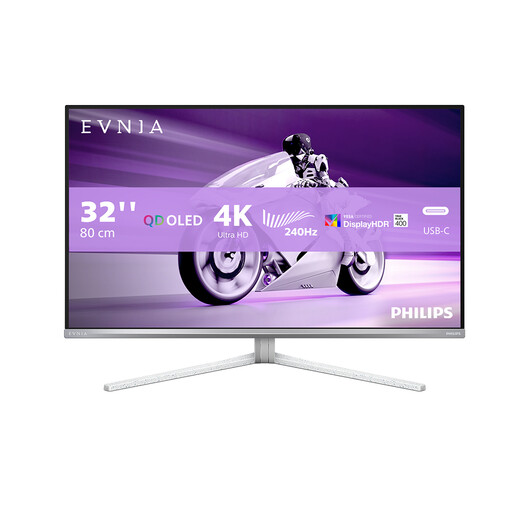
PHILIPS Evnia 32M2N8900 32-inch UHD OLED monitor
The large UHD format suits buyers whose first concern is inspecting replay detail. Before relying on a particular motion mode, confirm the complete supplied model code and its supported refresh rate and response-time specifications; the product information gives conflicting figures.
View on Joybuy
 No image available
Acer X Predator X49X 49-inch curved ultrawide QD-OLED
This is an alternative if a very wide image suits your footage and desk better than a conventional 4K screen. Its title specifies a 32:9 format, 1800R curve, Double Quad HD resolution and 240Hz. Check how your footage fits that shape and whether your desk or mount can support the 49-inch display; allow for help when moving it.
View on Joybuy
 No image available
Dahua 34-inch curved UWQHD 200Hz gaming monitor
Consider the wider 34-inch layout if it suits your replay view, while recognising that its stated 3440 × 1440 resolution is not 4K. The title lists HDMI and DisplayPort 1.4 connections; check the supported refresh rate for the input you will use rather than assuming every port reaches 200Hz.
View on Joybuy
 No image available
CRUA 49-inch curved 32:9 DQHD gaming monitor
The 49-inch ultrawide format may suit a desk set up for a broad replay view, but its stated 5120 × 1440 resolution is not 4K. The title lists 165Hz, HDMI 2.1 and DisplayPort 1.4; confirm which resolution-and-refresh combination each input supports with your device, and check the available desk space.
View on Joybuy
Frequently asked questions
Should I choose 4K at 240Hz or a 4K/FHD dual-mode monitor?
Choose a consistent 4K mode if fine replay detail is your main concern; dual mode adds an option for faster play at lower resolution. LG specifies the 32GS95UE-B for 4K at 240Hz or FHD at 480Hz, so check whether you would use that FHD mode enough to accept the trade-off.
Will a high-refresh monitor improve every tournament recording?
No: a monitor cannot add frames or image detail absent from the recording. Check the footage format, playback device and supported monitor mode together before choosing on refresh rate.
How should I arrange a large screen for lengthy replay sessions?
Position the monitor to suit your desk, manage room lighting and take regular breaks. The Health and Safety Executive recommends appropriate screen adjustment and breaks for display-screen work; a glare-management finish is only one part of that setup.
Do OLED cooling or care features rule out image retention?
No guarantee follows from those features. ASUS says the cooling design of its PG32UCDM is intended to reduce burn-in risk; read the care instructions and applicable warranty for the exact OLED model you are considering.
What should I ask about disposing of an old monitor?
Ask the retailer how its electrical-waste take-back arrangement applies when you buy a replacement monitor. GOV.UK states that UK retailers must offer take-back of waste of the same type as a newly purchased item, subject to the applicable arrangement.


