Large-screen competitive all-rounders
You want a screen around 32 inches for movement practice and value 4K detail in other games. A 4K 240Hz model is worth considering if your PC can make use of that display mode.


For competitive movement practice on a large screen, a 31.5- to 32-inch 4K monitor with a 240Hz mode keeps size and detail central to the choice. A dual-mode model adds a faster full-HD option, but that option does not retain 4K detail. Smaller QHD 360Hz and 24-inch 540Hz monitors shift the priority towards refresh rate; whichever route you choose, check that your PC or console can use the intended mode.
You want a screen around 32 inches for movement practice and value 4K detail in other games. A 4K 240Hz model is worth considering if your PC can make use of that display mode.
You want one large display for both detailed 4K play and a faster practice mode. Dual-mode models such as the ASUS ROG Swift OLED PG32UCDP switch between 4K 240Hz and FHD 480Hz, according to ASUS ROG; the faster mode means accepting lower resolution.
You mainly practise fast PC games and would give up screen size for a higher-refresh option. Dell lists the 26.7-inch Alienware AW2725DF at QHD 360Hz, while ZOWIE lists its 24.1-inch XL2586X at 540Hz. Neither follows the large-screen aim as closely as a 32-inch model.
Choose it when: A large screen and 4K detail matter more to you than a mode above 240Hz.
Accept: Your PC must be able to deliver the frame rates you want at your chosen game settings.
Choose it when: You want to switch one large monitor between detailed play and a faster competitive mode.
Accept: On the ASUS ROG Swift OLED PG32UCDP and LG UltraGear 32GS95UE-B, the stated 480Hz mode is FHD rather than 4K.
Choose it when: A competitive PC mode matters more than keeping the requested large screen.
Accept: Dell lists the Alienware AW2725DF with a 26.7-inch viewable screen, substantially smaller than the 32-inch routes.
Choose it when: Your priority is a high-refresh esports display rather than a large viewing area.
Accept: ZOWIE lists the XL2586X at 24.1 inches, so this route gives up the large-screen experience.
| Concern | What to check | Who this matters to |
|---|---|---|
| Refresh mode | Match the stated refresh rate to its resolution and input; check the frame rate your game delivers. | If fast movement practice is my main aim, I want a mode my PC and game can actually use. Around 33% of consumers put refresh-mode headroom first. |
| Screen size and detail | Check viewable size, native resolution and refresh rate at that resolution. | For practice and other detailed games on one large screen, I would keep the viewing area even if another monitor has a higher refresh ceiling. Around 27% of consumers prioritise that size-and-detail balance. |
| PC and connection fit | Check GPU outputs, cable capability and game frame rates at your intended settings; confirm variable refresh rate (VRR) compatibility if you need it. | I do not want to choose a display mode that my current PC cannot drive as intended. PC and connection fit comes first for around 20% of consumers. |
| Console fit | For PS5, check the monitor's HDMI connection and support for the console output mode you want. | If I also play on PS5, a supported console signal matters more than a PC-focused maximum refresh figure. Around 20% of consumers make console compatibility their primary concern. |
A dual-mode monitor may reach that figure only at a lower resolution. ASUS ROG lists the PG32UCDP at 480Hz in FHD mode and 240Hz in 4K mode.
Decide which resolution-and-refresh combination you intend to use, then compare models on that combination.
A 4K high-refresh display does not make a PC produce frames at the monitor's maximum rate.
Check game performance at your intended settings alongside GPU outputs, cable capability and monitor input limits.
Reaching the intended frame rate may mean changing game settings or upgrading the graphics card.
Sony's PlayStation Support states that PS5 supports HDMI 2.1 and 4K 120Hz video output; a monitor's 360Hz, 480Hz or 540Hz specification does not mean the console will output at that rate.
Check the monitor's PS5-relevant modes and inspect the console's reported output signal after connection.
LG UK marks its cited 32GS95UE-B as discontinued. A specification page can still help you compare modes without establishing that you can currently buy the model.
Check the exact model, current retailer listing and warranty terms before making a decision.
Its cited Swift OLED models cover 31.5- to 32-inch 4K 240Hz viewing and, with the PG32UCDP, a second FHD 480Hz mode.
Dell lists the AW2725DF as a QHD 360Hz QD-OLED option for players considering a smaller, high-refresh screen.
LG's cited 32GS95UE-B illustrates the large dual-mode OLED choice: 4K 240Hz or FHD 480Hz.
Its cited XL2586X is a 24.1-inch Fast TN esports monitor listed by ZOWIE at 540Hz.
These choices cover large 4K OLED monitors and wider ultrawide setups. An ultrawide screen changes the shape of the viewing area as well as its size, so check your game and desk layout before treating it as a substitute for a roughly 32-inch 16:9 display.
 No image available
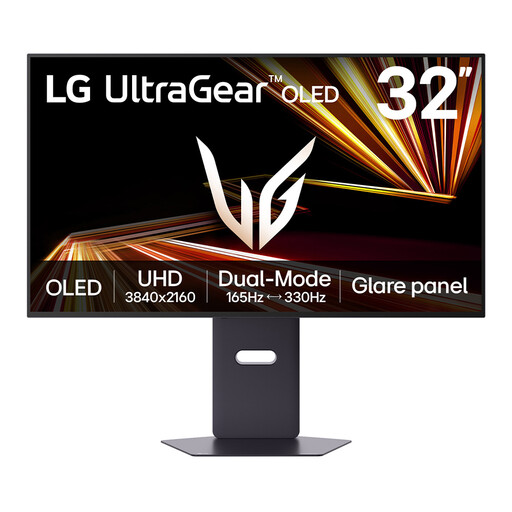
Consider this large-screen option if you want 4K play and the flexibility of a separate faster mode.
The product title specifies dual-mode operation with a maximum of 330Hz; check the resolution paired with your intended mode before choosing it. Follow the OLED guidance for prolonged static images.
 No image available
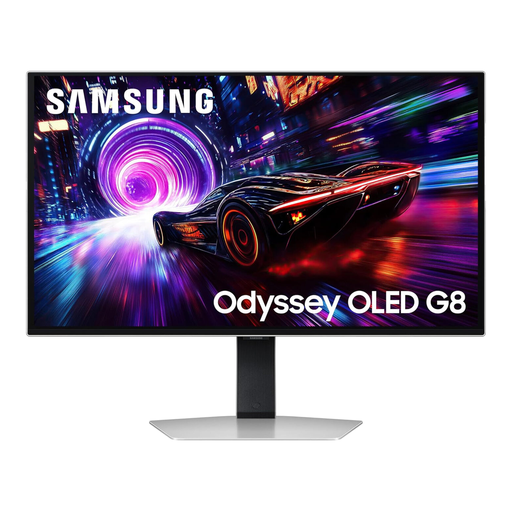
This is a large OLED option to consider if you want to practise on a screen around 32 inches.
Check the exact model's input configuration and its supported resolution-and-refresh combinations against your PC or console before buying. Follow the product's guidance on extended static, high-brightness images.
 No image available
Consider the wider screen if your games and preferred viewing layout suit an ultrawide display rather than the standard 16:9 route.
The product title specifies 3440 × 1440 resolution, a VA panel, 200Hz and DisplayPort 1.4 connections. Check the input needed for your intended refresh mode.
 No image available
This is a markedly wider option for consumers who want a large viewing area and can accommodate a 32:9 layout.
The product title specifies 5120 × 1440 resolution, a VA panel, HDMI 2.1 and DisplayPort 1.4 connections. Check game support and use a desk or mount rated for the monitor; the product guidance calls for two-person handling.
 No image available
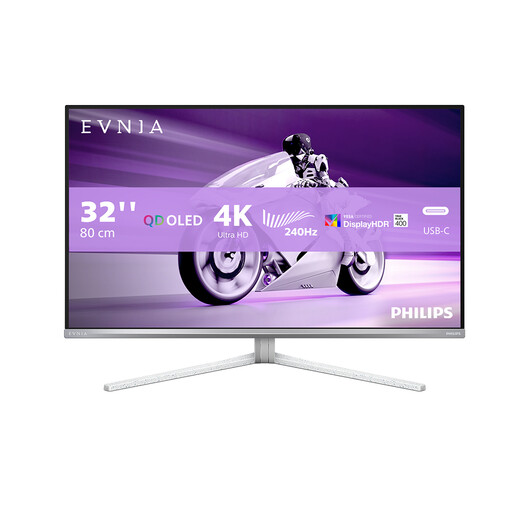
Consider this model if a large 4K OLED screen is your starting point.
Before choosing it for competitive practice, confirm the exact model's supported refresh mode and input requirements. Follow its guidance on leaving static images on the OLED screen.
Choose 4K 240Hz when large-screen detail matters more; choose a dual-mode monitor's FHD 480Hz setting when your PC and game can use it and you would rather prioritise that faster mode. ASUS ROG specifies these as alternative modes on the PG32UCDP, not simultaneous 4K and 480Hz operation.
Do not assume it can use that maximum: Sony's PlayStation Support specifies HDMI 2.1 and 4K 120Hz video output for PS5. Check the monitor's supported console modes and the connected signal shown in the PS5 Screen and Video settings.
Follow the exact model's OLED-care instructions and avoid leaving static images at high brightness for extended periods. ASUS ROG's PG32UCDP product information describes care functions, but those features do not replace its usage guidance.
Use an appropriate electrical-equipment collection or retailer take-back route rather than putting the monitor in ordinary household waste. GOV.UK explains that UK waste electrical and electronic equipment arrangements aim to support recovery, reuse and recycling; check the collection options available to you.