
24/7 Customer Support

Free returns

Same-day & Next-day Delivery

Quality Guaranteed

Unlock Your Welcome Offers: FREE Delivery | Up to 80% OFF | Free 30-day JoyPlus trial
Download the APP
Navigating the laundry aisle can feel overwhelming. Shelves are packed with bottles promising brighter whites, vibrant colours and scents that last for weeks. But with so many claims, it's easy to choose a product that doesn't quite meet your household's needs, leading to re-washes, faded clothes or even skin irritation. As a Joybuy Product Recommendation Officer, my role is to help you see past the marketing jargon and make a practical choice for your laundry basket.
Before you add a new laundry detergent to your cart, let's look at a few common pitfalls that UK shoppers often encounter.
To ensure you get brilliant results with every wash, focus on these core parameters. Understanding them will help you select a product that genuinely works for your specific laundry challenges.
This is the most fundamental choice when selecting a laundry detergent. The difference lies in the presence of enzymes.
The format of your detergent can influence its performance and convenience.
Beyond the basics, many detergents are designed for specific tasks. A colour protect washing liquid contains ingredients to help prevent dyes from fading or bleeding, keeping your brights vibrant for longer. For delicate fabrics like silk and wool, a dedicated non-bio formula without harsh enzymes is essential. Similarly, a specialised laundry detergent for sportswear is formulated to tackle sweat and odours in synthetic fabrics while protecting their elasticity and moisture-wicking properties.
To help you find the right match, we've aligned some practical options with common UK household needs.
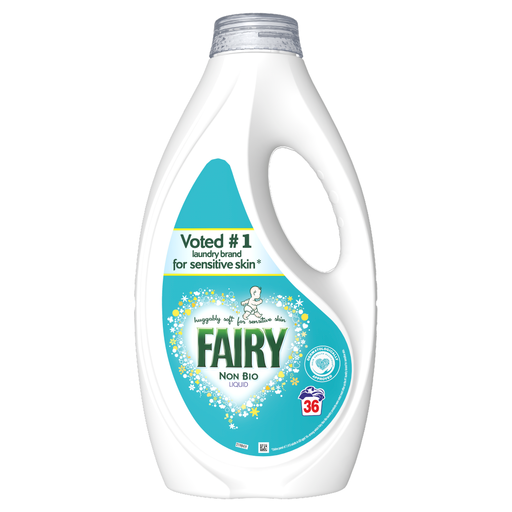
Why This Fits Their Persona: This is a go-to for families with young children or adults with delicate skin. Its non-bio formula is designed to be gentle while still providing a reliable clean for everyday laundry, from school uniforms to bedding.
It avoids the risk of irritation from harsh enzymes by being a dedicated non-bio laundry detergent. The focus is on a gentle, effective clean rather than overpowering fragrances.
Dermatologically tested and formulated for sensitive skin. The liquid format allows for easy pre-treating of stains with the cap.
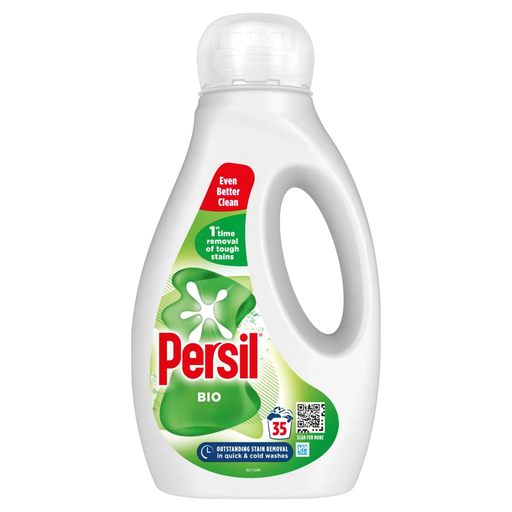
Why This Fits Their Persona: For busy households dealing with everything from muddy PE kits to food spills, a powerful bio detergent is a necessity. This formula is designed to break down tough stains effectively, saving time and the hassle of re-washing.
It counters the "cold wash wonder" trap by using a powerful bio-enzyme formula that is explicitly stated to tackle tough stains like mud and jam, even in a quick wash, delivering a true clean rather than just a refresh.
Its concentrated formula means only 27 ml is needed for a standard wash, making it economical. The bottle and dosing device are also recyclable.
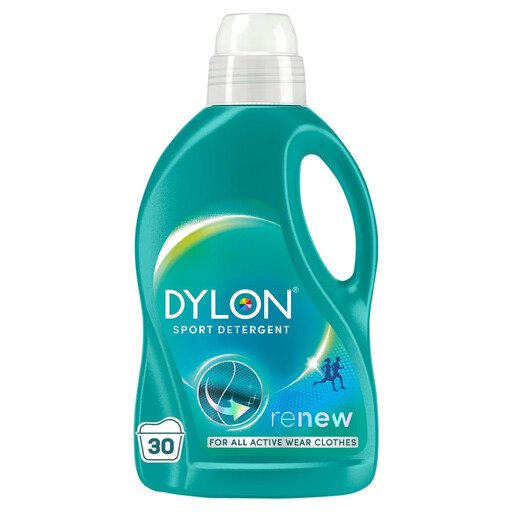
Why This Fits Their Persona: Ideal for gym-goers and athletes, this detergent is specifically designed for activewear. It focuses on removing malodour from synthetic fabrics and maintaining the elasticity and shape of high-performance clothing.
This specialist laundry detergent for sportswear avoids the one-size-fits-all trap. It addresses the unique challenge of sweat odours in technical fabrics, which general detergents can struggle with, ensuring a hygienic clean.
Formulated to remove odours and maintain fabric elasticity. The bottle is made from 50% recycled plastic and the ingredients are 97% biodegradable.
We have compiled a complete, real-time list of products that fully satisfy these strict selection criteria and UK safety regulations.
While bio detergents are excellent for cottons and synthetics, you should avoid using them on delicate protein-based fibres like wool and silk. The enzymes that are so effective at breaking down stains can also damage these delicate materials over time, causing them to weaken or lose their shape. Always check the garment's care label and use a dedicated delicates wash for these items.
An antibacterial laundry cleanser is an additive, not a detergent. It's designed to be used in the fabric softener drawer alongside your regular detergent. Its primary purpose is to kill 99.9% of bacteria and viruses, especially during low-temperature washes (below 60°C) where bacteria may otherwise survive. It's particularly useful for washing items like sportswear, bedding, towels and baby clothes to ensure they are hygienically clean, not just visibly clean.
The golden rule is to follow the instructions on the packaging. The correct dose depends on three factors: the size of your laundry load, the hardness of your water (hard water requires more detergent) and how soiled the clothes are. Using too little can result in a poor clean, while using too much is wasteful and can leave a residue on your clothes and a build-up in your washing machine. A dosing cap or device can help you measure accurately.