
24/7 Customer Support

Free returns

Same-day & Next-day Delivery

Quality Guaranteed

Unlock Your Welcome Offers: FREE Delivery | Up to 80% OFF | Free 30-day JoyPlus trial
Download the APP
Hard water can leave white deposits on taps, shower screens, tiles, toilet bowls and kitchen appliances. The right limescale remover can make routine cleaning easier, but choosing by bottle size or bold packaging claims alone may lead to wasted money or damaged surfaces.
This guide explains what to check before buying, which formats suit different household jobs and how to compare bathroom cleaners with appliance descalers.
Limescale forms on many surfaces, but they do not all tolerate the same ingredients. Natural stone such as marble and travertine, sensitive metals, enamel, aluminium and some plastics may react badly to acidic or strongly alkaline formulas.
A product suitable for ceramic tiles may not be suitable for a kettle, chrome fitting or stone worktop. Always check the label’s surface list and test an inconspicuous area first.
A 750ml bathroom limescale remover spray may offer practical coverage for shower screens and tiles, but it is not automatically suitable for an appliance. Kettles, coffee machines and washing machines usually require a measured liquid, sachet or product designed for use inside the appliance.
Conversely, small sachets can be inconvenient for treating several bathroom surfaces. Match the amount and application method to the task rather than buying on volume alone.
A fresh scent and polished finish can improve the cleaning experience, but they do not indicate whether a product is suitable for thick scale. Look for practical information such as recommended contact time, rinse instructions, surface compatibility and whether the formula is intended for soap scum, hard water marks or internal appliance deposits.
For bathroom cleaning, look for clear suitability information covering ceramics, glass, chrome, stainless steel and tiles. Some products specifically exclude natural stone, brass, copper, linoleum or sensitive metals.
A limescale remover for taps and shower screens should be easy to rinse away and suitable for vertical surfaces where possible. If you are cleaning a toilet bowl, an angled or upside-down spray can make it easier to reach beneath the rim.
Citric acid and other acidic ingredients can loosen mineral deposits, while surfactants help lift soap scum and dirt. An eco-friendly limescale remover may use plant-based or biodegradable ingredients, but “natural” does not mean risk-free. Some formulas can still irritate skin or eyes and may be harmful to aquatic life.
Read the hazard label before purchase. Wear gloves or eye protection where instructed, ventilate the room and never mix cleaning products, particularly acidic cleaners with bleach.
Check whether the product should be left for one to three minutes, five to ten minutes or used within an appliance cycle. Longer contact is not always better: allowing a formula to dry on a surface can increase residue or cause damage.
For a descaler for kettles and coffee machines, follow the appliance manufacturer’s dilution and rinsing instructions. A washing machine descaler or dishwasher descaler should normally be used in an empty machine, with the correct programme selected.
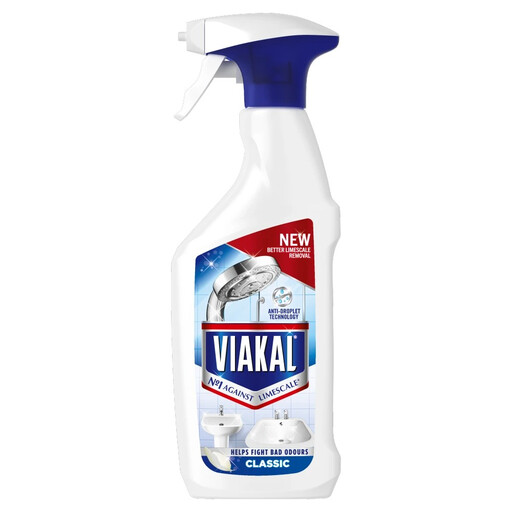
Why This Fits Their Persona: A practical starter option for renters or smaller households needing a bathroom and kitchen surface spray for regular cleaning.
The stated directions specify spraying, leaving it for a few minutes, rinsing and wiping, making the process clear rather than dependent on vague claims.
500ml spray format; listed for chrome, ceramics and tiles; contains no chlorine, bleach or ammonia.
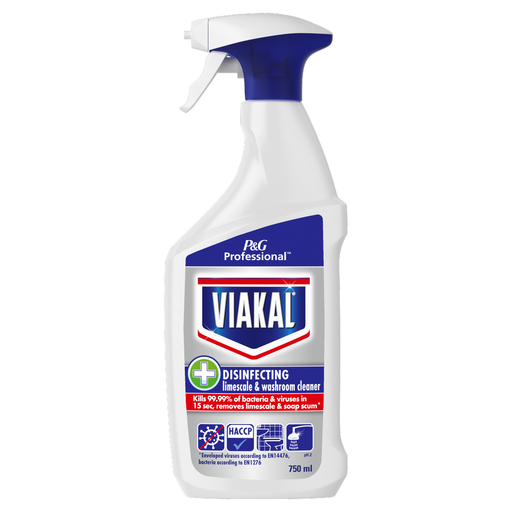
Why This Fits Their Persona: The larger format suits households with several bathrooms or frequent hard-water cleaning duties.
Its warning information clearly identifies eye and skin risks, metal compatibility concerns and the need not to mix it with bleach or other cleaners.
750ml capacity; spray application; country of origin listed as the United Kingdom.
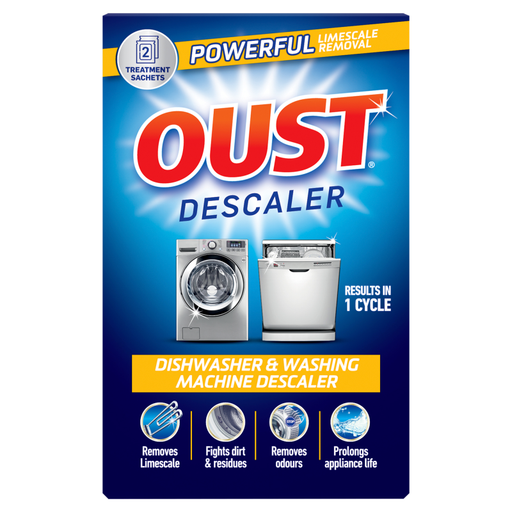
Why This Fits Their Persona: Designed for households wanting a dedicated washing machine descaler and dishwasher descaler rather than a general bathroom spray.
The instructions specify an empty appliance and identify the required programme, reducing the risk of using a surface cleaner inside a machine.
One sachet is used per cycle; suitable for dishwashers and front-loading automatic washing machines.
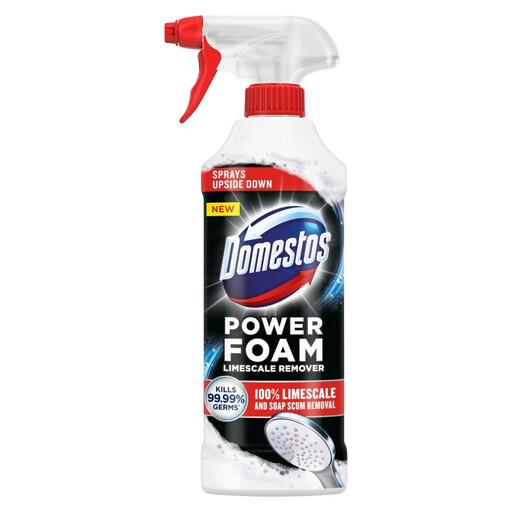
Why This Fits Their Persona: A suitable format for shoppers prioritising toilet access, bathroom surfaces and foam coverage in hard-to-reach areas.
The upside-down spray design is intended to reach beneath the toilet rim, while the instructions state where the product should not be used.
Foaming application; suitable for toilets, sinks, tiles, mirrors and taps; 450ml size.
We have compiled a complete, real-time list of products that fully satisfy these strict selection criteria and UK safety regulations.
For shower screens and taps, a limescale remover spray is usually convenient. For stubborn deposits, a gel may cling for longer, but it still needs to be used only on compatible surfaces. For appliance scale, choose a dedicated descaler and follow the appliance manual.
Choose a spray or gel that lists your surfaces, such as ceramic, glass, chrome or tiles, and provides a clear contact time. A product with anti-droplet or water-mark prevention features may help reduce visible marks between cleans, but regular wiping and drying remain important.
Not unless the label specifically says it is suitable for that appliance. Bathroom formulas may contain fragrances, surfactants or ingredients that are not intended for internal food-contact equipment. Use a product labelled as a descaler for kettles and coffee machines, then rinse according to the instructions.
The appropriate frequency depends on water hardness, appliance usage and the manufacturer’s guidance. Homes in hard-water areas may need more regular maintenance, but the product label and appliance manual should take priority. Use the correct dose in an empty machine rather than adding descaler alongside laundry or dishes.