Families planning the main lunch item
If protein is the priority, choose a main item containing a protein source rather than counting on a maize snack. School Food Matters recommends a main course containing protein as part of a packed lunch.


Do not rely on the Wotsits, Monster Munch or Tesco maize snacks discussed here as the high-protein part of a secondary-school packed lunch. The nutrition figures reviewed for these products do not meet the high-protein condition of at least 20% of energy from protein set out in the rules published by legislation.gov.uk. If a pupil wants a savoury snack, treat it as separate from a protein-containing main item; School Food Matters’ packed-lunch guidance also includes fruit, vegetables and water.
If protein is the priority, choose a main item containing a protein source rather than counting on a maize snack. School Food Matters recommends a main course containing protein as part of a packed lunch.
A portioned snack can have a place alongside the main item. Compare the exact pack’s nutrition and allergen information before deciding whether it suits the lunch.
Check the current flavour’s allergen information against the pupil’s needs and the school’s packed-lunch policy. Ingredients and precautionary statements differ between products.
Decide what will provide protein in the main lunch item, then assess any snack on its own label and against the school’s rules.
| Priority | What to check | Your needs |
|---|---|---|
| High-protein claim | Check the exact product’s protein and energy declarations. Under the nutrition-claims rules published by legislation.gov.uk, at least 20% of a food’s energy must come from protein for a high-protein claim. | If I am buying food specifically for its protein, I need more than a protein figure on a snack pack. The Walkers and Tesco maize-snack examples discussed here do not meet that condition. |
| Lunch structure | Choose a main item containing a protein source; consider fruit, vegetables, a snack and water. School Food Matters sets these out in its packed-lunch guidance. | A crunchy snack can accompany the lunch, but I do not want it to take the place of the main item. |
| Allergens | Read the current label for the exact flavour, including highlighted ingredients and precautionary statements. Check it against the pupil’s allergy plan. | When an ingredient matters to my family, I cannot assume another flavour or a previously bought pack has the same allergen information. |
| School rules | Check the individual school’s current packed-lunch and allergy policy before packing a particular snack. | I need to know whether this product can go in the pupil’s lunch at their school. |
A protein amount alone does not establish a high-protein claim. The condition published by legislation.gov.uk concerns the proportion of the food’s energy supplied by protein.
Check the protein and energy figures on the exact pack if that claim is central to your choice.
A savoury snack does not replace the protein-containing main course described in School Food Matters’ packed-lunch guidance.
Plan the main item first, then decide whether to include a snack alongside fruit, vegetables and water.
Allergen information differs between the Walkers snacks discussed here, including information relating to milk and other ingredients.
Read the current pack for the exact flavour and check the school’s allergy policy rather than relying on an earlier purchase.
These examples help distinguish snack types and labels; a brand name alone does not establish whether a particular product meets a high-protein claim.
Walkers lists maize in Wotsits Cheese and maize alongside chickpea flour in Wotsits Cheese Toastie.
Monster Munch Pickled Onion is a shaped savoury snack sold in a 20g pack.
Quavers Cheese is another Walkers savoury snack, but it should be assessed on its own recipe rather than treated as interchangeable with a maize-based product.
Tesco lists multipacks with different savoury snack varieties, so the nutrition figures depend on the snack inside.
These options are lentil cakes and snack bars, not maize snacks. Consider them as separate snack choices, and check their current labels if protein content, allergens or school rules affect the decision.
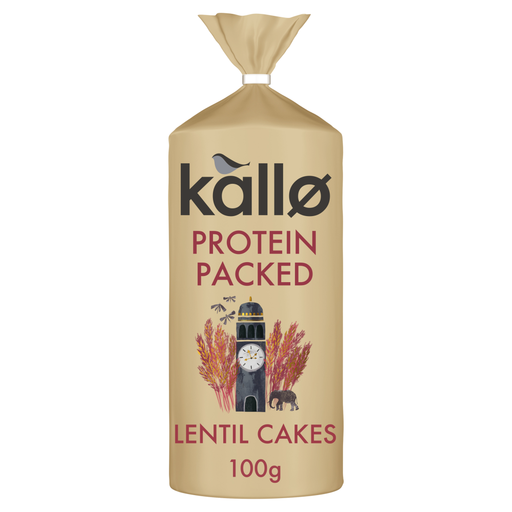 No image available
These lentil cakes are an alternative snack type, not a maize snack. Check the current nutrition and allergen labels before packing them for school.
 No image available
This peanut and chocolate bar is not a savoury maize snack. The named pack contains four 40g bars; check the current allergen label and school policy before including one.
 No image available
This salted caramel nut bar is a different snack from the maize products discussed above. The named pack contains four 40g bars; check its current ingredients and the school’s rules before packing one.
Not necessarily. Under the nutrition-claims condition published by legislation.gov.uk, protein must provide at least 20% of the food’s energy for a high-protein claim. The Walkers and Tesco examples discussed here do not meet that condition; check the exact current product rather than assuming all maize snacks are alike.
Treat it as a snack rather than the protein-containing main item. School Food Matters’ packed-lunch guidance describes a main course with protein and wholegrain food, fruit and vegetables, one snack and water.
Read the allergen information on the exact current pack and check it against the pupil’s allergy plan. The Walkers labels discussed here differ by product and flavour, so a familiar brand name is not enough.
No. The Department for Education describes England’s School Food Standards as applying to food and drink provided to pupils on school premises. For food brought from home, check the individual school’s current packed-lunch and allergy policy before choosing a snack.