
24/7 Customer Support

Free returns

Same-day & Next-day Delivery

Quality Guaranteed

Unlock Your Welcome Offers: FREE Delivery | Up to 80% OFF | Free 30-day JoyPlus trial
Download the APP
From vibrant green lattes in your local café to a quiet, mindful moment at home, matcha has firmly established itself in the UK. Yet, navigating the world of matcha powder can be confusing. With labels like "ceremonial" and "culinary" often used loosely and prices varying wildly, it is easy to feel overwhelmed and end up with a product that disappoints.
As a Joybuy Product Recommendation Officer, my role is to help you understand the key differences so you can choose the right matcha for your needs, whether you're a seasoned enthusiast or just starting your journey. Let's look at the common traps to avoid and what really matters when making your selection.
To ensure you get a quality product that suits your purpose, focus on these three practical parameters.
The quality of matcha is heavily influenced by where and when it was grown. Japanese matcha is widely regarded for its centuries-old cultivation and processing techniques.
The ingredients tell you exactly what you are buying.
Choosing the right type of matcha depends entirely on how you plan to use it.
Based on these criteria, here are a few options from our catalogue, matched to different needs and preferences.

Why This Fits Their Persona: This is for the enthusiast who appreciates the traditional Japanese tea ceremony (usucha or koicha). They want an unadulterated, high-quality experience and are willing to invest in superior flavour.
This product specifies it is made from the first harvest and is stone-ground, backing up its high-grade claim with verifiable production details, not just a label.
It is 100% organic matcha with a fine particle size for a smooth mouthfeel, delivering a naturally sweet, umami-rich flavour with no bitterness.
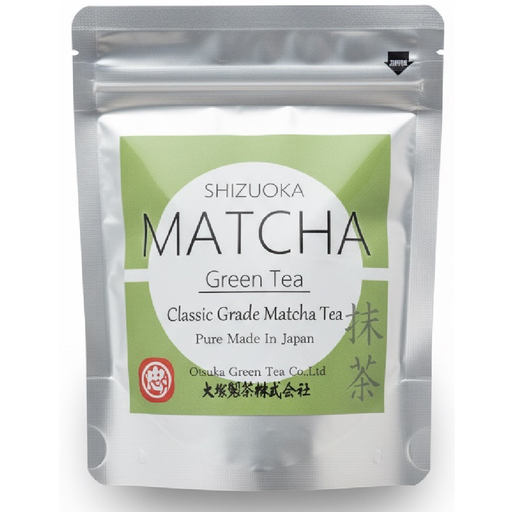
Why This Fits Their Persona: This user primarily makes matcha for lattes or smoothies at home. They need a versatile, pure matcha with a flavour robust enough to pair with milk, but without the premium price of a purely ceremonial grade.
It avoids the sugar trap by being 100% pure green tea powder. It is positioned as a classic grade, offering a balance of umami and bitterness suitable for culinary use, setting clear expectations.
Sourced from Shizuoka, Japan, this stone-ground powder offers an authentic, balanced flavour that is versatile enough for both traditional drinks and lattes, providing great value.
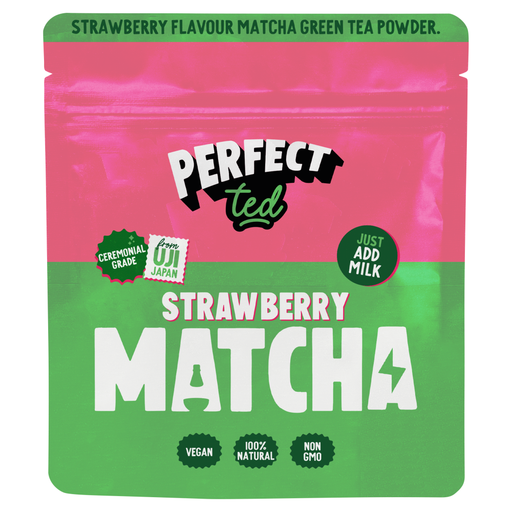
Why This Fits Their Persona: This individual enjoys the idea of matcha but is looking for a fun, accessible and flavourful twist. They want a quick, easy-to-make drink that doesn't require traditional preparation and offers a novel taste experience.
While it is a sweetened mix, it is transparent about its ingredients. It uses Japanese whisked tea grade matcha and natural flavouring, clearly positioning itself as a flavoured matcha blend rather than pure matcha.
Offers a convenient and tasty entry point into matcha with a popular strawberry flavour. It's simple to prepare and provides a consistent taste experience every time.

Why This Fits Their Persona: This user values convenience above all. They want to enjoy a quality cup of matcha at the office or while travelling, without the fuss of measuring powder from a large tin.
This product avoids the quality trap by using 100% ceremonial grade matcha in its sachets, ensuring a premium experience even in a convenient format. There are no hidden sugars or fillers.
The single-serve sachets are perfectly portioned, protecting the powder from oxidation and ensuring maximum freshness and flavour for each serving, wherever you are.
We have compiled a complete, real-time list of products that fully satisfy these strict selection criteria and UK safety regulations.
1. How should I store my matcha powder to keep it fresh? To protect it from light, air and heat, store your matcha in an airtight container in a cool, dark place. For high-grade ceremonial matcha, it is often recommended to store the sealed container in the refrigerator after opening to preserve its delicate flavour and vibrant colour for longer.
2. Why is my matcha clumpy and difficult to whisk? High-quality matcha is an extremely fine powder, which can lead to static clumping. To achieve a smooth, frothy consistency, it is highly recommended to sift the matcha powder through a fine-mesh tea strainer before adding water. This simple step breaks up any clumps and allows the powder to dissolve evenly.
3. Is it worth using expensive ceremonial grade matcha for lattes? Generally, it is not necessary. The subtle, nuanced flavours of ceremonial grade matcha are best appreciated when prepared with water alone. When mixed with milk and sweeteners, these delicate notes are often lost. A good quality culinary matcha has a bolder flavour profile that is specifically suited to cut through the creaminess of a latte, making it a more practical and cost-effective choice.