If protein per snack portion drives your choice, EatProtein Cheese & Onion protein crisps provide 11.2g per bag, compared with 1.5g per 24g pack of Walkers Salt & Shake and 2.1g per 30g serving of Tyrrells Naked, according to the manufacturers. Tyrrells lentil crisps provide 3.9g per 30g serving as another crisp-style option; compare salt and ingredients too, particularly if you avoid soy or milk.
Who is choosing?
Protein-focused late-night snackers
If protein is the reason for choosing a crisp-style snack, compare what one bag or serving provides rather than relying on the product name. The checked conventional potato crisps provide less protein per stated portion than EatProtein Cheese & Onion protein crisps.
Potato-crisp loyalists watching salt
If you want potato crisps, compare the portion’s protein, fat and salt separately. Tyrrells Naked and Walkers Salt & Shake handle salt differently, but neither checked pack provides as much protein per portion as the EatProtein product.
Shoppers considering lentil or soy-based crisps
These are alternatives to conventional sliced-potato crisps, not interchangeable ingredients. EatProtein Cheese & Onion contains soy and milk ingredients, so check the exact flavour if either matters to your choice.
What should you compare?
Start with the protein in the portion you expect to eat, then check the other nutrition values and ingredients on that same pack.
| Priority | What to check | Your needs |
|---|
| Protein per portion |
Compare the stated bag or serving, not just protein per 100g. EatProtein lists 11.2g per bag; Tyrrells lists 3.9g per 30g serving of its Sour Cream & Onion lentil crisps. |
I’m choosing this snack for its protein, so the amount I will actually eat matters more than a protein-themed name. |
| Energy, fat and salt |
Tyrrells lists 141 kcal, 6.0g fat and 0.60g salt per 30g serving of its lentil crisps. Its Naked potato crisps list 156 kcal, 8.9g fat and 0.02g salt per 30g serving. |
A lentil or no-salt label does not answer every nutrition question for me; I want to compare the values for my portion. |
| Ingredients and allergens |
Read the exact flavour’s ingredients and allergen statement. EatProtein Cheese & Onion contains soy and milk ingredients; Tyrrells says its Naked potato crisps may contain milk. |
If I avoid soy or milk, I need to check the individual product rather than assume that a vegetarian or potato-based option suits me. |
| Salt added at home |
Walkers lists 0.00g salt for its 24g Salt & Shake crisps before the separate sachet is added; the sachet contains 0.60g salt. |
I want to decide whether to add the sachet, rather than compare the unsalted crisps as though the sachet had already been mixed in. |
Buying pitfalls
-
Treating any protein on a potato-crisp label as a protein-focused portion
Walkers lists 1.5g protein per 24g Salt & Shake pack, while Tyrrells lists 2.1g per 30g serving of Naked potato crisps. Those amounts answer a different buying need from the 11.2g per bag listed for EatProtein Cheese & Onion.
Compare protein in the amount you intend to eat, and check the exact pack before choosing conventional potato crisps for a protein-focused snack.
-
Assuming lentil crisps answer every nutrition concern
Tyrrells Sour Cream & Onion lentil crisps provide 3.9g protein per 30g serving, alongside 6.0g fat and 0.60g salt, according to Tyrrells.
Read protein, energy, fat and salt together on the same serving basis when comparing them with potato crisps.
-
Overlooking soy and milk in protein crisps
EatProtein Cheese & Onion contains soy protein concentrate and milk ingredients. Its vegetarian labelling does not mean it is free from either ingredient.
Check the ingredients and allergen statement for the exact flavour before buying.
Brand references for this choice
EatProtein
Makes soy-based protein crisps rather than conventional sliced-potato crisps.
- EatProtein lists 11.2g protein and 89 kcal per bag for Cheese & Onion.
- That flavour contains soy and milk ingredients, so it will not suit every ingredient preference.
Tyrrells
Its lentil and potato-crisp ranges offer two distinct types to compare.
- Tyrrells lists 3.9g protein per 30g serving for Sour Cream & Onion lentil crisps and 2.1g for a 30g serving of Naked potato crisps.
- Naked has 0.02g salt per 30g serving, but also lists 156 kcal and 8.9g fat for that serving.
Walkers
Its Salt & Shake pack is a conventional potato-crisp example with a separate salt sachet.
- Walkers lists 1.5g protein and 128 kcal per 24g pack of Salt & Shake crisps.
- The separate salt sachet contains 0.60g salt; the crisps’ listed salt value does not include it.
KETTLE Chips
Lists hand-cooked potato crisps made with British potatoes.
- A conventional potato-crisp route for shoppers who want that type of snack.
- Check the nutrition panel of the particular pack if protein per serving is your deciding factor.
Joybuy snack options
These options include lentil cakes, lentil chips and a seaweed snack as alternatives to potato crisps. Check protein per portion on the pack if that is the reason for your midnight-snack choice.
 No image available
Kallo Protein Packed Lentil Cakes 100g
Lentil cakes offer a different format from potato crisps for a late snack. Compare protein per cake with the number you plan to eat, and check the pack’s allergen advice.
 No image available
CJ Bibigo Crispy Seaweed Snack Bulgogi Flavour 5g x 3 Packs
This is seaweed rather than a potato or lentil crisp, supplied in three 5g packs. Check protein per pack if you want the snack to contribute protein.
 No image available
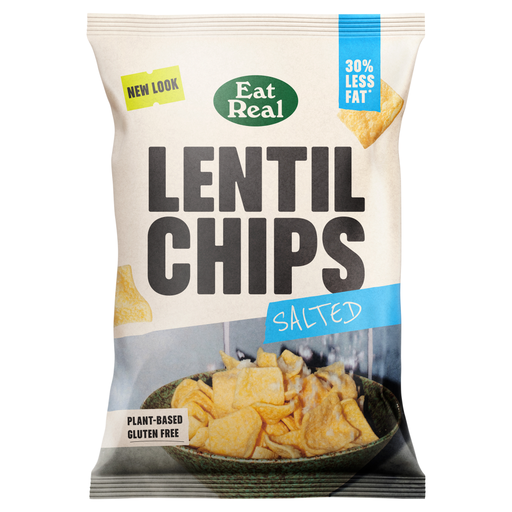
Eat Real Sea Salt Lentil Chips 95g
These lentil chips come in a 95g bag rather than a stated single-snack portion. Compare the label’s protein and salt values for the amount you intend to eat, and check the allergen advice.
Common questions
Are ordinary potato crisps a protein-focused midnight snack?
The checked conventional examples provide relatively small amounts per stated portion: Walkers lists 1.5g protein per 24g Salt & Shake pack, and Tyrrells lists 2.1g per 30g serving of Naked potato crisps. Check the exact pack if protein is your main reason for choosing it.
Can I choose a protein crisp if I avoid soy or milk?
Check the exact flavour before choosing one. EatProtein Cheese & Onion contains soy and milk ingredients, while Tyrrells says its Naked potato crisps may contain milk; neither example establishes what is in another product or flavour.


