
24/7 Customer Support

Free returns

Same-day & Next-day Delivery

Quality Guaranteed

Unlock Your Welcome Offers: FREE Delivery | Up to 80% OFF | Free 30-day JoyPlus trial
Download the APP
Miso paste and instant miso soup can add savoury depth to everyday meals, but the products on the shelf are not interchangeable. A mild white miso may suit dressings and light broths, while an aged red miso can be noticeably saltier and more intense. Instant sachets offer speed, but may contain fish-based dashi, flavour enhancers or a higher concentration of salt.
For UK shoppers, the main challenge is matching the product format, flavour and ingredients to the way it will actually be used. The following guide highlights common buying traps, key label details and suitable options for different household needs.
“Miso soup” does not automatically mean meat-free. Some instant products contain bonito, sardine or other fish extracts in the soup base. For example, Hikari Miso Instant Miso Soup 3 Servings includes bonito powder, while Marukome vegetarian varieties use ingredients such as kelp and shiitake mushroom extracts instead.
Always read the full ingredient list rather than relying only on the front-of-pack wording. Vegetarians should also check for fish, bonito, sardine, prawn and fish-derived dashi.
Japanese miso, including shiro miso, aka miso and Shinshu miso, is usually made with soybeans, rice or barley koji and salt. Other fermented soybean pastes can have a different texture, fermentation style and culinary role.
Shinho Soybean Paste 180g, for instance, is a Chinese fermented soybean paste made with soybeans, wheat flour, salt and water. It is suited to stews, marinades, dipping sauces and Northeastern Chinese dishes, but it should not be assumed to taste like Japanese miso in a basic miso soup.
White miso is generally lighter and sweeter, but colour alone does not tell you the precise salt level or intended use. Red miso is often deeper and more robust, yet recipes and production methods vary.
Check the product description, ingredients and nutrition panel. Hikari Inaka Miso Paste lists 11.3g of salt per 100g, while Hikari Savoury White Miso lists approximately 6.5g per 100g. The difference can affect how much you need in soup, sauces or marinades.
Choose miso paste if you want flexibility. It can be dissolved into dashi, stirred into ramen, whisked into a dressing or used as a glaze. Once opened, most refrigerated pastes should be kept chilled and sealed properly.
Choose instant miso soup for quick individual servings. Sachets usually combine powdered or prepared miso with dried garnishes such as tofu, wakame seaweed and spring onion. Preparation commonly requires around 150–200ml of hot water, but follow the pack instructions.
Miso products commonly contain soybeans, and some also contain wheat, rice, sesame, milk, crustaceans or fish. UK allergen information should be checked on the packaging, particularly if cooking for guests.
Salt levels can vary considerably. Instant soup is portion-controlled, but its salt value per 100g may appear high because the product is concentrated before water is added. Compare the per-serving information where available, and treat miso as a seasoning rather than adding extra salt automatically.
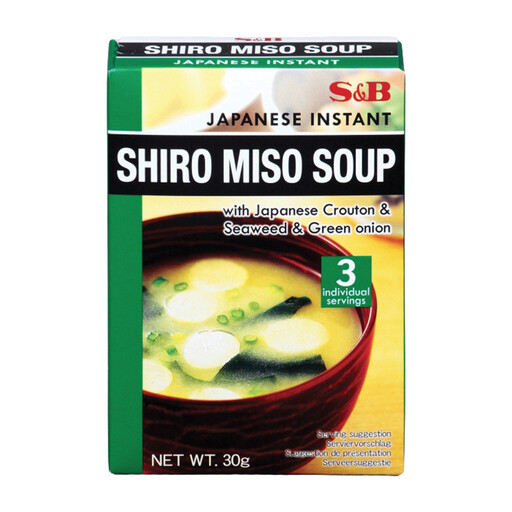
Why This Fits Their Persona: A compact single-serve option for first-time buyers, office drawers or quick lunches where opening a larger tub would be inconvenient.
The label clearly identifies shiro miso and gives a defined 30g serving, helping buyers avoid guessing how much paste to use.
Single sachet format; includes wakame seaweed and spring onion; requires approximately 180ml of freshly boiled water.
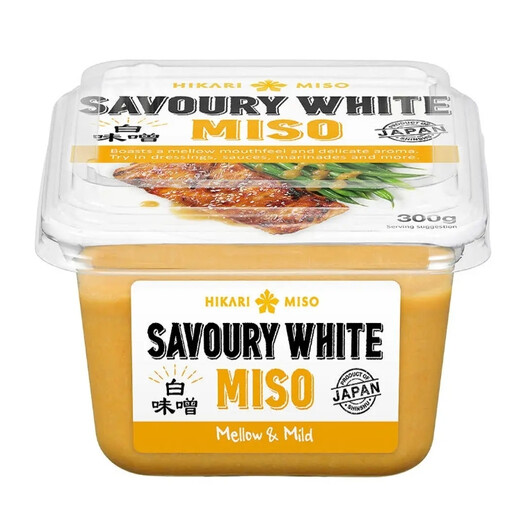
Why This Fits Their Persona: A Japanese white miso for cooks who want one adaptable paste for soups, dressings, glazes and marinades.
Its product information identifies the lighter flavour profile and gives specific uses, rather than relying only on colour-based marketing.
300g tub; made with rice koji and soybeans; suitable for light soups, dressings, marinades and glazes.
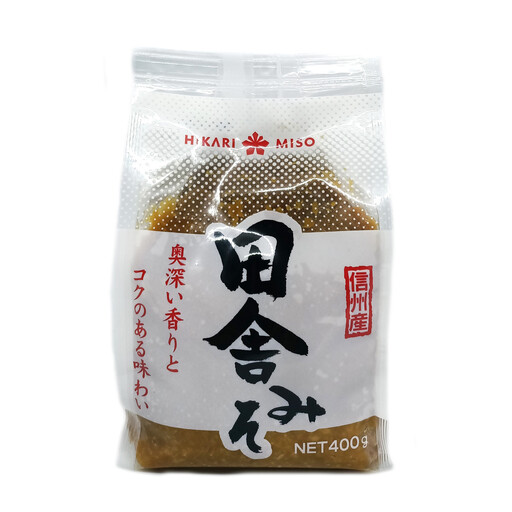
Why This Fits Their Persona: A larger tub for regular soup making, robust sauces, noodle dishes and recipes where a stronger miso character is required.
The stated salt value of 11.3g per 100g makes its intensity clear, helping cooks adjust quantities rather than over-seasoning dishes.
400g format; rustic texture with rice koji grains; suitable for hearty miso soup, glazes and noodle dishes.
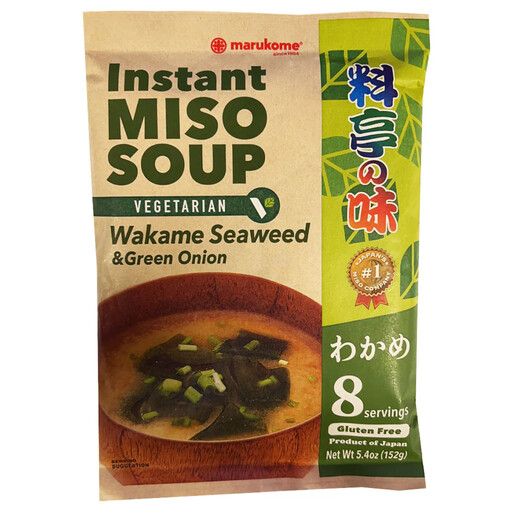
Why This Fits Their Persona: Convenient for meat-free breakfasts, packed lunches or a quick side dish without preparing a separate dashi stock.
The product is specifically described as vegetarian and uses kelp and shiitake extracts, making the dashi ingredients easier to identify.
152g pack; includes wakame, dried tofu and spring onion; designed for quick preparation with hot water.
We have compiled a complete, real-time list of products that fully satisfy these strict selection criteria and UK safety regulations.
For paste, whisk it first with a small amount of warm dashi or water to remove lumps. Add the mixture to the pan near the end of cooking and avoid vigorous boiling, which can change the aroma and texture. For instant soup, use the stated water volume and allow dried tofu or wakame to rehydrate fully before drinking.
You can customise a vegetarian miso soup with spring onion, mushrooms, tofu or extra wakame. For a more substantial meal, add noodles and vegetables, while a spoonful of red miso can give miso ramen a deeper flavour.
Yes. Add a small amount of paste to hot dashi or water, then adjust gradually. It is not as fast as a sachet, but one tub can also be used for sauces, dressings, marinades and ramen.
Check the packaging, but opened miso paste is generally kept refrigerated in a sealed container. Use a clean spoon and follow the stated storage guidance and best-before date.
White miso, shiro miso and some Shinshu miso products generally provide a lighter, slightly sweeter profile. Start with a modest quantity, taste the broth and add more if needed. Always check the salt information and allergen statement before serving.