What matters when choosing?
Choose the screen format around the space you actually want for maps and panels, then check whether the monitor, desk and PC can deliver a setup you are comfortable using for hours.
27-inch QHD gaming monitor
Choose it when: you want a conventional 16:9 layout for maps, menus and other PC games, with gaming-oriented refresh and sync features on the model you select.
Trade-off: a 16:9 QHD screen has less horizontal space than a 3440 × 1440 ultrawide.
34-inch ultrawide
Choose it when: seeing more of a rail network or arranging panels across one wide screen is a priority.
Trade-off: the larger format needs desk space, and you should check how your preferred games present their interfaces on it.
Adjustable, comfort-focused display
Choose it when: flexible screen positioning matters more to you than gaming-class refresh specifications.
Trade-off: check resolution and refresh rate separately; comfort-oriented features do not establish either one or remove the need for breaks.
| Concern |
What to check |
Who this matters to |
| Long-session setup |
Check height adjustment or mounting options, screen placement and how you will control reflections. |
If I play for hours, I want to position the screen without working around glare or an awkward desk arrangement. Around 40% of consumers put long-session setup first. |
| Map and interface detail |
Compare native resolution and aspect ratio, then check text scaling and the game interface at your intended setting. |
Reading routes, timetables and panels is my main task, so I care more about a usable layout than maximum width alone. Map and interface detail comes first for around 30% of consumers. |
| Mixed-game smoothness |
Check the exact model’s refresh rate and adaptive-sync support against your graphics output and connection. |
I also play other games on this monitor and want to know which display modes my PC can use. Around 20% of consumers prioritise mixed-game smoothness. |
| Ultrawide workspace |
Measure the available desk area and check how your preferred games display at an ultrawide resolution. |
I would rather give a broad rail network and its panels more room on one screen, even if that means accommodating a larger display. That is the primary need for around 10% of consumers. |
Joybuy monitor options
These monitors cover several choices for railway-management sessions: conventional QHD, an ultrawide layout, a 27-inch 4K display and a QHD display presented primarily for professional use. Compare each exact model with your desk, PC and preferred games; its presence here does not make every format equally suitable for your setup.
 No image available
LG UltraGear 34GX900A-B 34-inch OLED WQHD 240Hz monitor
Consider this if a wider screen for maps and panels is your priority and you have room for a 34-inch display.
The product name specifies an OLED WQHD panel and 240Hz refresh rate. The listing warns that static images displayed for extended periods can cause OLED burn-in; use its screen-protection features and account for that risk when planning long sessions with persistent interface elements.
Check desk fit, your PC connection and how your games display on an ultrawide screen.
Joybuy
 No image available
Samsung Odyssey G6 S27DG612 27-inch QHD OLED 240Hz monitor
Its conventional 27-inch format is worth comparing if you want QHD for railway maps without moving to an ultrawide layout.
The product name specifies a QHD OLED display and 240Hz refresh rate. This is a 16:9 option rather than an ultrawide workspace.
Check that your graphics hardware and chosen connection support the refresh setting you intend to use.
Joybuy
 No image available
LG UltraGear G8 27G850A 27-inch 4K Nano IPS dual-mode monitor
Consider this 27-inch option if you want to compare a 4K screen for detailed maps and interface elements with the QHD routes.
The product name identifies a 4K UHD Nano IPS display, dual-mode 240Hz/480Hz operation, DisplayPort 2.1 and HDMI 2.1. Check which resolution and refresh-rate combination you intend to use rather than treating both mode figures as 4K settings.
Confirm that your graphics hardware and connection can drive your chosen display mode.
Joybuy
 No image available
Dahua 34-inch 3440 × 1440 curved VA 200Hz monitor
This is another format to consider if a wide, single-screen workspace for route maps matters more to you than keeping a 27-inch 16:9 setup.
The product name specifies a 34-inch curved VA panel, 3440 × 1440 resolution, 200Hz refresh rate, two HDMI inputs and two DisplayPort 1.4 inputs.
Check which input supports your intended refresh setting, as well as desk fit and the interface behaviour of your games.
Joybuy
 No image available
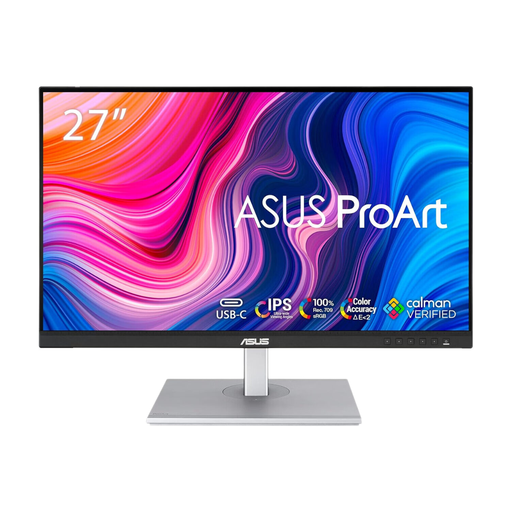
ASUS ProArt PA278CFRV QHD IPS 100Hz monitor
Compare this professional-display option if conventional QHD detail and an adjustable desk setup matter more to you than a gaming-focused specification.
The product name identifies a QHD IPS monitor. Check the exact regional model’s refresh-rate and connection specifications before choosing it for your PC; the available product details give conflicting refresh-rate figures.
Joybuy
Common questions
Should I choose 27-inch QHD or a 34-inch ultrawide for railway-management games?
Choose 27-inch QHD if you prefer a conventional 16:9 layout; consider a 34-inch 3440 × 1440 ultrawide if horizontal workspace is your priority. Before choosing the wider screen, check desk fit, PC output and how your preferred games arrange their interfaces.
Do eye-care modes mean I can play without breaks?
No. Low-blue-light, flicker-free and automatic-brightness features are model-specific features, not substitutes for screen positioning or changes of activity. The Health and Safety Executive’s advice on display-screen work calls for breaks or changes of activity for employees covered by its workplace guidance.
Can long display sessions permanently damage my eyes?
The Health and Safety Executive states that display-screen work does not cause permanent eye damage. Discomfort can still matter during a long session, so review your screen position and lighting, and seek an eye test if you have concerns.
What should I do with an old monitor?
Use an appropriate electrical-equipment collection or recycling route rather than putting an old monitor in general waste. UK guidance from the Office for Product Safety and Standards and the Department for Environment, Food & Rural Affairs describes waste-electrical rules aimed at reducing disposal to landfill or incineration; check your local authority’s or retailer’s available collection arrangements.


