Map-and-menu strategists
If you spend time inspecting towers, paths and upgrade controls, start by comparing a large 16:9 screen with 4K resolution. LG UK lists its 32GR93U-B as a 32-inch, 3840 × 2160 IPS example.


Choose a 32-inch 4K 16:9 monitor if reading dense menus and keeping a conventional game layout matter most. A 34-inch 3440 × 1440 ultrawide makes more sense if you want horizontal room for the map and side panels, provided your games handle 21:9 well. If you choose OLED, account for the panel care associated with long sessions showing a fixed game interface.
If you spend time inspecting towers, paths and upgrade controls, start by comparing a large 16:9 screen with 4K resolution. LG UK lists its 32GR93U-B as a 32-inch, 3840 × 2160 IPS example.
If seeing more information across the screen is your priority, consider a 34-inch 3440 × 1440 ultrawide. Check how each tower defence game displays its map and controls at 21:9 before committing to that format.
If you favour an OLED screen but regularly leave wave counters or menus in fixed positions, make panel care part of the choice. LG UK advises image cleaning after static content has remained visible for a long time, while Dell documents pixel-refresh notifications for the AW3423DWF family.
Settle the screen format first: a 16:9 display keeps the conventional layout, while an ultrawide is worth considering only if your games make useful use of its extra width. Then check panel care and whether your equipment can deliver the resolution and refresh rate you want.
| Concern | What to check | Who this matters to |
|---|---|---|
| Readable detail and 16:9 layout | Compare native resolution at your seating distance and check whether text remains comfortable to read with your preferred scaling. | If small upgrade controls and resource figures occupy much of my attention, I want a large screen without changing the familiar game layout. Around 31% of consumers put readable detail and a conventional format first. |
| Horizontal map space | Check the specific game’s 21:9 behaviour and whether a 34-inch screen fits your desk and viewing distance. | I would rather keep more of the map and side information in view, but only if the game uses the wider display properly. For around 31% of consumers, horizontal space is the primary concern. |
| OLED care with fixed interfaces | Review the exact model’s image-cleaning or pixel-refresh procedure and its applicable warranty terms. | If wave counters and build menus stay in place through long sessions, I need to be comfortable with the monitor’s care routine. OLED use with a persistent interface comes first for around 23% of consumers. |
| High-refresh operation | Confirm the input, cable and graphics output required for your chosen resolution and refresh-rate combination. | I also play games where smooth camera movement matters, so I want the higher refresh mode to work with my PC. Around 15% of consumers make that their leading concern. |
A 32-inch 4K 16:9 screen and a 34-inch 3440 × 1440 ultrawide offer different layouts, even though both are large monitors.
Decide whether detailed information in a conventional layout or more horizontal game space matters more, then compare monitors within that format.
LG UK specifies DisplayPort 1.4 with DSC or HDMI 2.1 support for 144Hz operation on the 4K 32GR93U-B. The mode you can use depends on the connected equipment.
Check your graphics output, cable and the monitor input against the resolution and refresh rate you intend to select.
LG UK warns that leaving the same image on an OLED monitor for a long time may cause faint marks. Dell also documents pixel-refresh maintenance for the AW3423DWF family.
Read the exact model’s care guidance and compare an IPS option if you expect very long, repetitive sessions with a persistent interface.
Dell UK marks the Alienware AW3423DWF unavailable on its product page, although its specifications remain useful for comparing screen formats.
Check the seller’s listing, exact model number and warranty terms before making a purchase decision.
LG UK lists both the 32GR93U-B, a 32-inch 4K IPS monitor, and the 34GS95QE-W, a 34-inch 3440 × 1440 OLED ultrawide. They illustrate different choices of format and panel.
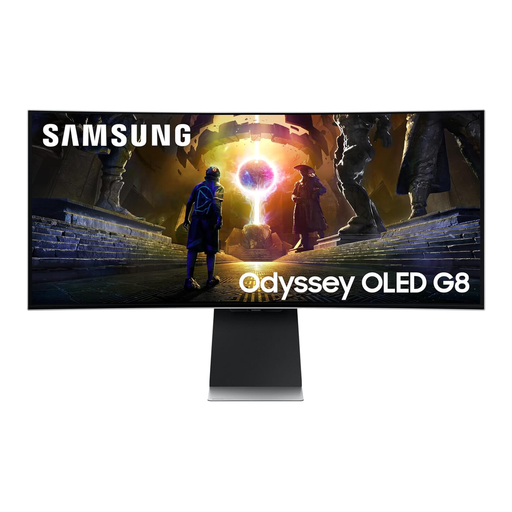
Samsung UK specifies the Odyssey OLED G8 G85SD LS34DG850SUXXU as a 34-inch, 3440 × 1440 OLED ultrawide with a 175Hz refresh rate and Gaming Hub.
Dell UK specifies the AW3423DWF as a 34-inch-class, 3440 × 1440 QD-OLED ultrawide with a USB hub and up to 165Hz through DisplayPort.
These monitors cover ultrawide layouts and larger conventional-format screens. Compare their stated resolutions, panel types and connection requirements against the games you play; a large screen alone does not settle the choice.
 No image available
Consider this ultrawide format if horizontal map space matters to you; check that your tower defence games display properly on a wide screen.
The product name specifies 3440 × 1440 resolution, a VA panel and a 200Hz refresh rate. Confirm the connection and cable needed for the mode you plan to use.
 No image available
This is another large, wide-format option to consider if you prefer room across the screen for a map and controls. Check the game’s ultrawide layout and the monitor’s fit on your desk.
Its product name identifies a 34-inch UWQHD gaming monitor. Confirm the native pixel dimensions and the refresh mode available through your intended connection before buying.
 No image available
Consider this conventional-format 4K option if detailed game menus matter more to you than ultrawide map space. Its OLED panel also makes care during long sessions with fixed menus an important check.
The product name specifies 3840 × 2160 resolution and a 165Hz refresh rate. Check the exact model’s panel-care guidance, warranty terms and connection requirements.
 No image available
This 21:9 option suits consideration when you want a wider game view and are willing to check both ultrawide game support and OLED care for fixed interface elements.
Samsung UK specifies 3440 × 1440 resolution and a 175Hz refresh rate for this model. Check its panel-care guidance and warranty terms for your expected use.
 No image available
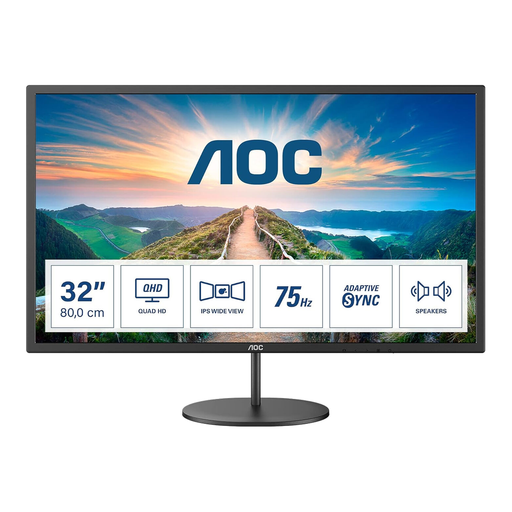
Consider this larger conventional-format IPS screen if you do not need the 4K specification of the detail-first route or an ultrawide layout.
The product name identifies a 31.5-inch IPS monitor with Adaptive Sync and built-in speakers. Check its exact native resolution, refresh rate and connection arrangement against your setup.
No: 4K is a choice for detailed menus on a large conventional-format screen, not a requirement for tower defence games. If horizontal map space matters more, compare a 34-inch ultrawide instead and check how your games handle 21:9.
It can if the monitor, graphics output and connection support that combination. For its 32GR93U-B, LG UK specifies a graphics card supporting DisplayPort 1.4 with DSC or HDMI 2.1 for 144Hz operation; check your own PC ports and the exact monitor requirements.
OLED is worth considering if you are comfortable following the exact monitor’s panel-care guidance, particularly when game menus stay in fixed positions. LG UK warns that prolonged static images may cause faint marks, and Dell documents pixel refresh for the AW3423DWF family; check the procedure and warranty terms for the model you choose.
A retailer covered by the applicable electrical-waste take-back obligations must offer to take back waste of the same type as the item being bought, according to GOV.UK. Ask the seller how its take-back arrangement applies to your monitor order before purchasing.