What to check before choosing
QD-OLED ultrawide
Consider it when: You play in a dim room and favour vivid colour and dark-scene contrast. RTINGS describes QD-OLED's colour advantage as generally stronger in darker conditions.
Weigh up: Black levels can rise in brighter rooms, and prolonged static interface elements remain an OLED concern.
WOLED ultrawide
Consider it when: You want OLED contrast but cannot reliably control ambient light. RTINGS says WOLED generally maintains low black levels better in well-lit rooms.
Weigh up: OLED static-content care still matters; check whether the curve of the particular model suits your seating position.
Curved VA LCD ultrawide
Consider it when: You want a wide RPG view but would rather avoid OLED-specific static-image concerns during mixed gaming and desktop use.
Weigh up: Do not assume its dark-scene presentation matches OLED; assess the exact panel and HDR specification on their own terms.
Once the panel choice fits your room and usage, check the game, source device and audio path before deciding how much refresh rate or connectivity you need.
| Concern |
What to check |
Who this matters to |
| Dark scenes and immersion |
Check the game's 21:9 and HDR support, the native resolution and any HDR certification. |
If shadowy exploration and wide scenery drive my choice, I need the game and screen to support the presentation I want. Around 40% of consumers put this visual experience first. |
| Lighting and static content |
Assess reflections in your room, then check OLED-care functions and warranty terms if considering OLED. |
When my RPG has a persistent interface and I also use the desktop for long stretches, panel care becomes my main concern; around 30% of consumers prioritise this fit with their usage. |
| Smoothness and source fit |
Check GPU capability at the intended resolution, adaptive-sync compatibility and refresh limits for the chosen input. |
I want camera movement to feel smooth, but the monitor's maximum refresh figure is useful only if my setup can make use of it. Roughly 20% of consumers place source-compatible smoothness first. |
| Headphone routing |
Confirm the exact model's audio output and whether your chosen device connection carries audio. |
If I want wired headphones connected at the desk rather than directly to the source, the audio path decides whether that arrangement works; about 10% of consumers make headphone and device routing their primary concern. |
Joybuy monitor choices
These curved ultrawide monitor choices cover OLED and VA routes for RPG play. Compare their size, panel type and stated refresh rate, then check game support and headphone routing for the exact setup you intend to use.
 No image available
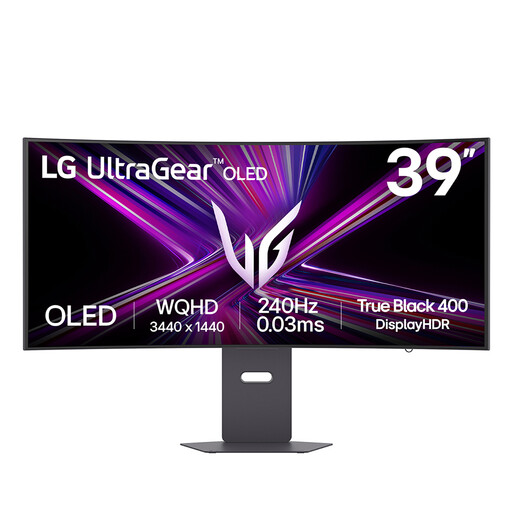
LG UltraGear 39GX900A-B 39-inch OLED, 240Hz
Consider the larger curved OLED format if you have room for it and your RPG supports an ultrawide view.
The product name specifies a 39-inch OLED screen and 240Hz refresh rate. Check desk space and seating fit, and review OLED-care and warranty terms if you regularly leave fixed interface elements on screen.
If you plan to connect wired headphones to the monitor, confirm the audio path from your source device.
View on Joybuy
 No image available
LG UltraGear 34GX900A-B 34-inch OLED, 240Hz
This 34-inch OLED option is worth considering if you want a curved ultrawide for supported RPGs without moving to the larger 39-inch format.
The product name specifies a 240Hz refresh rate. Check whether its curve suits your desk, and review OLED-care and warranty terms for prolonged fixed HUD or desktop use.
For headphones connected at the monitor, confirm that your chosen source connection carries audio.
View on Joybuy
 No image available
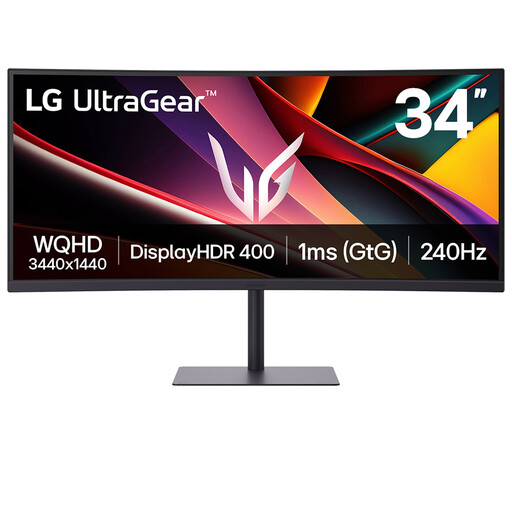
LG UltraGear 34G630A-B 34-inch VA, 240Hz
Consider this VA route if you want a curved RPG screen while avoiding OLED-specific static-image concerns.
The product name specifies a 34-inch VA display and 240Hz refresh rate. Check whether your graphics hardware and connection can use that refresh rate, and assess dark-scene presentation separately from OLED models.
Confirm the intended headphone connection and its audio source before buying.
View on Joybuy
 No image available
Dahua 34-inch curved VA, 3440 × 1440, 200Hz
This VA ultrawide is a non-OLED option for an RPG that supports its 3440 × 1440 format.
The product name specifies a 34-inch curved VA panel, 200Hz refresh rate, 1ms MPRT and two HDMI plus two DisplayPort 1.4 inputs. MPRT is not the same response-time measure as GtG.
Check the exact audio-out socket for your headphones and confirm variable-refresh support if you need it; do not treat the HDR10 label as a DisplayHDR certification.
View on Joybuy
 No image available
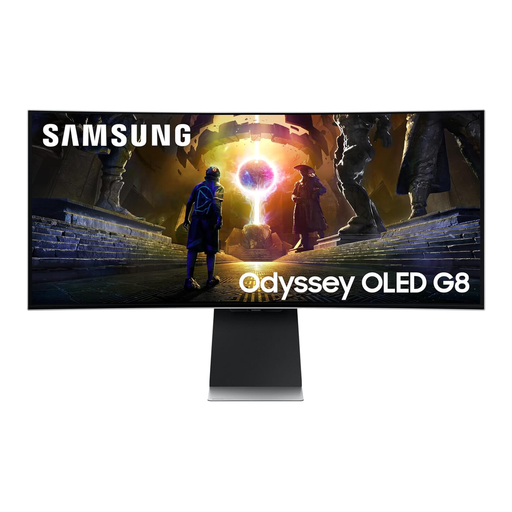
Samsung Odyssey G8 LS34DG850SUXXU 34-inch curved OLED
Consider this ultrawide OLED for supported RPGs in a room where you can control the lighting.
Samsung UK specifies 3440 × 1440 resolution and 175Hz for the Odyssey OLED G8 G85SD corresponding to this model. Check OLED-care terms if your games or desktop use involve prolonged fixed elements.
Verify how the exact monitor and source will route headphone audio; its display inputs alone do not establish a headphone connection.
View on Joybuy
Questions about RPG monitors
Can I plug wired headphones into a gaming monitor?
Yes, if the exact model has a suitable headphone or audio output and your chosen source connection supplies audio to it. Dell lists a headphones connection on the AW3423DWF, while ASUS ROG, MSI and BenQ list audio outputs on the PG34WCDM, MAG 341CQP QD-OLED X28 and EX3410R respectively. Check microphone routing separately if you use a headset mic.
Should I choose QD-OLED or WOLED for a sci-fi RPG?
Let room lighting guide the comparison rather than treating either panel type as a universal winner. RTINGS reports that QD-OLED generally has a colour advantage, while WOLED generally maintains low black levels better in well-lit rooms. Check the particular monitor's coating and your tolerance for OLED static-content care as well.
What if my RPG has a persistent HUD?
Treat prolonged fixed interface elements as part of the OLED ownership decision, rather than assuming every gaming session presents the same risk. RTINGS identifies burn-in from constant static elements as an OLED consideration; check the exact monitor's care features and warranty terms, particularly if you also leave desktop windows open for long periods.
Which electrical-equipment guidance applies when buying in Great Britain?
For Great Britain, GOV.UK's guidance on the Electrical Equipment (Safety) Regulations 2016 addresses businesses placing electrical equipment on that market. Check the documentation applicable to the product and where you live rather than using an electrical marking to judge gaming quality; Northern Ireland has separate provisions.
What should I do with an old monitor?
Look for an appropriate electrical-equipment collection or take-back route when disposing of an old monitor. GOV.UK describes the UK waste electrical and electronic equipment framework as intended to reduce disposal through recovery, reuse and recycling; check the collection options available to you.


