
24/7 Customer Support

Free returns

Same-day & Next-day Delivery

Quality Guaranteed

Unlock Your Welcome Offers: FREE Delivery | Up to 80% OFF | Free 30-day JoyPlus trial
Download the APP
A mop can look practical on a product page yet become frustrating after a few weeks. Common complaints include heads that stay too wet, handles that feel awkward, buckets that are difficult to carry and replacement pads that are hard to find.
When comparing mops and replacement mop heads, focus on the cleaning system rather than a single headline feature. A suitable mop should match your flooring, storage space, cleaning routine and willingness to wash or replace the head.
A sponge mop may be highly absorbent and useful on tiled or vinyl floors, but that does not automatically make it suitable for every type of wood, laminate or textured surface. Excess water can be a concern on flooring that should not remain damp.
Always check the manufacturer’s flooring guidance. For example, the Vileda Turbo Mop & Bucket product information warns against use on unfinished, oiled or waxed wooden floors. Follow similar instructions for any floor mop for tiles and vinyl, laminate or suitable sealed wood.
A self-wringing mop can reduce contact with dirty water, but systems vary. Some use a push-pull mechanism built into the mop, while others use a spinning basket operated by a foot pedal.
A push-pull design may suit smaller homes where storing a bucket is inconvenient. A spin mop and bucket can be more useful if you want adjustable moisture levels and a dedicated wringer, but the bucket needs enough storage space and must be easy to carry when filled.
Searches for an antibacterial mop are common, but the mop head still needs regular washing and proper floor preparation. Remove loose dirt first, use the recommended amount of cleaning solution and allow the floor to dry as directed.
The Vileda Turbo Mop & Bucket listing states that its microfibre head removes over 99% of bacteria with just water, based on third-party laboratory testing. This is a product-specific claim rather than a guarantee for every household situation. Cleaning results can vary according to floor condition, technique and maintenance.
A microfibre mop is often selected for its ability to pick up fine dust and moisture using a relatively small amount of water. It can be practical for sealed hard floors, provided the head is washed regularly and the floor manufacturer permits damp cleaning.
A sponge mop offers a different design. Its absorbent head can be useful for spills and routine cleaning on tiles and vinyl, while an integrated scouring edge may help with more stubborn marks. However, sponge heads can deteriorate if stored wet or left compressed.
Look for:
The right wringing method helps you control how much water reaches the floor. A self-wringing mop with a push-pull mechanism can squeeze out excess water without requiring a separate bucket with a wringer.
A foot-pedal spin system allows you to operate the wringer while standing, which may be preferable if bending or hand-wringing is uncomfortable. Check whether the mop head can be removed easily and whether the bucket has features such as an easy-pour opening or a carry handle.
The initial mop price is only part of the cost. A product with accessible replacement mop pads or machine-washable mop heads may be more practical over time than a system requiring a complete replacement after the head wears out.
Before purchasing, check:
A washable head still has a finite lifespan. Replace it when fibres, sponge material or stitching show visible wear, or when it no longer absorbs and collects dirt effectively.
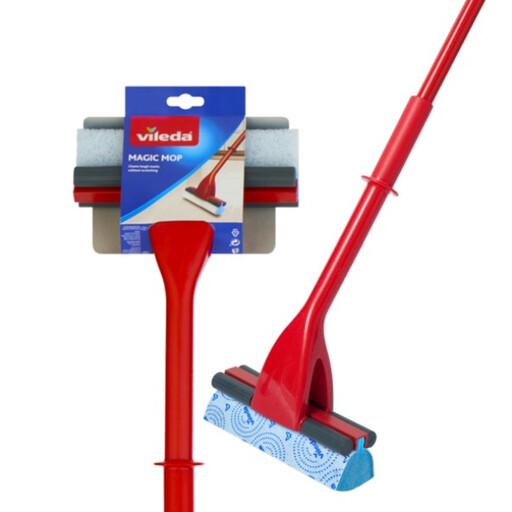
Why This Fits Their Persona: A practical option for renters, flats and smaller households that want a straightforward mop without storing a bucket with a separate wringer. It is designed for tiled and vinyl floors and has a 1,325mm overall length.
Its push-pull wringer helps squeeze out excess water without relying on a bucket with an additional wringing compartment.
Absorbent sponge head, white scouring edge and angled head for greater floor contact. Replacement mop heads are available.
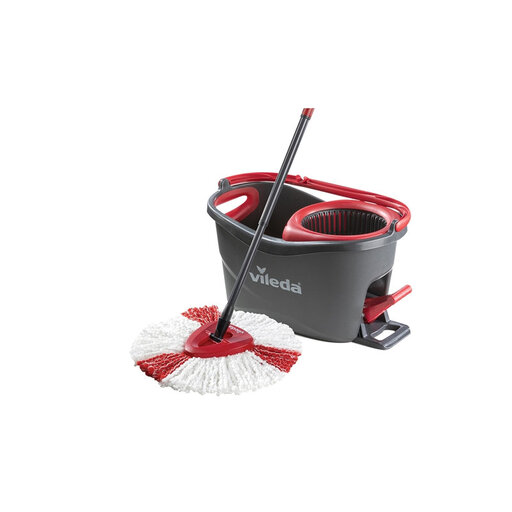
Why This Fits Their Persona: Suitable for households that prefer a complete spin mop and bucket arrangement, adjustable moisture control and a handle that can be set between 55cm and 130cm.
The foot-pedal-operated spin wringer avoids hand-wringing and the triangular head is designed to help reach corners.
Machine-washable microfibre head, telescopic handle, easy-pour bucket mouth and lengthways handle. Follow the stated floor restrictions.
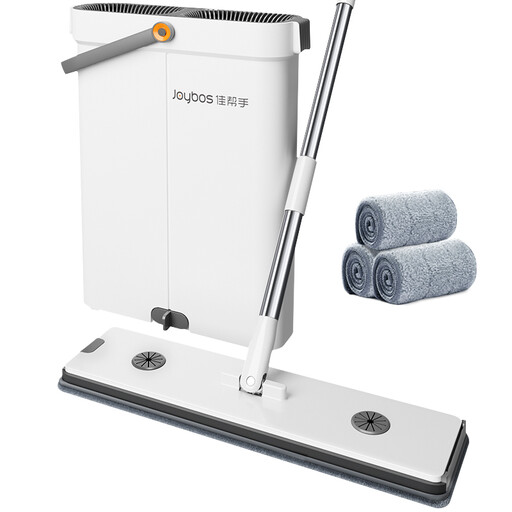
Why This Fits Their Persona: A useful add-on for frequent cleaners who already use the matching self-wringing flat mop system and want spare pads available between washes.
A four-pack reduces reliance on a single used pad and helps maintain a cleaner head rotation during regular floor cleaning.
40cm microfibre replacement pads supplied in a four-pack for a self-wringing flat mop system.
We have compiled a complete, real-time list of products that fully satisfy these strict selection criteria and UK safety regulations.
They can be useful if you clean larger areas regularly or want to control moisture without bending to wring the mop by hand. Consider the bucket’s filled weight, storage footprint and whether the floor requires only a lightly damp mop.
There is no universal timetable. Change a head when it becomes misshapen, develops persistent odours despite washing, loses absorbency or no longer attaches securely. Households that mop frequently may need replacement mop heads more often than occasional users.
Only if the flooring manufacturer permits damp cleaning and the mop can be wrung sufficiently dry. Avoid leaving standing water on laminate or wood, and follow the mop manufacturer’s instructions. For unfinished, oiled or waxed wooden floors, check the specific warning before use.