Careful certificate preservers
If you have a small set of important or mixed-condition originals, one-at-a-time flatbed handling, readable scans and sensible file organisation matter more than feeder speed.


Choose a flatbed-equipped multifunction printer for delicate or irreplaceable school-project certificates, checking that its platen, scan settings and file formats suit the originals. The National Archives uses 300 PPI as its default for ordinary documents in its own digitisation work; it is a practical reference point, not a school-project rule. An automatic document feeder (ADF) is useful to consider for robust batches, while repeated printing may make an ink-tank model more relevant. If scans identify pupils or others, settle the storage, access and backup arrangements before using cloud destinations.
If you have a small set of important or mixed-condition originals, one-at-a-time flatbed handling, readable scans and sensible file organisation matter more than feeder speed.
If you have many robust A4 certificates or supporting sheets, an ADF can reduce manual handling. Paper capacity also matters when the project involves repeated printing.
If scans contain pupil names, dates of birth, addresses or candidate numbers, decide who may access the files and where they will be stored and backed up.
Start with the condition of the certificates, then consider how many sheets you need to process and where the digital files will go.
| Concern | What to check | Who this matters to |
|---|---|---|
| Readable scans and careful handling | Check optical scan resolution, platen size and the file formats and settings your project needs. The National Archives uses 300 PPI as a default for ordinary documents in its own digitisation work. | If my certificates have small text or delicate surfaces, I want to inspect each original and scan it without feeding it through rollers. Around 42% of consumers put readable capture and careful handling first. |
| Batch scanning and printing | Check ADF capacity and permitted sheet sizes and weights; check two-sided scanning if both sides matter. Compare paper capacity for repeated project printouts. | With a stack of sturdy sheets and display materials to produce, I want fewer pauses to turn pages or reload paper. Roughly 33% of consumers prioritise batch throughput. |
| Control of personal data | Before using cloud or mobile scanning, check the approved destination, who has access, how access ends and how files are backed up. | If certificates identify pupils, I need the scans to stay within the school’s approved arrangements and remain accessible to the right people. Around 25% of consumers place personal-data control first. |
A printer’s print resolution is not its scanner’s optical resolution. Even a high optical-resolution specification does not establish colour fidelity, text-recognition accuracy or how a particular certificate will look.
Check the scanner specification and output formats separately, then test-scan a representative original before processing the set.
Feeder capacity describes how many compatible sheets it holds, not whether a creased, mounted, thick or irreplaceable original is safe to pass through rollers.
Inspect each original and use the flatbed for anything delicate or unsuitable for the feeder’s stated media limits.
Refillable tanks and cartridges suit different patterns of printing; a page-yield claim alone cannot tell you which purchase makes sense for a small archive.
Estimate your project’s printing and scanning needs, then compare included supplies, replacement consumables and the scan features you will actually use.
Shared email, cloud and mobile destinations can put personal information outside the school’s intended access arrangements. The Information Commissioner’s Office advises organisations to use security measures appropriate to the processing risk.
Use approved accounts and storage locations, restrict access, avoid unnecessary copies and follow the school’s backup and retention arrangements.
The MAXIFY MegaTank range is worth considering when you need both flatbed placement and an ADF alongside repeated project printing.
EcoTank A4 multifunction models are relevant if regular colour printing accompanies the scanning work and you prefer refillable ink.
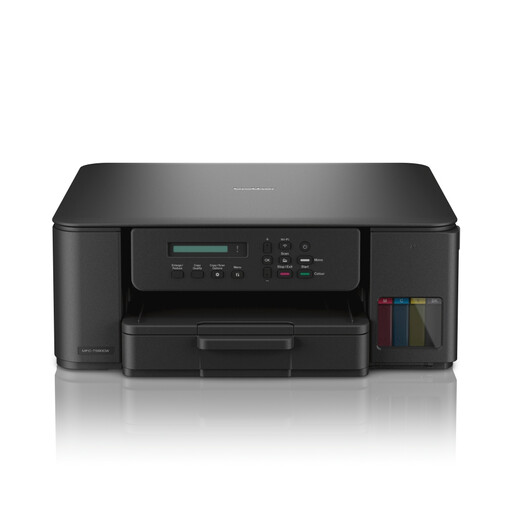
Brother’s A4 inkjet multifunction range offers a cartridge-based route for projects that need an ADF and regular printing.
OfficeJet Pro is another office-style all-in-one range to examine if ADF and connected scanning features matter to your project.
These multifunction printers offer different starting points for careful placement, batch workflows and related project printing. Match the exact model’s scanner and document-handling limits to your originals before deciding.
 No image available
For a project mixing individual certificates with batches of robust sheets, check the flatbed dimensions and feeder media limits against your originals.
Inkjet model. Test a representative certificate at the scan settings you intend to use, and follow the school’s approved file-storage arrangements.
 No image available
If you need both one-at-a-time certificate scans and a workflow for sturdy multi-page sets, check the platen size and feeder’s permitted media before buying.
Colour LED printer. Make a representative test scan rather than treating an optical-resolution figure as proof of the result you need.
 No image available
For a smaller set of originals that you plan to place individually, check the platen dimensions and available scan settings for your certificates.
Refillable ink-tank model. If you also need automatic batch feeding, confirm that the exact model provides the workflow you require.
 No image available
For robust multi-page paperwork, check the feeder’s document limits; if any certificate needs careful placement, confirm the flatbed and platen size before buying.
Inkjet model. If searchable files are important, check the text-recognition settings with a representative scan.
 No image available
If the project combines batches of robust sheets with repeated printing, compare this model’s feeder limits and scan settings with the work you have planned.
Before using it for delicate certificates, confirm flatbed availability, platen size and suitable output formats for the GX6150 specifically.
Not as a universal school-project requirement. The National Archives uses 300 PPI as its default for ordinary documents in its own digitisation work and notes that photographic material may need considerably more; choose settings that keep the certificate’s text and important detail readable for your intended use.
No: use an ADF only for robust originals within that model’s stated feeder limits. Place delicate, creased, mounted, unusually sized or irreplaceable certificates on a suitable flatbed instead.
Use a cloud destination only if it fits the school’s approved arrangements for the information in the scans. For personal data, the Information Commissioner’s Office advises organisations to use security measures appropriate to the risk; check account access, retention and backups before sending files.
Do not discard originals just because the digital copies look clear. Check who owns the certificates and follow the school’s retention or disposal process; scanning alone does not settle what should happen to the paper originals.