If the studio mainly prints black-text reading lists and needs automatic two-sided output, consider a monochrome laser multifunction printer. For recurring print and scan jobs, compare refillable-ink models with larger paper trays and document feeders; a compact inkjet is another option when space is limited and occasional colour matters. Check the exact model’s scanning workflow, network setup and consumable restrictions before choosing.
Who is each route for?
Frequent black-text list printers
If reading lists are usually black and white, prioritise automatic two-sided printing and a workflow that accommodates several users. HP specifies black-and-white printing, copying and scanning, an automatic document feeder and up to 29 pages per minute for the LaserJet M234sdw. Its rated speed is not a promise of how long every studio job will take.
Users with recurring print and scan jobs
If people regularly print and scan multipage material, paper and feeder capacity may matter more than a small footprint. Epson specifies a 250-sheet front tray and 35-page automatic document feeder for the EcoTank ET-5170. Compare those capacities with the studio’s busiest session.
Space-limited occasional users
For a shared corner with intermittent printing, copying and scanning, a compact inkjet may be easier to accommodate than an office-oriented model. Brother specifies a 150-sheet tray, 20-sheet automatic document feeder and automatic two-sided printing for the DCP-J1460DW; check whether those capacities cover busy days.
What should you check before buying?
Decide whether routine reading lists need colour, then compare the busiest print-and-scan session with each model’s paper handling. Shared access and cartridge or ink requirements can change which route is practical.
| Concern | Buying checks | Who this matters to |
|---|
| Black-text output |
Confirm that monochrome output covers routine work; compare automatic duplex printing and like-for-like rated speeds. |
When several people need black-text reading lists near a deadline, I want double-sided jobs to move without turning pages by hand. Around 31% of consumers would put black-text output first. |
| Recurring workload |
Compare tray and document-feeder capacities with busy sessions, and check the exact model’s refill or cartridge requirements. |
If printing and scanning happen repeatedly, I want fewer interruptions to load paper or handle consumables. Lower-intervention printing would come first for about 31% of consumers. |
| Shared scanning and access |
Check the scan method, automatic document feeder and compatibility with the studio’s network and administration requirements. |
When colleagues share multipage documents, I need them to print and scan through a setup everyone authorised to use can access. Roughly 23% of consumers would prioritise that shared workflow. |
| Space and occasional colour |
Measure the printer’s location, including paper-loading clearance; check colour capability and capacity for the busiest day. |
With little room for a printer, I still want to produce an occasional colour handout without choosing a machine intended for heavier work. Compact, occasional use would be the first concern for around 15% of consumers. |
Buying mistakes to avoid
-
Assuming every multifunction printer handles batches alike
A print, copy and scan label does not tell you how much paper the device holds or how many pages its feeder accepts. Brother specifies a 150-sheet tray and 20-sheet feeder for the DCP-J1460DW; Epson specifies a 250-sheet tray and 35-page feeder for the ET-5170.
Use the studio’s busiest print-and-scan session to judge tray and feeder capacity, and confirm how the chosen model sends scans.
-
Choosing colour capability before defining the main job
If reading lists are overwhelmingly black text, colour alone will not address a need for automatic two-sided printing or a smoother multipage workflow. HP specifies the monochrome LaserJet M234sdw with duplex printing and an automatic document feeder.
Decide whether colour is routinely needed, then compare models on the printing and scanning tasks the studio actually performs.
-
Overlooking cartridge restrictions
HP states that dynamic security measures on the LaserJet M234sdw can block cartridges using modified or non-HP circuitry. That restriction matters if the studio intends to use an alternative cartridge source.
Check the exact model’s current cartridge policy against the consumables the studio plans to use.
Relevant brands to consider
Brother
Brother’s DCP-J1460DW illustrates a compact A4 inkjet route, while its MFC-J5955DW illustrates an office-oriented route that also prints A3. These are different models for different space and paper-handling needs.
- Brother specifies automatic two-sided printing, a 150-sheet tray, 20-sheet document feeder, Wi-Fi and USB for the DCP-J1460DW.
- Brother states a duty cycle of up to 1,000 pages for the DCP-J1460DW; compare the studio’s expected workload rather than applying the larger model’s capacities to it.
HP
HP’s LaserJet M234sdw is a monochrome laser multifunction example for studios whose routine lists do not need colour.
- HP specifies automatic two-sided printing, an automatic document feeder and up to 29 pages per minute for the M234sdw.
- HP says the M234sdw’s dynamic security measures can block cartridges using modified or non-HP circuitry; check the planned cartridge source.
Epson
Epson’s EcoTank ET-5170 illustrates a refillable-ink A4 route for recurring print and scan work.
- Epson specifies a 250-sheet front tray, 35-page automatic document feeder and double-sided printing for the ET-5170.
- Epson’s stated ink yields are conditional; do not treat them as the number of pages the studio will necessarily print between refills.
Joybuy products for this decision
These multifunction printers offer different approaches to shared reading-list work, from monochrome laser printing to inkjet models for occasional or recurring use. Compare each model’s paper handling, scanning method and consumables with the studio’s needs.
 No image available
Canon MAXIFY GX6150
Consider this model for recurring shared print, copy and scan jobs if its paper-handling setup suits the studio’s busiest session. Confirm compatible ink bottles and the studio’s network requirements before choosing it.
View on Joybuy
 No image available
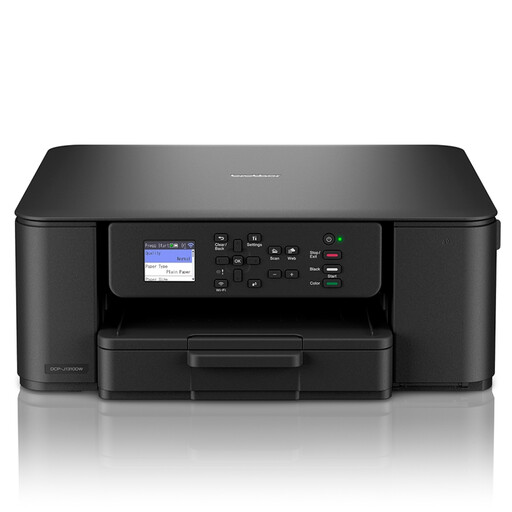
Brother DCP-J1310DW Wireless Inkjet Printer
Consider this wireless inkjet for occasional text and colour work where space is limited. Check its document-feeder capacity against the studio’s scanning batches and its monthly-use guidance against expected printing.
View on Joybuy
 No image available
Brother MFC-J6760DW All-in-One Inkjet Printer
Consider this inkjet if the studio combines reading lists with multipage copying or scanning and occasional larger-format work. Check its placement clearance, paper handling and exact consumables before committing space to it.
View on Joybuy
 No image available
Brother MFC-J6540DWE Inkjet Printer
Consider this model for shared multipage work if its paper handling suits the studio. Confirm the exact ink system before choosing consumables; an additional lower tray is optional, so check the bundle if expanded capacity matters.
View on Joybuy
 No image available
Brother DCP-L1640W Mono Laser Printer
Consider this monochrome laser model for black-text A4 lists if manual page handling is acceptable. Two-sided printing is manual and there is no automatic document feeder, so multipage scanning or copying will take more hands-on work.
View on Joybuy
Frequently asked questions
Do reading lists call for a monochrome laser printer?
A monochrome laser multifunction printer is worth considering when routine reading lists are black text and automatic two-sided output matters more than colour. HP specifies duplex printing and an automatic document feeder for the LaserJet M234sdw; choose a colour-capable route instead if colour is a regular requirement.
How large should the paper tray and document feeder be?
Choose capacities around the studio’s busiest likely print-and-scan session, not just an average quiet day. Epson specifies a 250-sheet tray and 35-page feeder for the ET-5170, while Brother specifies a 150-sheet tray and 20-sheet feeder for the DCP-J1460DW; neither set of figures alone determines whether a model suits your workload.
Can the HP LaserJet M234sdw use any cartridge that looks compatible?
Do not assume it can. HP states that the M234sdw uses dynamic security measures that can block cartridges using modified or non-HP circuitry. Check HP’s current policy for the exact model against the cartridges the studio intends to use.


