Recurring-list organisers
Groups printing lists repeatedly for classes, sessions or events need paper handling that requires little intervention and a workable plan for replacement ink.


For a community group printing A4 booking lists, choose by the size and frequency of print runs and whether volunteers also copy or scan stacks of paperwork. Automatic two-sided printing, paper capacity and an automatic document feeder (ADF) deserve attention; weigh refillable ink against cartridges using the group’s expected printing pattern and consumables needs.
Groups printing lists repeatedly for classes, sessions or events need paper handling that requires little intervention and a workable plan for replacement ink.
When different volunteers print, copy or scan paperwork, an ADF, automatic two-sided functions and suitable connection options can reduce manual steps. Check each function separately: two-sided printing does not establish two-sided scanning.
Groups that print irregularly still need to decide whether a higher-yield ink system will be useful, while keeping the required copying and scanning functions in view.
Start with a typical month’s A4 printing, then check the largest event-day batch and the number of paper records volunteers handle. Those three tasks determine which ink system, tray and scanning functions deserve closer comparison.
| Concern | What to check | Who this matters to |
|---|---|---|
| Ink for recurring lists | Compare replacement ink, stated page yields and maintenance consumables against a typical month’s printing; yields are not a promise of the group’s results. | If we print lists week after week, we need a consumables plan we can sustain. Around 36% of consumers put recurring printing needs first. |
| Occasional-use fit | Check whether the group would use the capacity of a refillable system, and review any cartridge-chip or subscription conditions. | When we print only for occasional events, unused ink capacity matters less than a straightforward setup for those sessions. About 27% of consumers prioritise occasional-use fit. |
| Event-day batches | Match tray capacity to the usual batch and confirm automatic two-sided printing for the paper and mode you intend to use. | Several lists may need to be ready before an event, so we want fewer stops to reload paper or turn sheets over. Around 27% of consumers put event-day printing first. |
| Paper-record handling | Check ADF capacity and whether scanning, as well as printing, can be double-sided if forms have two printed faces. | When volunteers receive multi-page forms, we need to copy or scan them without feeding every sheet by hand. Roughly 10% of consumers make paper-record handling their primary concern. |
A cartridge model can suit light use, while repeated booking-list runs make replacement ink more important to assess. Manufacturer page yields depend on their stated test conditions.
Estimate a normal month’s black and colour pages, then compare the applicable ink options and yields for each model.
Automatic duplex printing does not establish that volunteers can scan both faces of a form automatically.
If double-sided forms are routine, look for an explicit two-sided scanning or duplex-ADF specification.
A printer can handle A4 lists yet still interrupt a large batch or require a stack of forms to be split.
Compare the tray with the largest normal print run and the ADF with the usual document stack.
Reloading paper during an event-day run also takes a volunteer away from other tasks.
HP says dynamic-security updates for the OfficeJet Pro 9125e can block cartridges using a non-HP chip, including some that previously worked.
If the group plans to use remanufactured or refilled cartridges, check the current consumables policy before choosing that model.
The MAXIFY GX refillable-ink line is relevant to groups printing plain-paper lists regularly and handling multi-page paperwork.
Brother’s MFC-J cartridge models are relevant where volunteers need printing, copying and scanning with substantial paper handling.
EcoTank multifunction models are relevant when a group wants refillable ink alongside A4 printing, copying and scanning.
OfficeJet Pro multifunction models are relevant to groups considering office-style paper handling and connected workflows.
These multifunction printer choices relate to recurring A4 booking lists and volunteer paperwork. Compare their paper handling and ink arrangements against the group’s printing pattern; check two-sided scanning separately if forms have information on both faces.
 No image available
Consider this cartridge-model route for A4 list batches and multi-page volunteer paperwork. Compare the appropriate replacement cartridges with your expected volume, and confirm two-sided scanning if forms require it.
 No image available
Consider this refillable-ink route if booking lists are printed frequently and volunteers handle batches of forms. Assess stated ink yields against expected use, and check two-sided scanning before relying on it for forms.
 No image available
This A4 multifunction model is a choice to consider for repeated list printing alongside copying and scanning. Compare replacement-bottle arrangements with the group’s printing pattern; confirm whether it scans both sides automatically if needed.
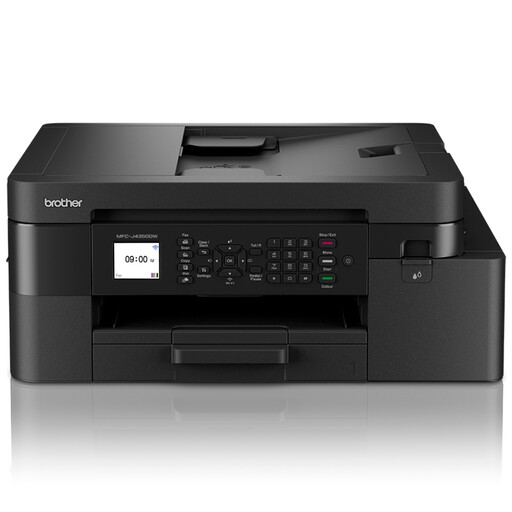 No image available
Consider this model when booking-list batches are modest but volunteers also copy or scan paperwork. Match its tray to your largest run; check which cartridge option you intend to use and whether two-sided scanning is required.
 No image available
Consider this model for A4 lists and multi-page volunteer paperwork. Check whether an additional paper tray is part of the configuration you choose, as well as the applicable cartridges and any need for two-sided scanning.
Choose automatic two-sided printing if the group routinely prints lists or policies on both faces of a sheet. Check the supported paper and feed path: Canon specifies this function for A4 or Letter plain paper through the rear tray or cassette on the MAXIFY GX4050.
An automatic document feeder is useful when volunteers regularly copy or scan stacks of booking forms or records. Check its capacity against the usual stack and confirm two-sided scanning separately if the source documents use both faces.
Check the manufacturer’s security-update information and whether the printer’s connection options suit the group’s setup. The UK government says its consumer-connectable-product security regime took effect on 29 April 2024 for covered products; a particular printer’s status needs to be assessed against the regime’s scope.
Use an appropriate electrical-equipment collection or take-back route available to the group rather than putting the printer in general waste. UK government guidance describes waste electrical and electronic equipment rules as supporting recovery, reuse and recycling.