Choose a multifunction printer around the stories you will scan: a feeder with automatic two-sided scanning is useful for loose, double-sided pages, while bound or delicate originals call for individual handling on a suitable flatbed. For a shared studio, check the exact model's scanning modes, paper sizes, network options and consumables before choosing; a feeder or automatic double-sided printing alone does not establish automatic two-sided scanning.
Who needs this printer?
Batch-digitisation coordinators
If several contributors bring loose, multi-page stories, a document feeder can reduce repeated placement of individual sheets. Check whether the printer scans both sides automatically if those pages have writing on both sides.
Creators handling delicate originals
Bound notebooks, fragile pages and irregular sheets may need individual placement rather than a feeder. Check the flatbed and the sizes it accepts before planning how to scan them.
Shared-space print-and-scan managers
If the machine will also handle routine printing, consider consumables and how studio members will connect to it. Where stories contain personal data, agree who can access scan destinations and collect originals promptly.
What matters when choosing?
Sort the originals into feedable sheets and items needing individual placement before comparing printers. Then decide how much two-sided scanning, shared access and routine printing matter to your studio.
| Concern |
What to check |
Who this matters to |
| Loose, two-sided batches |
Check feeder capacity and whether scanning both sides is automatic for the original size you use. |
When several contributors bring loose manuscripts, I want to scan a batch without turning each sheet myself. Around 42% of consumers put batch handling first. |
| Delicate or bound originals |
Check flatbed access and whether it accommodates the originals that should not go through a feeder. |
If a notebook cannot safely be fed as loose sheets, I need a way to place its pages individually. Careful original handling comes first for around 33% of consumers. |
| Shared printing and access |
Check connection options, scan destinations and the correct replacement consumables for your expected printing. |
When studio members also print and share scan files, I need a workable access and supplies routine. Around 25% of consumers prioritise those shared-use needs. |
Mistakes to avoid
-
Assuming every feeder scans both sides automatically
Canon specifies manual, not automatic, duplex scanning through the MAXIFY GX4050's document feeder. Two-sided sheets therefore need turning and reloading.
For a sizeable archive of two-sided loose pages, check the exact model's duplex-scan mode and supported paper size, not just whether it has a feeder.
-
Planning to feed every original
A document feeder handles multiple loose pages in one go, but bound or delicate stories may need individual handling.
Sort the stories by format before buying, then check that the printer offers a suitable way to scan those that should stay out of the feeder.
-
Equating an ink-yield claim with running cost
Manufacturer yield figures do not, by themselves, account for your studio's mix of black and colour printing or its replacement supplies.
Compare the correct ink and any maintenance parts against the volume of printing you expect alongside scanning.
-
Leaving stories at a shared machine
Originals and printouts containing personal data need particular care when a studio handles them as an organisation. The Information Commissioner's Office advises shared-printer users to check that nothing has been left behind.
Agree who can access scan destinations and check the machine for originals and output after each batch.
Relevant brands and models
These model-specific features offer different ways to handle a shared studio's scanning and printing; they do not describe every printer from each brand.
Brother
The MFC-J5740DW is a reference for studios combining A3 printing with loose A4 manuscript batches.
- Brother UK lists a 50-sheet feeder, automatic A4 two-sided scanning, wired and wireless connectivity, two 250-sheet trays and a 100-sheet multi-purpose tray for this model.
- Its automatic two-sided scanning specification is for A4; check how other original sizes would be handled.
Epson
The EcoTank ET-4950 is an A4-focused reference for loose, two-sided stories and a refillable-ink printing workflow.
- Epson United Kingdom lists double-sided printing, copying and scanning with a double-sided document feeder for the ET-4950.
- Compare replacement ink and your likely printing volume before using Epson's included-ink yield claims to assess running costs.
Canon
The MAXIFY GX4050 is a reference for a shared print-and-scan space considering refillable tanks and network access.
- Canon UK lists a 35-sheet feeder, 350-sheet plain-paper capacity, Wi-Fi and Ethernet for the GX4050.
- Canon specifies manual duplex copying and scanning through its feeder, so two-sided batches require turning and reloading.
Joybuy printer choices
These multifunction printers are choices to assess for scanning loose stories in a shared studio. Check each model's feeder, two-sided scanning and flatbed arrangements against your originals; the features of the separately discussed Brother, Epson and Canon models do not transfer to these products.
 No image available
Brother MFC-J6540DWE Inkjet Printer
Consider this model for a studio scanning loose stories alongside routine printing. Confirm its feeder capacity, whether it scans both sides automatically and how it handles originals that need individual placement.
View on Joybuy
 No image available
Brother MFC-J6760DW All-in-One Inkjet Printer
This model is worth assessing if your studio needs to scan loose pages and also considers larger-format printing. Check the supported paper sizes and whether two-sided scanning is automatic for the sheets you use.
View on Joybuy
 No image available
Canon MAXIFY GX6150
Consider this model if scanning loose manuscripts and managing shared printing are both priorities. Check its feeder and duplex-scan modes, connection options and the consumables required for your printing volume.
View on Joybuy
 No image available
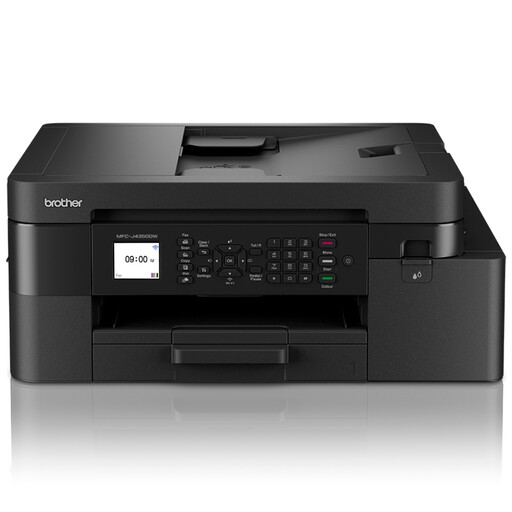
Brother MFC-J4350DW All-in-One Inkjet Printer
Assess this model for a studio with loose-page scanning jobs and limited room for a printer. Check its dimensions, feeder capacity and duplex-scan mode, as well as the supplies needed for routine printing.
View on Joybuy
Common questions
Do handwritten stories need a document feeder?
A feeder is useful when most stories are loose, multi-page sheets: Epson United Kingdom describes it as a way to scan multiple pages in one go. For bound, fragile or irregular originals, check for a suitable flatbed workflow instead.
When does automatic two-sided scanning matter?
It matters most when many loose sheets have writing on both sides and you want to avoid turning each batch. Brother UK specifies automatic A4 two-sided scanning for the MFC-J5740DW, while Canon UK says the MAXIFY GX4050 requires manual turning and reloading for duplex feeder scans; check the exact mode on any model you consider.
Will a printer's scanner turn handwriting into editable text?
Do not assume a scan will produce accurate editable text from handwriting. If searchable or editable stories are essential, try representative pages with the text-recognition software you intend to use before committing to that workflow.
What should a shared studio do with stories containing personal data?
Agree who can access the scan files and collect originals and printouts after each session. The Information Commissioner's Office advises organisations using shared printers or photocopiers to check that nothing has been left behind.


