People caring for fragile recipe originals
If recipes are worn, curled or difficult to replace, a flatbed lets you position each sheet on the glass instead of routinely feeding it through an ADF.


Choose a multifunction printer with a flatbed for delicate recipe originals and an automatic document feeder (ADF) for stable, loose sheets. If several people will scan batches and print regularly, compare feeder capacity, network connections and paper handling; for occasional short batches, a smaller machine may be enough, provided it meets the studio’s requirements for handling originals.
If recipes are worn, curled or difficult to replace, a flatbed lets you position each sheet on the glass instead of routinely feeding it through an ADF.
For mostly stable, loose sheets shared between several users, feeder capacity, network access and paper handling matter alongside a flatbed for less suitable originals.
If scanning happens in short sessions, one machine for scanning, copying and printing may be more practical than choosing capacity for large, repeated batches.
Start with how the originals must be handled, then size the feeder and shared-printing features to the work the studio actually expects.
| Concern | What to check | Who this matters to |
|---|---|---|
| Handling old originals | Confirm a flatbed and check its maximum document size. Use the ADF only for sheets suitable for feeding. | If my handwritten or curled recipes are hard to replace, I want to position them individually rather than risk feeding them through the machine. Around 42% of consumers put preserving originals first. |
| Shared batch scanning | Compare ADF capacity and network connections; check the paper tray if users will also print copies. | When several of us scan stable, loose sheets, I want fewer interruptions to reload pages or wait for access. For around 33% of consumers, shared workflow is the primary concern. |
| Space and regular printing | Check the machine’s dimensions, feeder capacity and ink system against available space and expected printing. | If we scan only short batches but need to print and copy in the same workspace, I do not want capacity that takes up space without serving our routine. Compact all-in-one use comes first for around 25% of consumers. |
A feeder reduces handling time for stable, loose pages, but curled or irreplaceable sheets need more controlled placement.
Choose a model that explicitly specifies a flatbed as well as an ADF, then separate originals that need individual placement from sheets suitable for feeding.
A printer that prints on both sides does not necessarily capture both sides of a recipe automatically. Notes on the reverse could be missed.
If reverse sides matter, check the exact model’s duplex-scan specification and inspect the first batch before continuing.
A refillable-ink model is worth considering when the studio prints regularly, but a published yield alone cannot establish what the studio’s running costs will be.
Estimate colour and mono printing separately, then check compatible consumables and maintenance requirements before choosing the machine’s capacity.
The Information Commissioner’s Office defines personal data as information relating to an identified or identifiable living person. Names or contact details on digitised recipes therefore warrant a check of what is being stored and shared.
Decide who needs access to the files and use an appropriate access-controlled location for scans containing personal details.
Canon’s MAXIFY range includes models relevant to studios seeking both individual-sheet scanning and shared-use connections.
Epson’s EcoTank ET-5170 is relevant when recipe scanning is accompanied by regular studio printing.
Brother has multifunction models to consider where short document batches and wireless access are part of the studio routine.
These multifunction printers offer different starting points for a shared studio. Check each exact model’s flatbed and feeder specifications against the condition and volume of your recipes before choosing.
 No image available
Consider this wireless all-in-one model if the studio needs one machine for shared printing and recipe scanning. Before using it for the collection, confirm flatbed and ADF scanning on the exact model; check duplex scanning separately if notes on reverse sides matter.
 No image available
For a studio considering an inkjet machine for printing alongside digitisation, confirm the flatbed, ADF and connection options of this exact model before purchase. If recipes have reverse-side notes, check its scanning mode rather than relying on a duplex-printing description.
 No image available
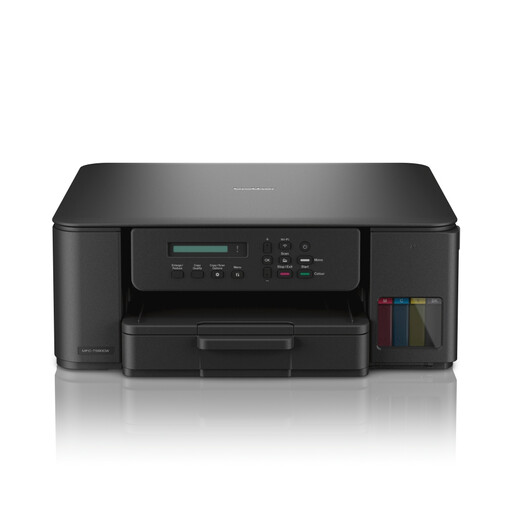
This wireless ink-tank model is a choice to examine when the studio also expects to print regularly. Check its flatbed specification for old originals, and confirm whether it has an ADF before planning feeder-based batch scans.
 No image available
If shared batch work is the priority, compare this model’s stated feeder and connection specifications with the studio’s workload. Confirm that it also has a suitable flatbed before using it for fragile recipes, and check duplex scanning if both sides need capturing.
 No image available
Consider the GX6150 where several users have stable, loose sheets to scan and the studio prints regularly. Canon UK specifies a 50-sheet ADF, Wi-Fi and Ethernet for this model; confirm its flatbed and duplex-scan arrangements against any delicate or two-sided originals.
Use an ADF for stable, loose recipes that can travel through the feeder without concern. Place delicate, curled or irreplaceable originals on a flatbed one at a time; Canon UK specifies both scanner arrangements on the MAXIFY GX4050.
Duplex scanning matters when recipe sheets have content on both sides and the sheets are suitable for feeding. Check the exact model’s duplex-scan specification: automatic double-sided printing does not establish that it scans both sides automatically.
Agree on a file-naming convention and an appropriate shared storage location before processing the collection. Scan a small representative batch first to check that handwriting is legible and reverse-side content has not been missed.
It can matter if electronically stored recipe scans contain information relating to an identified or identifiable living person, under the Information Commissioner’s Office definition of personal data. Check the collection’s actual contents and who can access the files rather than assuming that every historic recipe contains personal data.