
24/7 Customer Support

Free returns

Same-day & Next-day Delivery

Quality Guaranteed

Unlock Your Welcome Offers: FREE Delivery | Up to 80% OFF | Free 30-day JoyPlus trial
Download the APP
Choosing a non-bio laundry detergent seems straightforward until you compare wash counts, ingredients, formats and fragrance claims. UK households also need to consider hard water, cooler wash cycles, baby clothing, activewear and the practical realities of storing detergent safely.
A lower price is not always better value, while a large pack may not suit a small washing machine or lightly soiled loads. The right choice depends on how you wash, what you wash and which ingredients you prefer to avoid.
Non-bio generally refers to detergent without biological enzymes, which are commonly used to break down certain stains. However, non-bio products may still contain perfume, preservatives, optical brighteners or other cleaning ingredients.
If you are shopping for a sensitive skin laundry detergent, read the full ingredient information rather than relying only on the front label. A fragrance-free laundry detergent may be more suitable for households wishing to minimise added scent, but “non-bio” and “fragrance-free” are not interchangeable terms.
A 1.5-litre bottle can look cheaper than a family-size laundry detergent pack, but the meaningful comparison is the recommended dose and number of washes. Dosage may increase for:
Check the stated wash count and follow the label dosage. Overdosing can leave residue, increase rinsing requirements and raise your running cost.
Liquid, powder, pods and laundry detergent sheets each have different handling and dosing requirements.
Convenience should not replace checking the instructions for your machine and load size.
Look for the number of washes and the recommended dose for a standard 4–5kg load. Some products provide different instructions for 6–8kg machines, hard water and heavily soiled laundry.
For example, Persil Non Bio Liquid Laundry Detergent lists a 27ml dose for a standard load in soft or medium water and 40ml for larger loads or hard water. This is more useful than judging value by bottle volume alone.
A family household may prefer a 60-wash or 68-wash pack to reduce replacement frequency. Smaller packs, such as 26 or 36 washes, may be more practical where storage space is limited.
Check whether the formula contains perfume, enzymes, preservatives, optical brighteners or bleaching agents. These features are not automatically unsuitable, but they matter if you are choosing baby laundry detergent, caring for delicate fabrics or trying to reduce fragrance.
For a fragrance-free laundry detergent, look for an explicitly unscented product rather than one described as having a “mild” or “fresh” fragrance. If someone in your household has an ongoing skin condition or repeated irritation, seek appropriate medical advice; no laundry product should be treated as a medical solution.
Liquid and gel products usually require a dosing cap or dispenser. Powder should be stored in a dry place to reduce clumping. Pods and sheets must remain out of sight and reach of children and pets.
Always check the garment care label and machine instructions. For sportswear, swimwear and technical fabrics, a specialist non-bio formula may be preferable to a general detergent, particularly where odour, elastane or fabric treatments are concerns.
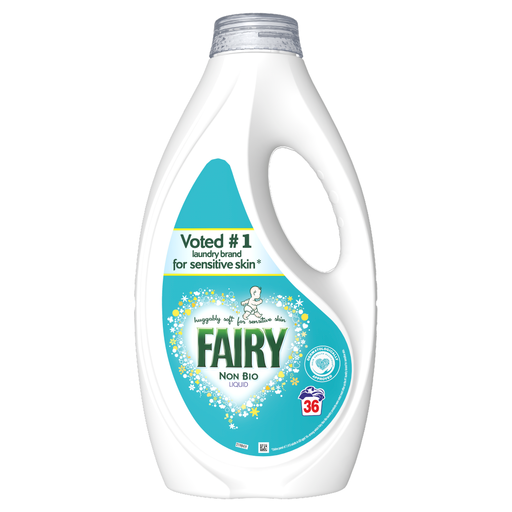
Why This Fits Their Persona: A manageable bottle size suits smaller UK households, rented homes and shoppers who want liquid dosing without committing to a large family pack.
The stated 36-wash capacity makes cost-per-wash comparisons clearer than relying on bottle size. The product information also provides dosing and pre-treatment guidance.
Liquid format; suitable for machine or hand washing; can be used for pre-treating selected stains.
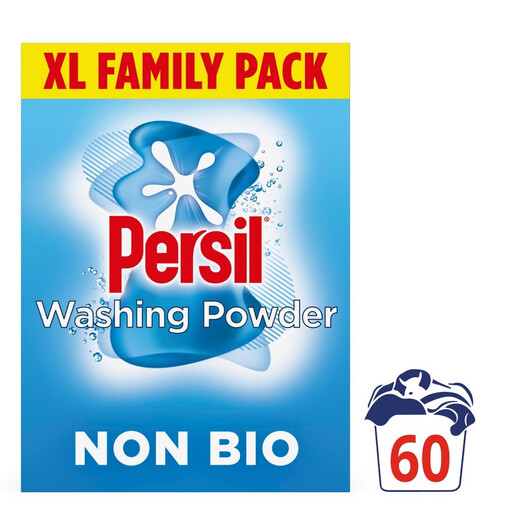
Why This Fits Their Persona: The 3kg format is suited to regular family washing, especially where a household wants a powder format and fewer replacement trips.
The listing specifies a 50g dose for medium soiling in medium-hard water, helping shoppers calculate usage rather than assume the largest box is automatically economical.
60-wash family pack; powder format; stated suitability for cold washes and recyclable box packaging.
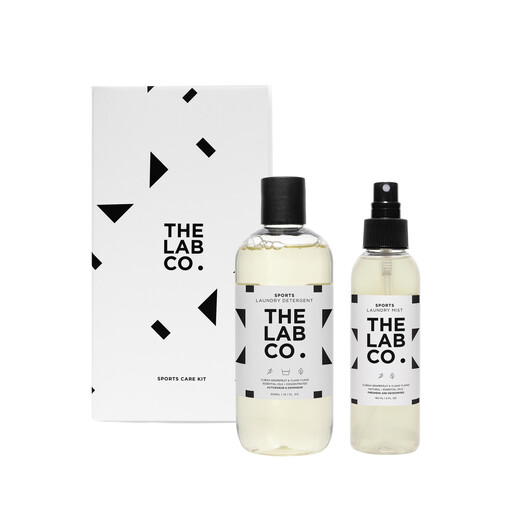
Why This Fits Their Persona: Gym users, swimmers and runners may want a dedicated wash for activewear and swimwear rather than using one detergent for every fabric.
Its directions distinguish soft-water/light-soiling doses from hard-water/heavy-soiling doses, rather than presenting one universal amount.
Plant-based formula stated by the listing; detergent and fabric freshener included; designed for activewear and swimwear.
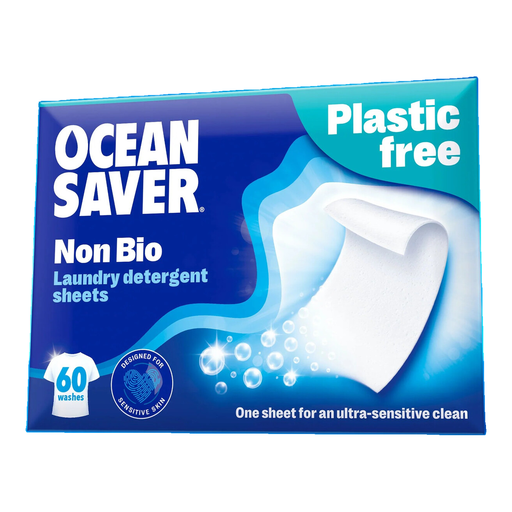
Why This Fits Their Persona: Lightweight sheets are convenient for flats, limited storage, travel and shoppers comparing plastic-free laundry formats.
The instructions specify half a sheet for lighter loads and one full sheet for full loads or hard water, making the pre-measured format more flexible.
60 sheets per pack; plant-based and plastic-free features stated by the listing; designed for cold-water washing.
We have compiled a complete, real-time list of products that fully satisfy these strict selection criteria and UK safety regulations.
Many non-bio products are marketed for baby clothes and sensitive skin, but suitability depends on the complete formula and your household’s preferences. Check fragrance, preservatives and usage instructions, then use an appropriate wash programme with thorough rinsing.
Not necessarily. Compare the pack price with the stated number of washes, then consider whether hard water or heavy soiling requires two sheets. A compact format may offer storage and transport convenience, but cost per wash remains the practical comparison.
Shelf life and storage guidance vary by product. Keep bottles tightly closed, store powder somewhere dry and protect pods or sheets from moisture and heat. The number of washes depends on load size, water hardness and dosage, so the stated wash count is an estimate based on specified conditions.