A 34-inch, 21:9 ultrawide is a useful starting point for a single-screen cockpit setup, provided your simulator handles that aspect ratio as you want. Consider OLED if dark-scene presentation matters most and you are comfortable managing persistent HUD elements; consider a VA ultrawide if you prefer a non-OLED screen for long sessions. Check the refresh rate available through your intended connection, your desk space and the exact model’s terms before buying.
Who this setup suits
Single-screen cockpit explorers
If you want flying, navigation panels and starfields on one continuous display rather than across monitor bezels, a 34-inch, 21:9, 3440 × 1440 format is worth comparing. Check how your particular simulator uses the extra screen width.
Dark-scene and HDR atmosphere seekers
If black-level presentation and bright highlights matter to you, compare the exact panel and HDR credentials rather than relying on an HDR label alone. The Video Electronics Standards Association (VESA) uses defined DisplayHDR certification tiers; room reflections still deserve a separate check.
Long-session HUD users
If maps or cockpit instruments remain in place for extended sessions, decide whether OLED image-care routines fit your use. LG warns that leaving the same image on an OLED monitor for a long time may cause faint marks; a VA ultrawide offers a non-OLED route to the wide-screen layout.
What to check before choosing
Start with the simulator’s 21:9 behaviour and your available desk space, then weigh dark-scene presentation against persistent-HUD use and the refresh mode your connection can deliver.
| Concern |
Buying checks |
Who this matters to |
| Panoramic cockpit space |
Check 21:9 support in the exact game, plus a 3440 × 1440 screen’s width and fit on your desk. |
If I want navigation panels and the view ahead on one continuous screen, usable game width comes first. Around 46% of consumers would put that panoramic need ahead of the other concerns here. |
| Dark scenes and reflections |
Compare panel type and the exact VESA DisplayHDR tier; assess screen reflections against your room lighting. |
When stars and interface highlights sit against dark backgrounds, I care most about how the image looks where I play. That would be the primary need for around 27% of consumers. |
| Motion and long-session use |
Check refresh rate at native resolution for your chosen input, and review OLED image-care guidance if the HUD stays static. |
If I spend long sessions flying with instruments in place, I need a connection mode and panel-care routine I can live with. Around 27% of consumers would make motion and ongoing use their first concern. |
Buying pitfalls
-
Assuming every HDR label means comparable HDR performance
Accepting HDR content and meeting a certified performance tier are different things. VESA defines DisplayHDR and DisplayHDR True Black tiers, so broad HDR wording alone does not establish how two monitors compare.
Check certification and tier for the exact model, then consider panel type and the lighting in your room.
-
Overlooking a persistent HUD when choosing OLED
Maps and cockpit instruments can stay fixed during a long session. LG says a long-static image may leave faint marks on its OLED monitors and describes Image Cleaning as an image-care measure, not a reason to disregard the risk.
Read the exact model’s image-care instructions and warranty terms. If that routine does not suit your use, compare a non-OLED ultrawide with the layout you need.
-
Expecting the headline refresh rate through every port
The available mode can depend on the input. Dell lists the Alienware AW3423DWF at 3440 × 1440 up to 165Hz through DisplayPort, but 100Hz through HDMI.
Match the monitor’s input-specific modes to your graphics output and cable, then select the intended resolution and refresh rate after connecting it.
-
Assuming 21:9 improves every simulator
A wider physical screen does not establish how a particular game handles field of view, HUD placement or cut-scenes.
Check support for the exact game before making its ultrawide presentation the deciding reason to buy.
Relevant brands to compare
LG UltraGear
LG’s 34GS95QE-B is a 34-inch, 3440 × 1440 OLED ultrawide reference for comparing a pronounced curve and a high listed refresh rate.
- LG lists an 800R curve, 240Hz refresh rate, 0.03ms GtG response and DisplayHDR True Black 400 for this model. These are manufacturer specifications, not independent test results.
- LG also warns that long-static images may leave faint marks on its OLED monitors and provides an Image Cleaning routine, relevant to persistent cockpit HUDs.
Samsung Odyssey
The 34-inch Odyssey OLED G8 G85SD is a QD-OLED ultrawide reference if reflections in your room are a particular concern.
- Samsung lists 3440 × 1440 resolution, 175Hz and an OLED Glare Free feature; assess the claimed glare reduction against your own room lighting.
- Its glare treatment does not remove the need to consider static-image care on an OLED screen.
Alienware
Dell’s 34-inch AW3423DWF provides a QD-OLED specification reference when comparing input-dependent refresh modes and pixel-refresh upkeep.
- Dell lists 3440 × 1440 at up to 165Hz through DisplayPort, with a lower 100Hz mode through HDMI.
- Dell documents pixel-refresh maintenance for the AW3423DWF. Check its availability separately rather than treating it as a confirmed purchase option.
BenQ MOBIUZ
BenQ’s EX3410R is a 34-inch curved VA reference for buyers who want a 3440 × 1440 ultrawide without choosing OLED.
- BenQ lists a 1000R curve, 144Hz through DisplayPort, DisplayHDR 400 and integrated 2.1-channel audio for this model.
- Its listed 144Hz maximum and 2ms GtG response differ from the higher refresh-rate and lower response-time figures quoted for the OLED models above; compare the modes and conditions you would actually use.
Joybuy monitors for this setup
These monitors offer single-screen ultrawide options for the cockpit scenario, including VA and OLED models. Compare each model’s stated format with your game, connection and tolerance for persistent on-screen elements.
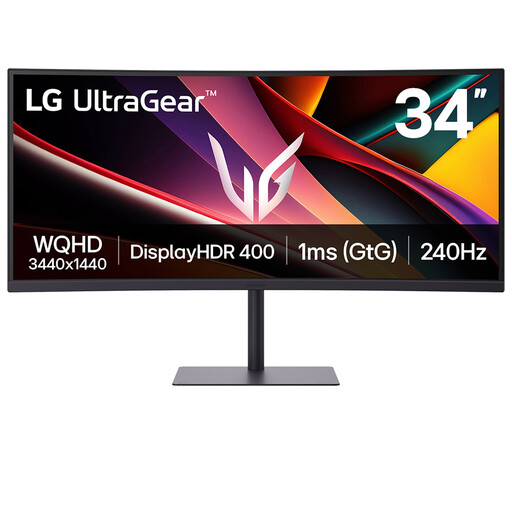 Image unavailable
LG UltraGear 34G630A-B 34-inch VA WQHD 240Hz monitor
Consider this VA model if you want a wide single-screen cockpit without choosing OLED.
The product name specifies a 34-inch VA display, WQHD resolution and 240Hz refresh rate. Check which connection and PC output can provide your intended mode, and confirm the game’s ultrawide behaviour.
View on Joybuy
 Image unavailable
Dahua 34-inch curved UWQHD 200Hz VA monitor
This is another non-OLED option for a wide cockpit view with persistent interface elements.
The product name specifies 3440 × 1440 resolution, 200Hz, a VA panel and two HDMI plus two DisplayPort 1.4 inputs. Confirm the refresh mode available through the input you will use; do not treat its HDR10 wording as a VESA DisplayHDR certification.
View on Joybuy
 Image unavailable
LG UltraGear 34GX900A-B 34-inch OLED WQHD 240Hz monitor
Consider this OLED model if dark-scene presentation is a priority and its image-care requirements suit your sessions.
The product name specifies a 34-inch OLED display, WQHD resolution and 240Hz. Check the exact model’s care instructions and warranty terms if cockpit elements remain static, as well as the mode available from your PC and cable.
View on Joybuy
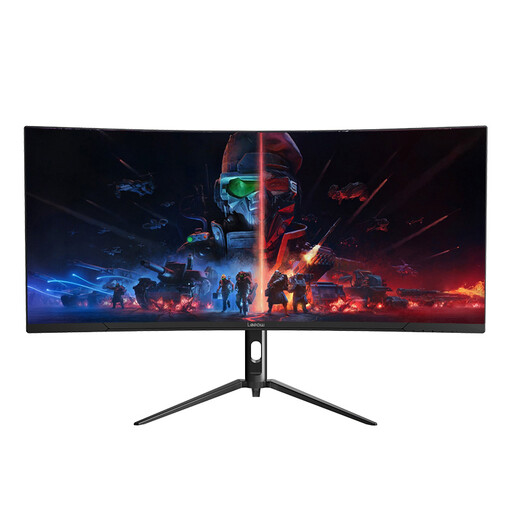 Image unavailable
Lepow HC-SJ34MZ5 34-inch curved ultrawide 165Hz monitor
Consider this curved ultrawide if you want one screen for the simulator and need to check how its 3440 × 1440 layout fits your desk.
The product name specifies a 165Hz refresh rate. Confirm the supported mode through your intended input and check how the exact game places its HUD at ultrawide resolution.
View on Joybuy
 Image unavailable
LG UltraGear 39GX900A-B 39-inch OLED QHD 240Hz monitor
This larger OLED option is worth considering if you want more physical screen space and can accommodate it on your desk.
The product name specifies a 39-inch OLED display, QHD and 240Hz. Check its listed dimensions against your desk and viewing position, and review exact-model image-care guidance for long sessions with a static HUD.
View on Joybuy
Questions about setup and ownership
How can I use a monitor’s advertised maximum refresh rate?
Match the monitor’s input-specific mode to your graphics output and cable, then select the intended resolution and refresh rate in your system settings. Dell, for example, lists the AW3423DWF at 3440 × 1440 up to 165Hz through DisplayPort but 100Hz through HDMI; do not assume the same mode applies to another monitor or port.
What upkeep matters when an OLED monitor shows a persistent cockpit HUD?
Follow the exact monitor’s image-care instructions and check its warranty terms before committing to long sessions with static elements. LG says leaving the same image on an OLED monitor for a long time may cause faint marks and describes Image Cleaning for its applicable models; Dell documents pixel-refresh maintenance for applicable Alienware OLED models.
What should I do with an old monitor when buying a new one?
Ask the seller how its electrical-equipment take-back arrangement works for your purchase. GOV.UK says retailers must offer take-back of waste equipment of the same type when customers buy a new item; confirm the available handover or collection route with the seller rather than putting the old monitor in general household waste.


