Who needs which approach?

People who want automatic recovery and access

If your phone is lost, damaged or replaced, you want recent photos available through your account on another device. Check that uploads have finished, that there is room for new files and that you can regain access to the account.

People who want a local copy

If you prefer to keep a copy on a computer or removable drive rather than depend solely on cloud storage, plan how you will transfer new photos and protect the device holding them.

People protecting irreplaceable memories

If losing one account or device would put important photos at risk, keep another copy that can be recovered independently. The National Cyber Security Centre advises storing backups separately and checking that you know how to restore them.

What matters when choosing?

Automatic cloud storage

Choose it when: You want recent photos to upload without a manual transfer and to open them after changing phones.

Allow for: Uploads depend on account access, connectivity and available storage; synchronised deletions may affect every connected device.

Computer copy

Choose it when: You already use a Mac or Windows PC and can transfer your phone photos to it regularly.

Allow for: A copy kept only on that computer remains vulnerable if the computer is lost or damaged.

External drive

Choose it when: You want a removable local copy, particularly for a library that you transfer in batches.

Allow for: You must update and store the drive safely; direct phone transfers depend on the device and connection.

Cloud and separate local copy

Choose it when: Important files need both convenient access and protection from a problem affecting one copy.

Allow for: Two copies take more upkeep, and the local one must remain separately recoverable.

ConcernWhat to checkWho this matters to
Recent copies and recovery Check the last completed upload, the receiving account, video settings and how you would regain account access. If my phone disappears, I need recent photos available on another device rather than an older manual copy. Around 36% of consumers put recent recovery and access first.
Local control Compare drive or computer capacity with your library, and check how you will connect and update the copy. I would rather maintain a copy on storage I control than rely solely on a continuing cloud subscription. Keeping a local copy is the primary need for around 29% of consumers.
Independently recoverable copies Check that a second copy is separate from the synchronised library and that you can restore files from it. One mistaken deletion or damaged device should not remove my only usable version of an important photo. Around 21% of consumers primarily want protection from a single point of failure.
Large transfers and file formats Check phone and cable compatibility, the drive format and whether your other devices can open the files. When moving long videos to another device, I need the transfer and the resulting files to work there. Transfer and file compatibility come first for around 14% of consumers.

Backup mistakes to avoid

  • Treating photo synchronisation as a separate backup

    Apple says deletions in iCloud Photos appear across devices using the service, while those photos are not duplicated in the daily iCloud Backup.

    Keep an independently recoverable copy of irreplaceable media and try restoring a file from it.

  • Choosing an SSD by its headline speed alone

    Samsung says the rated maximum speeds of its T7 require a USB 3.2 Gen 2 host, suitable cables and UASP; the number on a drive does not establish your phone’s transfer speed.

    Check the phone, computer ports, cable and drive-format requirements before deciding which connection you need.

  • Leaving the only local backup permanently connected

    The National Cyber Security Centre advises against leaving an external backup device permanently connected to a computer.

    Disconnect the drive after updating the copy, store it separately and check that a file can be restored.

  • Assuming that turning on uploads completes a backup

    Photos or videos may still be waiting to upload. Microsoft says OneDrive users on iOS must turn on video upload separately, and Google Photos lets users check their backup status.

    Confirm the account and upload status, then look for recent files from another device before relying on the cloud copy. Check how deletion works before removing originals from your phone.

Relevant brands and services

Apple

iCloud Photos, iCloud device backup and computer-based options for iPhone and iPad.

  • Apple Support describes automatic iCloud device backups and photo transfer to a Mac or Windows PC.
  • iCloud Photos synchronises edits and deletions; Apple says its photos are not duplicated in the daily iCloud Backup.

Google

Google Photos for account-based media backup, alongside separate Android device backup.

  • Google Photos Help says photos and videos can be saved automatically to a Google Account.
  • Google distinguishes photo and video backup from Android device backup; Google Photos backs up to only one account at a time.

Microsoft

OneDrive camera upload for people who want phone photos accessible through a Microsoft account.

  • Microsoft Support describes camera upload for iOS and Android.
  • On iOS, video upload needs its own setting, and Microsoft says OneDrive cannot upload photos optimised for iCloud.

Samsung

The portable SSD T7 offers an option for keeping a removable local copy.

  • Samsung UK lists USB Type-C-to-C and Type-C-to-A cables for the T7.
  • Samsung’s rated transfer speeds depend on compatible host hardware, cables and transfer support; device compatibility and formatting needs can vary.

Local storage options on Joybuy

These removable drives are options for keeping a local copy of phone photos and videos. Before choosing one for direct phone use, check your exact phone, connection and transfer workflow; a drive kept on its own is not a separately located backup.
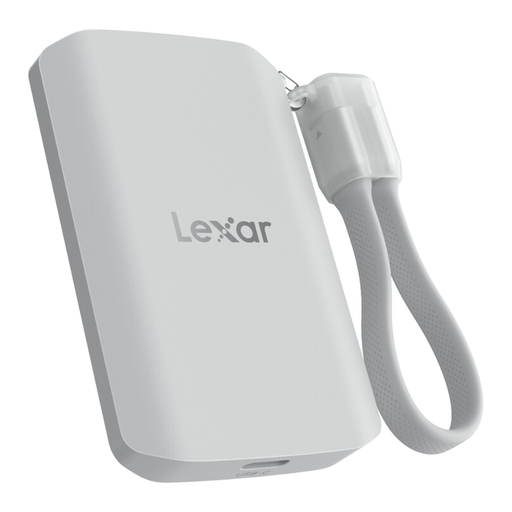
Lexar ES5 Portable SSD 1TB

Lexar ES5 Portable SSD 1TB

Consider this for a local copy if its phone connection and backup workflow suit your device. The product name specifies USB 3.2 Gen 2x2 and read and write speeds of up to 2000MB/s; check host and cable support before relying on that rating. Confirm how you would restore files, as well as make the initial copy.

View on Joybuy

SanDisk Phone Drive with USB-C, Arctic White, 256GB

SanDisk Phone Drive with USB-C, Arctic White, 256GB

This USB-C drive is a local-copy option for a compatible phone or tablet. Check support for your exact device and the backup app’s transfer and restore steps, especially if your phone uses Lightning or runs Android.

View on Joybuy

Lexar ES4 Portable SSD with Magnetic Set 1TB

Lexar ES4 Portable SSD with Magnetic Set 1TB

This drive is worth considering for a removable copy if you can transfer files from your phone or computer. Its name lists USB 3.2 Gen 2, read speeds of up to 1050MB/s and write speeds of up to 1000MB/s. Check your phone’s transfer procedure and drive format; formatting a drive that already holds files erases them.

View on Joybuy

Samsung Portable SSD T7 2 TB Grey

Samsung Portable SSD T7 2 TB Grey

This 2 TB drive can hold a local copy when you have a compatible way to move photos from your phone. Samsung UK lists Type-C-to-C and Type-C-to-A cables for the T7, but check direct phone transfer, cable and drive-format compatibility for your setup.

View on Joybuy

SanDisk Portable SSD 2TB

SanDisk Portable SSD 2TB

Consider this 2TB portable SSD for a separate local copy. Before using it with a phone, check the required connector, cable and transfer steps, including whether you will need a computer to make the copy.

View on Joybuy

Frequently asked questions

Is iCloud Photos the same as an iPhone backup?

No. Apple says iCloud Photos synchronises your library across devices, and photos in that library are not duplicated in the daily iCloud Backup. Keep another recoverable copy if you need protection from a deletion affecting the synchronised library.

Can I copy iPhone photos to a Windows PC without using iCloud?

Yes. Apple describes importing photos over a USB connection after unlocking the iPhone and allowing access to the computer. If iCloud Photos is enabled, Apple says the original, full-resolution items must be downloaded to the iPhone or iPad before importing them to a PC.

Why are some iPhone videos missing from OneDrive?

On iOS, Microsoft says you must turn on Include Videos separately for OneDrive camera upload. Check that Camera Upload is enabled and that the app can run in the background; Microsoft also says OneDrive cannot upload photos optimised for iCloud.

Does Android device backup cover my photos and videos?

Do not rely on Android device backup alone for your camera media. Google directs users to Google Photos for photo and video backup, so check its account and completion status separately from the device backup.

When should I check that a backup can be restored?

Try restoring a small selection after setting up your backup and after a major change to your phone, account or storage device. The National Cyber Security Centre advises making sure you know how to restore important files, rather than assuming that a stored copy will be usable.