
24/7 Customer Support

Free returns

Same-day & Next-day Delivery

Quality Guaranteed

Unlock Your Welcome Offers: FREE Delivery | Up to 80% OFF | Free 30-day JoyPlus trial
Download the APP
A reliable pliers set is a cornerstone of any well-equipped toolbox, whether you're a seasoned tradesperson, a weekend DIY enthusiast or simply tackling household maintenance. Yet, the market is flooded with options that look the part but fail when you need them most. Choosing incorrectly can lead to stripped nuts, damaged components and immense frustration.
As the Joybuy Product Recommendation Officer, my role is to help you see past the marketing jargon. This guide focuses on the critical factors that separate a dependable tool from a drawer-filler, ensuring your next purchase is a sound investment. We'll start by highlighting the common pitfalls that catch many UK buyers out.
heavy duty grips for a tough job. A tool that's uncomfortable to use is a tool you'll avoid using.long nose pliers often don't meet correctly, and the teeth on combination pliers are poorly defined. This lack of precision makes gripping small items impossible and can damage the very thing you're trying to fix.To avoid these issues, focus on a few non-negotiable technical specifications. These are the details that determine a tool's performance and lifespan.
The material is the most critical factor. Look for pliers forged from high-grade steel alloys.
plumbing tools and automotive pliers.Different jobs require different jaws. A good adjustable pliers set will include several types, each with a specific purpose.
jewellery making tools or electronics.wire stripper function is a useful bonus.A comfortable handle allows you to apply force effectively and safely. Look for bi-material grips, often made from a combination of hard polypropylene (PP) for structure and softer thermoplastic rubber (TPR) for comfort and a non-slip hold. For repetitive tasks, spring-loaded handles that automatically open can significantly reduce hand strain.
We've identified several pliers sets that align with these quality markers, matching them to the needs of different users.
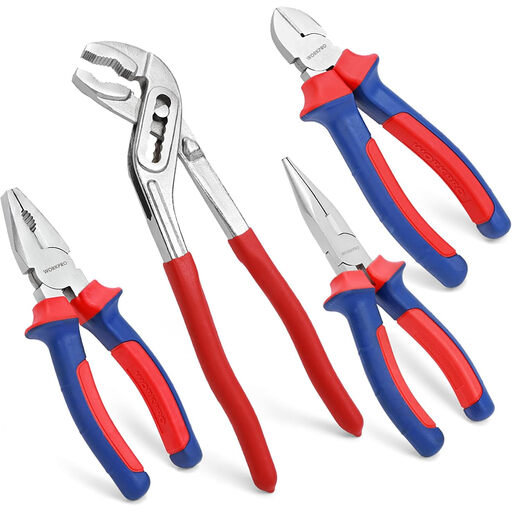
Why This Fits Their Persona: This set provides the four most essential pliers for a wide range of common household repairs, from tightening nuts with the water pump pliers to cutting wires with the side cutters. It's an ideal foundation for any home toolbox.
Unlike flimsy all-in-one kits, this set is made from drop-forged alloy steel for durability. The PP & TPR resin handles are designed for comfort, preventing the hand fatigue common with basic plastic grips.
A comprehensive 4-piece set covering the most frequent DIY tasks. The high-leverage design provides increased cutting and gripping power.
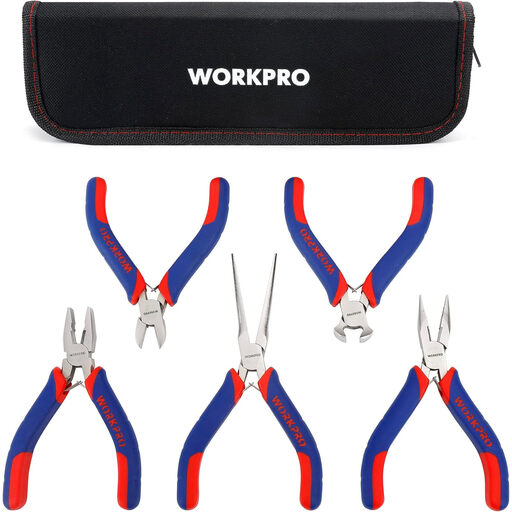
Why This Fits Their Persona: Perfect for detailed work like jewellery making, electronics repair or model building where standard-sized pliers are too cumbersome and lack the required finesse.
The jaws are machined and hardened to HRC55-65, ensuring they align perfectly and resist wear, directly countering the issue of poorly made, misaligned tips found in cheap sets.
Includes five specialised pliers for intricate tasks. The double spring-loaded handles reduce hand strain during repetitive work.
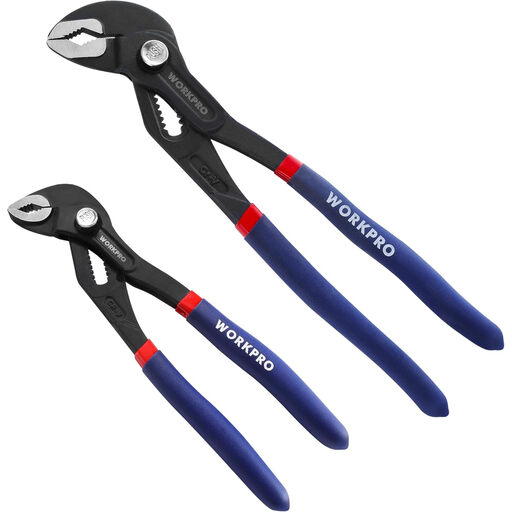
Why This Fits Their Persona: This adjustable pliers set is built for the demanding torque and varied sizes of pipes, nuts and fittings found in plumbing and automotive maintenance.
Constructed from Chromium-Vanadium steel, these heavy duty grips resist bending or breaking under high pressure. The secure push-button adjustment prevents the slipping common in basic groove-joint pliers.
The quick-adjust push-button allows for rapid sizing. The clear tooth pattern provides a firm, non-slip grip on round, flat or hexagonal shapes.
We have compiled a complete, real-time list of products that fully satisfy these strict selection criteria and UK safety regulations.
The primary differences are material quality, manufacturing precision and ergonomics. More affordable sets often use softer carbon steel that can deform, with poorly machined jaws that don't align. Higher-priced sets typically use hardened Chromium-Vanadium steel for durability, feature precisely engineered jaws for a secure grip and have comfortable, ergonomic handles that reduce user fatigue.
Proper maintenance is simple but effective. After each use, wipe your pliers clean with a dry cloth to remove dirt and moisture. Periodically apply a drop of light machine oil to the pivot point to ensure smooth operation. Store them in a dry place, such as a toolbox or the case they came in, to prevent rust.
Yes, absolutely. For any work on or near live electrical circuits, you must use pliers that are specifically designed and certified for electrical safety. These are known as insulated or VDE-rated pliers. They undergo rigorous testing to ensure they protect the user from electric shock up to a certain voltage (typically 1000V). Standard pliers, even those with rubber or plastic-coated handles, do not provide adequate protection and should never be used for live electrical work.