
24/7 Customer Support

Free returns

Same-day & Next-day Delivery

Quality Guaranteed

Unlock Your Welcome Offers: FREE Delivery | Up to 80% OFF | Free 30-day JoyPlus trial
Download the APP
A portable nebuliser can make home respiratory care more manageable, particularly when a device needs to be moved between bedrooms, carried on journeys or used by a child who dislikes loud equipment. However, product listings often focus on mist speed or compact dimensions while leaving out details that affect everyday use.
Before buying, watch for three common pitfalls:
A mesh nebuliser uses a vibrating mesh to create an aerosol and is commonly selected for its compact design and quieter operation. A handheld nebuliser may be more convenient for travel, bedside use or carers supporting several family members.
A compressor nebuliser uses airflow from a pump. It normally requires a mains connection but can provide continuous mist output without relying on battery capacity. This format may suit a household that expects longer sessions or frequent use in one location.
Neither design should be selected solely by appearance. Check the manufacturer’s instructions for compatible medication, cleaning requirements and intended use.
Particle size is normally shown in micrometres (µm). The Treesmile mesh models listed below specify a 3.5 µm median particle size, while the AR06 compressor model specifies approximately 3 µm MMAD. These figures describe the aerosol produced by the device; they do not establish a treatment outcome.
Mist output is usually measured in millilitres per minute. Adjustable settings can be practical for households with different users. For example, a low setting of around 0.15–0.3 ml/min and a high setting of around 0.35–0.6 ml/min provide a choice of operating speed. Always follow a clinician’s instructions for medicine quantity, frequency and duration.
A larger medicine cup may reduce the need to refill during a session. The Treesmile JM-802 has a 15 ml cup, whereas the JM-841 and JM-817 each have an 8 ml cup. A smaller cup can help keep the device compact, but capacity should match the prescribed volume rather than simply being as large as possible.
For portability, look for a rechargeable nebuliser with a clear charging method. The three handheld models use a 3.7 V, 800 mAh lithium battery and charge through DC 5 V in approximately two to three hours, according to their product information. A battery-operated nebuliser is convenient away from a socket, but check charging status before travel and follow the instructions for storage.
Useful safeguards include water-level detection, automatic shut-off and a detachable medicine cup or atomising component. Before purchase, confirm whether masks are included for both adults and children, and check that replacement parts are available.
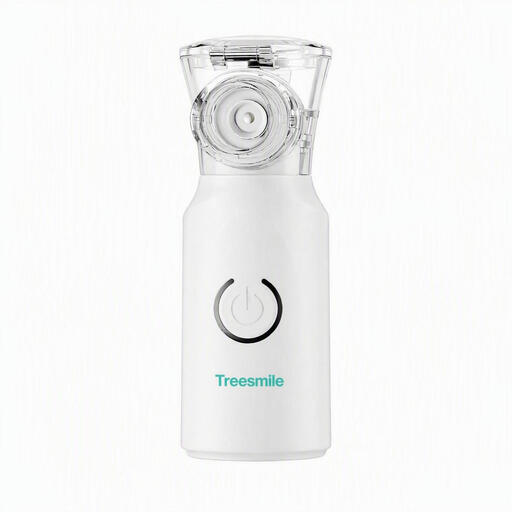
Why This Fits Their Persona: A compact option for shoppers wanting a rechargeable handheld nebuliser for routine home use, short trips or bedside storage.
The stated ≤25 dB(A) operating noise and two mist levels are more useful than an unsupported “quiet” description. Water-shortage detection and automatic shut-off address basic operating safeguards.
8 ml cup; rechargeable 3.7 V battery; automatic cleaning mode; compact 65.5 × 44 × 118 mm body.
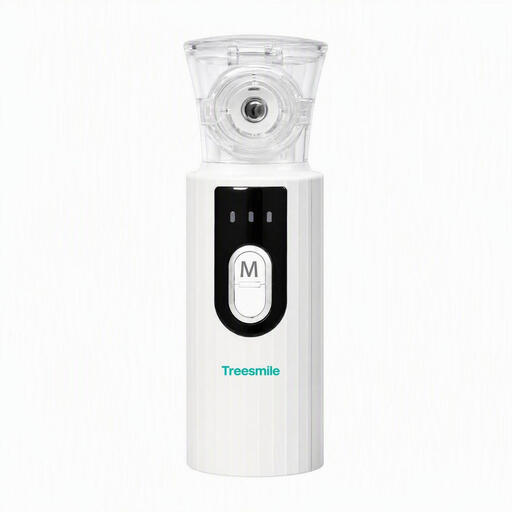
Why This Fits Their Persona: Suitable for users placing particular value on quiet night-time operation, compact handling and a straightforward two-mode interface.
Its listed ≤25 dB(A) noise level gives a measurable comparison point. The 15-minute automatic power-off, water-level detection and detachable atomising mesh help avoid overlooking care and safety features.
8 ml medicine cup; low and high mist ranges; rechargeable battery; self-cleaning mode and travel-friendly dimensions.
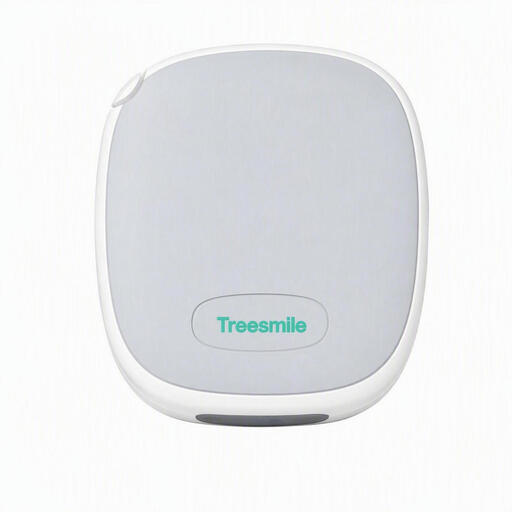
Why This Fits Their Persona: A home nebuliser for households that prefer mains-powered operation and continuous mist output rather than charging a portable battery.
It does not depend on battery charge, and its side knob provides three mist levels. The detachable cup supports cleaning after use, while the listed ≤57 dB noise figure allows a clearer comparison with mesh designs.
Continuous compressor output; three adjustable levels; adult and child masks included; stable flat body for a desk or bedside table.
Before ordering a nebuliser machine for adults and children, check the following:
A self-cleaning nebuliser can simplify maintenance, but the cleaning cycle should be treated as an additional feature, not a substitute for washing and drying parts as instructed.
We have compiled a complete, real-time list of products that fully satisfy these strict selection criteria and UK safety regulations.
Some models include child-sized masks and adjustable mist settings, but suitability depends on the child, the prescribed medicine and the instructions provided by a healthcare professional. Keep the child supervised, ensure the mask fits comfortably and stop if they show distress.
Disconnect the device, remove the medicine cup and other washable parts, then clean and dry them according to the manual. Do not immerse the main electrical unit. If the model has an automatic cleaning mode, use it only as directed and inspect the mesh or cup regularly for residue.