Tablet-first field-note writers
If you mainly write on a tablet or phone, a slim keyboard with a cover is worth considering when bag space and clear desk area matter more than a fuller key set.


Choose the smallest keyboard that still gives you the keys you use while writing and editing notes. A slim scissor keyboard puts bag and desk space first; a low-profile 75% keyboard retains more direct access to function and arrow keys. Check the selected key layout, device compatibility and typing noise before deciding which trade-off works for you.
If you mainly write on a tablet or phone, a slim keyboard with a cover is worth considering when bag space and clear desk area matter more than a fuller key set.
If notes turn into longer drafts, a 75% layout can keep arrow and function keys within direct reach without taking up the space of a full-size keyboard.
For writing near other people, consider switch type as well as size. RTINGS notes that scissor and rubber-dome mechanisms are generally among the quieter keyboard options.
Start with the space available for typing and carrying, then decide which keys, connections and noise characteristics your notes actually require.
| Concern | What to check | Who this matters to |
|---|---|---|
| Desk space and carrying | Compare published width and depth with your desk space; check the folded size or cover if you carry the keyboard. | If I need room for my notes and device on a small desk, I would put footprint ahead of extra keys. Around 42% of consumers would make space and carrying their primary concern. |
| Writing and key access | Check for physical arrow and function keys, plus the UK-ISO or British-English layout if you need it. | When short notes become longer drafts, I need familiar punctuation and quick navigation while editing; roughly 33% of consumers would prioritise writing and key access. |
| Noise and device switching | Check the selected switch type and whether its connection modes work with every device you plan to use. | If I write around others and move notes between devices, disruptive key noise or repeated pairing would get in the way. About 25% of consumers would put quiet operation and switching first. |
Some very small layouts put arrows or function keys behind shortcuts, which can interrupt frequent note editing.
Check the keys your note-taking app uses. If arrows and function keys matter regularly, compare a 75% layout before choosing a smaller one.
Low-profile describes key height, not typing noise. RTINGS notes that clicky mechanical switches can be loud, while scissor and rubber-dome mechanisms are generally quieter.
For shared spaces, check the exact switch variant rather than relying on the keyboard’s size or profile.
Keychron and NuPhy offer UK or British ISO options, while Apple lists a British-English Magic Keyboard variant. That does not mean every variant of those models has the same key arrangement.
Check the layout selector and selected product variant if Enter-key shape, punctuation or printed legends matter to you.
An electrical keyboard or its battery needs a suitable recycling route when it reaches the end of its useful life.
GOV.UK advises taking electrical products and batteries to an appropriate collection point rather than putting them in household rubbish.
These product lines illustrate different approaches to writing in limited space; check the exact model and variant rather than treating a brand name as a layout or compatibility guarantee.
Keys-To-Go 2 focuses on portable tablet and phone use, while MX Keys Mini is a compact keyboard with more productivity features.
The K3 Max is relevant if you want a low-profile mechanical 75% keyboard with a UK-ISO option.
The compact Magic Keyboard is an option for compatible Apple devices when you want a British-English layout.
The Air75 V3 is a low-profile 75% mechanical option for writers who want an F-row and a British ISO choice.
These keyboards offer compact layouts for limited desk space, from a foldable Bluetooth option to wired and wireless gaming-oriented models. Check the keys, connections and device requirements of the particular model before using it for field notes.
 No image available
Consider this 75% wireless model if your note editing calls for more direct key access than a smaller layout. Confirm its exact printed layout and desk fit; if you carry it or write around others, check its weight and typing noise too.
 No image available
This 65% keyboard is worth checking if you want a compact UK-layout option and can use a wired connection. Confirm compatibility with your device and assess typing noise for shared spaces. The product information also warns that its magnetic switches should be kept away from pacemakers and magnetic-sensitive medical devices.
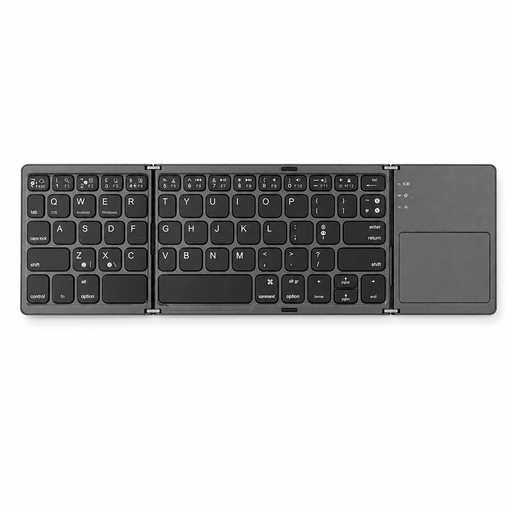 No image available
Consider this Bluetooth model if carrying space matters and you write across portable devices. Before choosing it for longer notes, check its regional key layout, navigation-key access and battery routine.
 No image available
This 60% model may suit a fixed small desk if a wired keyboard works for your device. Check its regional layout and whether using a modifier for arrow keys would interrupt your editing.
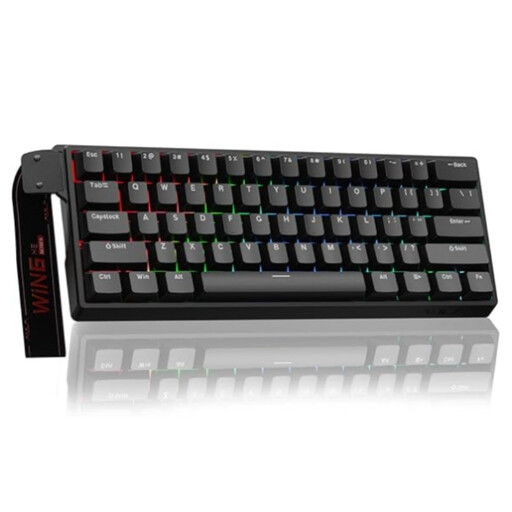 No image available
Consider this compact wired PC-oriented model if desk space matters more than wireless use. Its title specifies hot-swappable magnetic switches; check the physical dimensions, regional layout, navigation keys and compatibility needed for your notes.
Choose a very small keyboard when carrying space and clear desk area matter more than direct access to every key. If you often edit with arrows or function keys, a 75% layout retains more direct keys but takes up more room; check the exact arrangement before buying.
Scissor and other membrane-based keyboards are generally quieter options, according to RTINGS. Mechanical keyboards vary by switch, so check the selected variant rather than assuming a low-profile or compact model will be quiet.
It can if the selected keyboard supports each device’s operating system and connection method. Check its device-switching limit as well: Logitech specifies switching among up to three devices for Keys-To-Go 2, while Keychron specifies Bluetooth pairing with up to three devices for K3 Max.
Take an old electrical keyboard and its batteries to an appropriate recycling collection point rather than putting them in household rubbish. GOV.UK advises using a suitable collection point or household waste recycling centre.