What should you check before choosing?
Decide when you plan to eat the snack, then compare nutrition per bag as well as per 100g so differently sized packs do not obscure the choice.
| Priority |
What to check |
Your needs |
| Protein |
Compare protein and energy for the same serving. For a high-protein nutrition claim in Great Britain, the legislation.gov.uk annex specifies that at least 20% of the food’s energy must come from protein. |
I want a savoury snack with a meaningful amount of protein, not just a potato crisp that contains some protein. |
| Run timing |
Check how long remains before exercise and whether the food is familiar. University College London Hospitals NHS Foundation Trust advises faster-acting carbohydrate for snacks 15–30 minutes before exercise; its 60–90-minute guidance includes carbohydrate and protein with minimal fat. |
Close to the start, I would rather choose food I know I tolerate than assume a protein-focused crisp will suit me. |
| Portion and salt |
Read the bag size alongside the per-100g figures. Seabrook lists 0.4g salt and 1.9g protein in a 31.8g bag of Sea Salted crisps; its per-100g figures are 1.3g salt and 5.9g protein. |
One bag is the portion I am comparing, so I need its figures as well as the standardised label values. |
| Ingredients and allergens |
Check the exact flavour’s ingredients, dietary statements and precautionary wording. Tyrrells lists “May contain Milk” for Lightly Sea Salted crisps. |
A simple-sounding flavour does not tell me whether a particular pack meets my dietary requirements. |
Brands and products to compare
These product-label examples help distinguish conventional potato crisps from protein-led alternatives; a brand name alone does not settle the choice.
Walkers
Oven Baked Sea Salt is a baked potato-crisp option, not a protein-focused snack.
- Walkers states that it has 50% less fat than regular potato crisps and lists 13g fat per 100g.
- Its label lists 1.3g protein per 22g pack, so compare it on the nutrient you actually want.
Tyrrells
Lightly Sea Salted is a conventional potato crisp with a published nutrition panel.
- Tyrrells lists 6.9g protein and 29.3g fat per 100g for this product.
- The product carries a “May contain Milk” precaution; check the pack if milk is relevant to you.
KETTLE Chips
Lightly Salted provides another conventional crisp label for comparing nutrients on the same per-100g basis.
- KETTLE Chips lists 53.7g carbohydrate and 6.5g protein per 100g.
- The same panel lists 29.5g fat per 100g; consider the portion and timing if eating before a run.
Seabrook
Sea Salted has both per-bag and per-100g figures, making the stated portion easier to assess.
- Seabrook lists 1.9g protein per 31.8g bag.
- The same bag contains 0.4g salt; use the per-bag figure when that is the amount you plan to eat.
Pipers
Anglesey Sea Salt is a conventional potato-crisp example for a flavour-led choice.
- Pipers lists 5.1g protein per 100g for Anglesey Sea Salt.
- Its panel also lists 30.7g fat and 0.94g salt per 100g; check the serving size before comparing bags.
REAL Hand Cooked Crisps
REAL describes its range in terms of dietary characteristics rather than as a protein-led crisp option.
- REAL states that its whole range is vegetarian and gluten-free and has no added MSG.
- For a protein-based choice, use the nutrition panel for the particular flavour and pack you are considering.
Joybuy crisp-style option
This lentil-cake option is for shoppers considering a savoury alternative to potato crisps after a run or between meals, rather than choosing food immediately before a 5K.
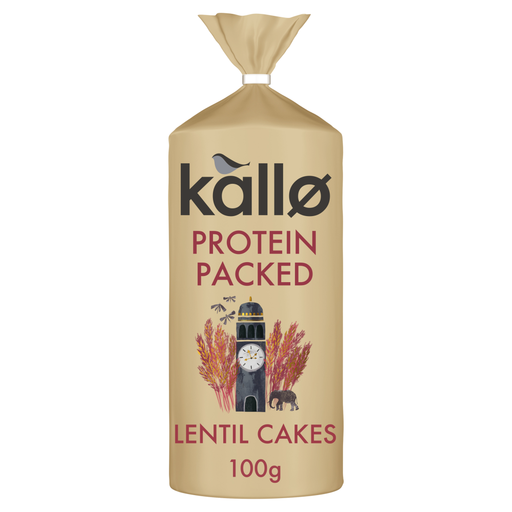 Image unavailable
Kallo Protein Packed Lentil Cakes 100g
These lentil cakes offer a savoury crisp-style choice after a run or between meals, but they are not conventional potato crisps. Check the pack’s protein per serving, ingredients and allergen statement if those details determine your choice.
View on Joybuy
Questions about crisps and 5K runs
Are ordinary potato crisps high in protein?
The conventional examples here are not a high-protein choice. Nutrition panels from KETTLE Chips, Seabrook, Walkers, Tyrrells and Pipers list 5.1–6.9g protein per 100g; the legislation.gov.uk annex sets a threshold of at least 20% of food energy from protein for a high-protein nutrition claim in Great Britain. Check the particular product’s protein and energy figures rather than assuming all crisps have the same composition.
Should I eat protein crisps just before a 5K?
Do not assume they are suitable last-minute fuel. University College London Hospitals NHS Foundation Trust advises faster-acting carbohydrate for a snack 15–30 minutes before exercise; for 60–90 minutes beforehand, its guidance includes carbohydrate and protein with minimal fat. Choose food and a portion you have already tried around running.
When might a protein-focused crisp-style snack fit?
It is a different choice when you want a savoury protein snack after a run or between meals, rather than food close to the start. Applied Nutrition lists 15g protein per 50g bag of its Protein Chips, which it describes as made with dehydrated potato, pea protein, lentil flour and fava beans. Check the particular product’s serving size and ingredients before comparing it with ordinary crisps.
Does “baked” tell me whether a crisp suits my run?
No: it does not tell you the full nutrient profile or when the crisp will suit you. Walkers states that Oven Baked Sea Salt has 50% less fat than regular potato crisps, but its label lists 1.3g protein per 22g pack. Compare the serving size, carbohydrate, protein and fat alongside your planned eating time.
What should I read on a crisp pack before buying?
Read the nutrition declaration per 100g and for the portion you expect to eat, then check the ingredients, allergens and precautionary statements for that flavour. GOV.UK explains that traffic-light labelling shows whether a food has high, medium or low amounts of fat, saturated fat, sugars and salt; it does not replace checking the protein figure when protein is your reason for buying.


