Hikers packing a savoury snack
Potato crisps are ready to eat and come in pack sizes you can choose to suit a walk. Check the portion you plan to carry rather than treating the bag’s per-100g nutrition figures as a serving.


Choose potato crisps for a portable savoury snack, not as the protein-focused part of your hiking food. Kettle Chips, Walkers UK and a Joybuy Walkers listing give the crisps discussed here 6.2–6.5g protein per 100g; their stated energy values put them below the condition that at least 20% of a food’s energy must come from protein for a high-protein claim, as set out on legislation.gov.uk. If protein is your priority, check the nutrition label of a different snack rather than relying on a crisp’s flavour or protein grams alone.
Potato crisps are ready to eat and come in pack sizes you can choose to suit a walk. Check the portion you plan to carry rather than treating the bag’s per-100g nutrition figures as a serving.
Some protein on a crisp label does not make the product high protein. Compare protein with total energy on the same nutrition panel, or consider a different snack with a suitable label.
Check the exact pack’s ingredients and allergen information alongside the standards that apply to your setting. A general description of crisps does not establish whether a particular product or menu is suitable.
Choose when: You want a ready-to-eat potato snack and are not relying on it for protein.
Bear in mind: The conventional crisps discussed here do not meet the high-protein claim condition.
Choose when: Protein is the reason you are selecting the hiking snack.
Bear in mind: It is a different food from potato crisps; check the exact product’s nutrition and allergens before packing it.
| Priority | What to check | Your needs |
|---|---|---|
| Protein | Compare protein and energy on the same nutrition panel. For a high-protein claim, legislation.gov.uk sets a condition of at least 20% of the food’s energy coming from protein; protein grams alone do not establish this. | If I am choosing a snack for its protein, I need its label to support that choice, rather than assuming potato crisps qualify. |
| Pack size | Check the weight of the bag or individual pack and the nutrition for the amount you intend to eat. A sharing bag may need portioning before the hike. | For this walk, I want to carry a portion I have chosen, not make that decision from a per-100g figure on the trail. |
| Salt and ingredients | Compare salt for the same amount of food. Read the exact flavour’s ingredient list, allergen declaration and any dietary-suitability statement. | My choice needs to fit the dietary requirements of everyone who will eat it; a claim on another flavour is not enough. |
| Group setting | For school food, check the standards for the relevant nation and setting, as well as the intended product and the wider menu. The Department for Education’s school-food practical guide applies to England. | When buying for a group or school, I need to check the rules that apply to that setting rather than assume every retail crisp is permitted or prohibited. |
A crisp can list protein yet get too little of its total energy from protein to meet the claim condition. Kettle Chips, Walkers UK and Joybuy list 6.2–6.5g protein per 100g for the conventional crisps discussed here; none meets the 20%-of-energy condition published on legislation.gov.uk.
Use protein and energy figures from the same product label when assessing a claim, or choose another snack whose current label supports your protein goal.
Per-100g figures do not describe what you will eat unless your planned portion is 100g. Bag sizes also affect how much you carry.
Decide on the portion before leaving, then use its weight to read the nutrition information in context.
Ingredients and allergen declarations can differ between variants, while a dietary statement may apply only to a specific product.
Read the current pack for the exact flavour you intend to take, including any factory-handling statement relevant to your needs.
The Department for Education’s school-food practical guide applies to England and addresses the overall food offer; it does not classify each branded retail crisp.
For school catering, check the current standards for your setting and assess the intended product and menu against them.
A potato-crisp range with pack formats and flavours to compare if you want a portionable savoury snack.
Tyrrells describes its potato-crisp range as made from English potatoes, cooked in small batches with the skins left on.
The Lightly Salted potato crisps provide a specific nutrition panel for comparing a savoury snack.
Seabrook’s Cream Cheese & Chive is one flavour to assess by its own pack details.
Pipers describes a potato-crisp range built around distinctive flavourings.
Real Crisps describes its hand-cooked range as vegetarian and gluten-free.
These protein bars and lentil cakes are alternatives to potato crisps for a hike. Compare their current nutrition labels if protein is your deciding factor; none is a potato crisp.
 No image available
A bar-format alternative if you would rather pack a protein-focused snack than potato crisps. The bundle contains 12 × 50g bars; check the current nutrition and allergen label before choosing it.
 No image available
A Golden Caramel bar option for packing alongside or instead of a savoury crisp. The bundle contains 12 × 50g bars; compare its own nutrition and allergen label with any other flavour.
 No image available
Another bar-format alternative to potato crisps, supplied as 12 × 50g bars. Check this Peanut Butter variant’s current ingredient and allergen declaration, as well as its nutrition panel, before packing it.
 No image available
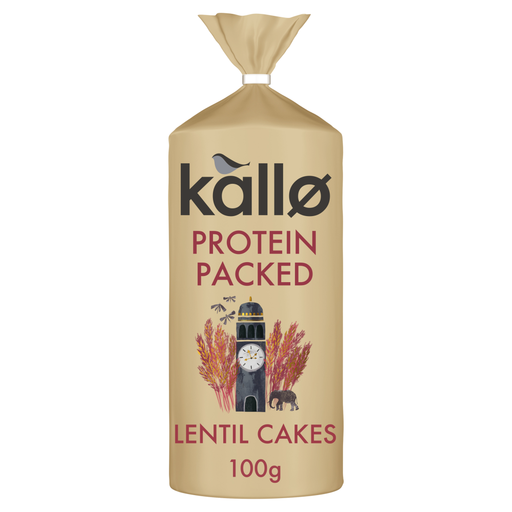
A lentil-cake alternative if you want something other than a bar or potato crisp. The pack is 100g; decide how much to take and check its current nutrition, ingredients and allergen information.
The conventional crisps discussed here are not high protein under the claim condition published on legislation.gov.uk, which requires at least 20% of a food’s energy to come from protein. Kettle Chips lists 6.5g protein and 516 kcal per 100g for Lightly Salted; a Joybuy listing gives Walkers Ready Salted 6.4g and 519 kcal, while Walkers UK gives Salt & Shake 6.2g and 533 kcal. Check any different product against its own label.
Check protein and total energy for the amount you plan to pack, then assess any high-protein claim against the condition that at least 20% of the food’s energy comes from protein, as published on legislation.gov.uk. A meat- or cheese-flavoured crisp does not meet that condition just because of its flavour name.
Yes, if that pack size suits what you intend to carry and eat. Choose your portion before setting off and use the pack’s nutrition information for that amount, rather than reading per-100g values as though they describe your serving.
No such blanket conclusion follows from the Department for Education’s school-food practical guide. The September 2026 guide applies to England and sets standards for the overall food offer, including a limit of two days each week for starchy food cooked in fat or oil across the whole school day; it does not determine the status of each branded retail crisp. Check the standards and menu requirements for the particular school setting before making a purchasing decision.
Read the current ingredient and allergen declaration for the exact flavour you are packing. Walkers UK, for example, says its Ready Salted crisps are made in a factory that also handles milk, wheat, gluten, barley, soya, celery and mustard; do not assume another flavour or brand has the same declaration.