Who is this lunch choice for?

Home workers looking for protein at lunch

If you want lunch to include a meaningful protein component, check what the crisp portion contributes rather than relying on the presence of protein on its label. The Walkers and Seabrook single-pack examples above list 1.3g and 1.5g respectively, so plan the rest of the meal separately.

Shoppers comparing salt per packet

A pack-level figure helps when you expect to eat the whole packet with lunch. Walkers lists 0.17g salt per 25g pack of Lightly Salted crisps; compare that figure with the portion you would eat of another product, not just its front-of-pack wording.

Shoppers checking ingredients by flavour

Seasonings can change a crisp’s ingredients and allergen information. Seabrook lists whey powder containing milk in its Cream Cheese & Chive crisps, so check the exact flavour and current pack when an ingredient matters to you.

What should you check before buying?

Start with the amount you would eat, then compare its protein and salt figures and check the ingredients of the exact flavour.

Priority What to check Your needs
Protein contribution Read protein per pack or intended portion, not only per 100g. Check whether the product is potato-based or an alternative such as lentil crisps. I want to know how much protein the snack contributes to lunch, rather than treating any crisps that list protein as the meal’s main protein component.
Salt and portion Compare salt for the amount you will eat; use per-100g figures to compare different pack sizes. Read what a lower-salt claim is compared with. If I regularly have crisps at my desk, the salt in my usual portion matters alongside the rest of lunch.
Ingredients and allergens Read the exact flavour’s ingredients, emphasised allergens and any cross-contact statement. Check dietary-suitability wording on that product, not another flavour. A different seasoning could change whether a packet meets my ingredient or dietary requirements.

Common buying mistakes

  • Taking any protein figure to mean a protein-focused lunch

    A nutrition panel can list protein even when the packet contributes only a small amount to the meal. Walkers Oven Baked Sea Salt lists 1.3g per 22g pack, according to Walkers.

    Check protein for the portion you will eat and decide what other food will provide the protein you want at lunch.

  • Using a baked or lower-salt claim to judge protein

    Those claims address fat or salt comparisons, not how much protein the packet contains. Walkers lists 1.3g protein per pack of Oven Baked Sea Salt and 1.6g per pack of Lightly Salted.

    Choose according to the figure that matters to you: compare salt if salt is the priority, and read protein per pack if protein is the priority.

  • Assuming every flavour has the same allergens

    A seasoning can introduce an ingredient that is not apparent from the potato base. Seabrook’s Cream Cheese & Chive ingredients include whey powder containing milk.

    Check the current packet’s ingredients and allergen information whenever you change flavour or pack format.

Brand and product-line references

Walkers

Two Walkers potato-crisp packs illustrate why protein and salt need separate checks.

  • Walkers lists 1.3g protein and 0.19g salt per 22g Oven Baked Sea Salt pack.
  • Its Lightly Salted pack lists 0.17g salt and 1.6g protein per 25g; choosing it for salt does not make it the protein component of lunch.

Tyrrells

The brand’s lentil crisps offer a non-potato comparison for a crisp-style lunch side.

  • Tyrrells lists 3.9g protein per 30g serving of Sour Cream & Onion Lentil Crisps.
  • The same serving lists 0.60g salt. These lentil crisps should not be mistaken for potato crisps.

KETTLE Chips

Its Sea Salt & Crushed Black Peppercorns potato crisps provide a per-100g comparison point.

  • KETTLE Chips lists 5.3g protein per 100g for this product.
  • It also lists 1.3g salt per 100g; use the amount you intend to eat when comparing it with single-serve packs.

Seabrook

Cream Cheese & Chive shows why a specific flavour’s nutrition and ingredients both matter.

  • Seabrook lists 1.5g protein and 0.3g salt per 25g bag.
  • Its ingredients include whey powder containing milk, so check the flavour rather than assuming suitability from the potato base.

Pipers

Pipers describes its crisps in terms of potatoes and sourced flavourings.

  • The brand’s description may help shoppers choosing by flavour.
  • For a protein comparison, use the nutrition panel of the particular flavour and portion instead.

REAL Hand Cooked Crisps

REAL describes its range as vegetarian and gluten-free.

  • Those are the brand’s stated range-level suitability claims.
  • They do not establish the protein content of a chosen flavour; check its pack for nutrition and allergen information.

Joybuy product option

This lentil-cake option is for shoppers willing to consider a non-potato snack alongside a working-from-home lunch. Check its current nutrition panel if a particular protein or salt figure will decide your purchase.
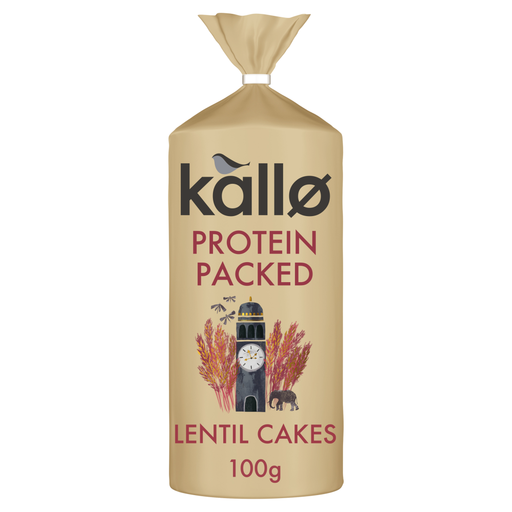
Kallo Protein Packed Lentil Cakes 100g pack

Kallo Protein Packed Lentil Cakes 100g

These are lentil cakes rather than potato crisps, in a 100g pack. Compare the protein and salt for the portion you plan to eat, and check the current allergen information if you avoid particular ingredients.

View on Joybuy

Questions about crisps at lunch

Does protein on a crisp packet make it the protein part of lunch?

No: the figure tells you how much protein is in the stated quantity, not whether that quantity meets your aim for the meal. Walkers lists 1.3g per 22g pack of Oven Baked Sea Salt, so consider what the rest of lunch contributes.

Do lentil crisps contain more protein than potato crisps?

The particular servings checked differ: Tyrrells lists 3.9g protein per 30g serving of Sour Cream & Onion Lentil Crisps, while Walkers lists 1.3g per 22g pack of Oven Baked Sea Salt potato crisps. The portions are different sizes, and Tyrrells lists 0.60g salt for that lentil-crisp serving, so compare the full labels before choosing.

Should I compare salt per 100g or per packet?

Use per-100g figures to compare products on the same quantity, then check the salt in the portion you expect to eat. Walkers lists 0.17g salt per 25g pack of Lightly Salted crisps. UK Government guidance recommends that adults have no more than 6g salt a day.

Can I rely on another flavour’s allergen information?

No. Check the ingredients and allergen information for the exact flavour and current pack. Seabrook’s Cream Cheese & Chive crisps, for example, list whey powder containing milk; that ingredient detail should not be assumed to apply to every Seabrook flavour.