Car boot sellers prioritising protein
You need a portable savoury snack whose nutrition figures justify a high-protein description, rather than a conventional crisp that merely contains some protein.


Choose conventional potato crisps when familiar, packaged refreshments matter more than protein: the reviewed examples provide about 3.4%–4.9% of their energy from protein, below the 20% high-protein criterion set out by legislation.gov.uk. If protein is the priority, consider a protein-crisp snack with qualifying nutrition figures instead, and check its exact ingredients, allergens and the requirements for selling food at your event.
You need a portable savoury snack whose nutrition figures justify a high-protein description, rather than a conventional crisp that merely contains some protein.
You want recognisable potato crisps in individual bags for refreshments, without presenting their ordinary protein content as a high-protein feature.
You need to consider whether refreshments will stay in their original packs, be packed by you before sale or be sold loose, because those choices change the information you must check and provide.
Choose when: Protein is central to the refreshment offer and a formulated crisp snack is acceptable instead of a sliced-potato crisp.
Trade-off: Ingredients vary by product and flavour; the reviewed EatProtein Cheese & Onion crisps contain soy and milk ingredients.
Choose when: Familiar potato crisps are the priority and a high-protein description is not required.
Trade-off: The reviewed Walkers, KETTLE Chips, Seabrook, REAL and Pipers products fall below the protein-energy criterion shown by legislation.gov.uk.
| Priority | What to check | Your needs |
|---|---|---|
| Protein claim | Compare protein grams and kcal on the same per-serving or per-100g basis. Multiply protein grams by 4 kcal, divide by total kcal and compare with the 20% protein-energy criterion in the legislation.gov.uk text. | If I plan to describe a snack as high protein, I need figures for the exact product rather than relying on its name or main ingredient. |
| Pack format | Check whether bags will remain in their original packaging or be packed by you. Food Standards Scotland says food prepacked on-site for direct sale needs a product name and full ingredients list. | I want buyers to be able to read the ingredients on the refreshment they receive, especially if I am considering dividing a larger pack into portions. |
| Ingredients and allergens | Read the declaration for the exact flavour and check any relevant allergen information. EatProtein lists soy and milk ingredients for its Cheese & Onion Protein Crisps. | A protein-crisp name alone does not tell me whether a particular flavour suits someone avoiding an ingredient. |
| Selling arrangements | Ask the organiser about food-selling conditions and the relevant local authority whether your activity requires food-business registration. Food Standards Agency / GOV.UK and Food Standards Scotland guidance give at least 28 days’ notice for registering a new food business. | Before buying refreshments to sell, I need to know which arrangements apply to my stall. |
Protein content alone does not establish the protein-energy share. The reviewed conventional potato crisps fall below the 20% criterion in the legislation.gov.uk text.
Use protein grams and kcal from the same nutrition basis to calculate the share before making a high-protein description.
Tyrrells lists 13g protein and 469 kcal per 100g for the reviewed lentil crisps. Those figures put about 11.1% of their energy from protein, below the 20% criterion set out by legislation.gov.uk.
Check the nutrition figures for each specific lentil, pea or mixed-base snack rather than judging it by its ingredients.
The original pack’s ingredient information may no longer accompany portions you pack yourself. Food Standards Scotland says food prepacked on-site for direct sale needs a product name and full ingredients list.
Keep manufacturer-packed bags intact where practical. If you plan to pack portions or sell crisps loose, establish the applicable labelling and allergen-information requirements before the event.
If your activity is a food business, registration may need arranging before you trade. Food Standards Agency / GOV.UK and Food Standards Scotland guidance both specify at least 28 days for new food-business registration.
Check the organiser’s conditions and ask the relevant local authority how your planned sales are treated before purchasing stock.
These examples describe specific products, not every flavour or range from each brand.
Ready Salted is a conventional potato-crisp reference for a familiar refreshment bag.
The reviewed Lentil Crisps offer a lentil-based alternative to conventional potato crisps.
Sea Salt & Balsamic Vinegar is a conventional potato-crisp example.
Sea Salted provides another conventional potato-crisp reference.
Sea Salt is the Pipers potato-crisp product considered here.
Sea Salt is a conventional crisp option in the reviewed range.
The listed Kallo product is a 100g pack of lentil cakes for a protein-led snack offer, not a conventional potato crisp. Check the exact pack’s nutrition and ingredients before deciding how to describe or sell it.
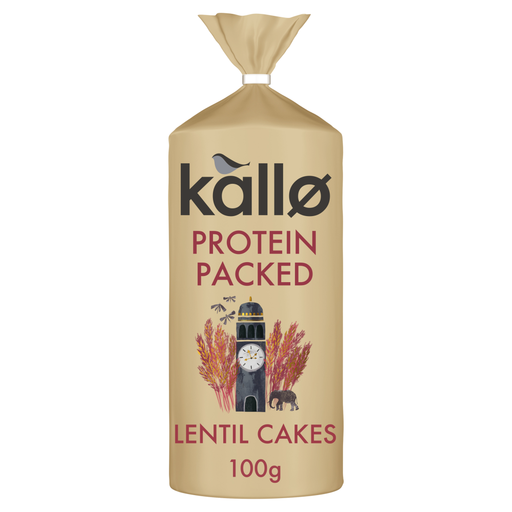 Image unavailable
Consider these lentil cakes if a crisp-style snack is acceptable instead of a potato crisp. For a protein-led offer, check protein and kcal on the pack using the same quantity basis; read its ingredient and allergen information before selling.
The reviewed conventional products do not reach the 20% protein-energy criterion set out by legislation.gov.uk. Using the published panels from Walkers UK, KETTLE Chips, Seabrook Crisps and REAL Hand Cooked Crisps, plus Snackline Direct’s Pipers Sea Salt listing, protein supplies about 3.4%–4.9% of their stated energy. Check the exact product before making a claim about another crisp.
Ask the relevant local authority whether your planned activity counts as a food business. Food Standards Agency / GOV.UK guidance says new food businesses should register at least 28 days before trading; Food Standards Scotland specifies at least 28 days before opening. Check the organiser’s conditions as well.
Keeping the original bags intact lets buyers consult the manufacturer’s ingredient information on each pack. If you pack food yourself before direct sale, Food Standards Scotland says it needs a product name and full ingredients list; check the applicable allergen-information requirements before packing portions or selling crisps loose.
No. Check the ingredients and allergen information for the exact product and flavour: EatProtein lists soy and milk ingredients for its Cheese & Onion Protein Crisps, while Applied Nutrition describes its Protein Chips as containing pea protein. A protein-focused name does not establish suitability for someone avoiding a particular ingredient.