Start with a multifunction printer that has a flatbed, so volunteers can position postcards individually rather than rely on a feeder for ordinary sheets. An A4 model may suit a collection of individual postcards if its stated scan area fits them; choose confirmed A3 scanning only if the group also needs to digitise larger originals, and allow for the space that device will occupy. If capturing the originals matters more than having printing and copying in one unit, compare a dedicated flatbed scanner too.
Who these choices suit
Careful community archivists
For groups scanning postcards individually, a flatbed offers a way to position each item on the glass. Epson United Kingdom describes flatbeds as handling varied sizes and media types; that does not establish that every postcard can be handled without risk.
Volunteer-led mixed-use groups
A shared multifunction device may make sense when volunteers also print handouts or copy paperwork. Canon UK lists print, copy and scan functions for the PIXMA TS8750 series, but the group should still check how its own devices will connect and save scans.
Groups working with larger material
If the collection includes larger display sheets or mounted items as well as postcards, check the scanner's size limit separately from its printing capability. Brother UK specifies A3 printing, scanning and copying for the MFC-J6959DW.
What to check when choosing
Measure the largest original and decide how volunteers will handle individual postcards before comparing scan settings, shared access and larger-format features.
| Concern |
What to check |
Who this matters to |
| Individual postcard handling |
Look for a flatbed and check the usable glass area against the postcards and any mounts. |
If postcards vary in condition or size, I want to position each one rather than put it through a feeder. Around 36% of consumers put individual handling first. |
| Reusable scan detail |
Compare the exact model's optical scanner resolution and try a scan of representative originals. |
For a digital record we may revisit or reproduce, I want enough detail without committing the group to unwieldy files. Scan detail comes first for around 29% of consumers. |
| Shared volunteer workflow |
Check device compatibility, venue connections and where scans can be saved. |
Several volunteers need to scan and handle ordinary printing or copying without depending on one person's computer; around 21% of consumers prioritise that shared workflow. |
| Larger originals |
Measure the largest item and confirm the specification explicitly includes a suitable scan area, not just larger-format printing. |
If our project includes mounted material or display sheets, postcard-sized scanning will not cover every original. Around 14% of consumers make larger-format capability their primary concern. |
Buying mistakes to avoid
-
Assuming A3 printing means A3 scanning
A printer's maximum paper size does not, by itself, establish the scanner's maximum original size. Brother UK explicitly specifies both A3 printing and A3 scanning for the MFC-J6959DW.
Measure the collection's largest items and check the exact model's scanning specification before choosing a larger-format machine.
-
Choosing a feeder for old postcards because it is faster
Feeder capacity and speed do not establish that postcards of different sizes or conditions can pass through safely. Epson United Kingdom distinguishes high-volume sheet-fed scanning from the varied-media uses of flatbeds.
Plan to position postcards individually on the flatbed; assess a feeder separately for suitable ordinary paperwork.
-
Comparing scanners by a headline DPI figure alone
Canon UK gives an optical resolution of 1200 × 2400 dpi for the PIXMA TS5350i series, but a resolution figure alone cannot show how scans of the group's postcards will look.
Compare stated optical resolution for the exact models and make trial scans of representative originals before agreeing on project settings and file names.
Scan settings that create unnecessarily large files can add storage demands and volunteer time.
-
Assuming an old postcard can be published freely
The UK Intellectual Property Office says photographs are generally protected by copyright as artistic works. A postcard's age alone does not establish the rights position of its images.
Keep a rights log with the scan catalogue, identify creators where possible and check the position before sharing scans publicly; seek permission or advice if it remains unclear.
Relevant brands to consider
Canon
Canon UK's PIXMA specifications provide examples of compact multifunction printers to compare for postcard scanning and occasional group printing.
- The PIXMA TS5350i series is specified with a CIS flatbed, 1200 × 2400 dpi optical resolution and a maximum document size of 216 × 297 mm.
- The PIXMA TS8750's six individual ink tanks concern printing; they do not establish that it scans postcards better. Check scanner specifications for the model under consideration.
Epson
Epson United Kingdom describes dedicated flatbed and photo scanners as alternatives worth comparing when image capture is the group's main task.
- Its scanner guidance describes flatbeds as handling different sizes and media types.
- A separate scanner does not provide printing or copying in the same device; compare the whole workflow before choosing that route.
Brother
Brother UK provides an A3 multifunction example for groups that need to scan larger originals as well as postcards.
- The MFC-J6959DW is specified for A3 printing, scanning and copying.
- Larger-format capability does not make a document feeder suitable for old postcards; check the flatbed dimensions and plan how individual items will be placed.
Joybuy multifunction printer options
These multifunction printers are options for combining individual postcard scanning with group printing and copying. Match the usable flatbed area to your originals, and check the connection methods volunteers need before choosing a model.
 No image available
Brother MFC-J6540DWE Inkjet Printer
If the group also has larger originals, check that this model's usable flatbed area fits them; larger-format printing alone would not settle the question.
View on Joybuy
 No image available
Brother MFC-L3740CDWE Colour Wireless LED Printer
For volunteers sharing postcard scans and office tasks, check the flatbed area against the collection and confirm that the wireless connection suits their devices. The product name identifies colour LED printing.
View on Joybuy
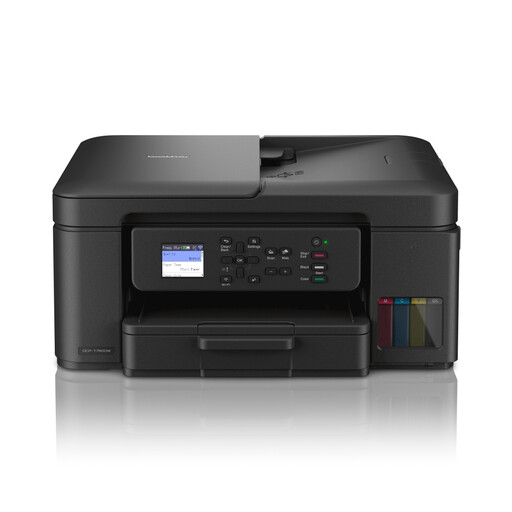 No image available
Brother DCP-T780DW 3-in-1 Wireless Ink Tank Printer
For a group seeking one device for individual postcard scanning and occasional printing, check that the flatbed fits its originals. The product name specifies wireless ink-tank printing.
View on Joybuy
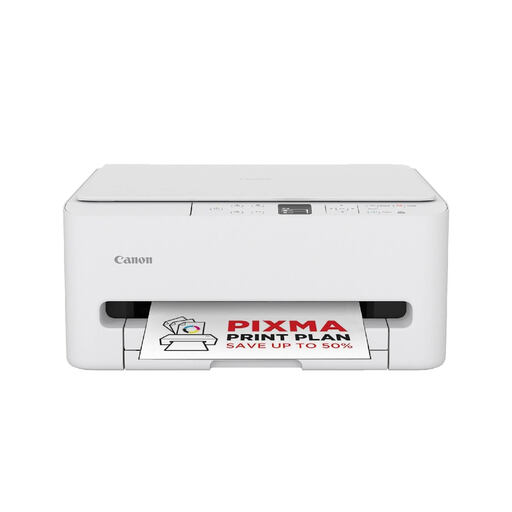 No image available
Canon PIXMA TS6550i
For scanning postcards individually alongside printing and copying, check the optical scanner resolution and usable flatbed area for this exact model before deciding whether it fits the project.
View on Joybuy
Questions about postcard scanning
Should we put old postcards through the document feeder?
Use the flatbed for the postcard workflow unless a particular batch has been assessed as suitable for a feeder. Epson United Kingdom describes flatbeds as handling varied sizes and media types, while feeder speed does not establish safe handling for postcards in differing conditions.
What scan resolution should we look for?
Compare the exact models' stated optical scanner resolutions, then make sample scans of the group's own postcards for their intended use. A headline DPI figure alone does not establish the detail or overall appearance the group needs, and higher settings can make files harder to store and manage.
Does A3 printing mean a printer can scan A3 originals?
No: check the maximum scanning size separately from the printing size. Brother UK expressly specifies A3 printing and scanning for the MFC-J6959DW, illustrating the kind of model-specific confirmation to look for.
Can our group share scans of old postcards online?
Do not assume a postcard is free to publish because it is old. The UK Intellectual Property Office says photographs are generally protected by copyright as artistic works; identify the relevant rights where possible and seek permission or advice before public sharing if the position is unclear.


